Project 2 : Experimenting with mark-making

Aim: This project continues the theme of focusing attention on your own physicality and opening up your method to new ways of moving

Method: Set up a reasonably large still life, for example two or three chairs piled together. Make yourself some drawing tools by attaching pencils or pieces of charcoal to the ends of bamboo cane or similar. Place a large sheet of paper on the floor and try to draw your subject using these super elongated pencils. You will have less controll but you may find that little movements you make have big results as they are magnified by the canes. This will lead to a very sensitive responsive mark. Even if you struggle to get an accurate representation of your subject, you will have a super accurate representation of your own struggle.
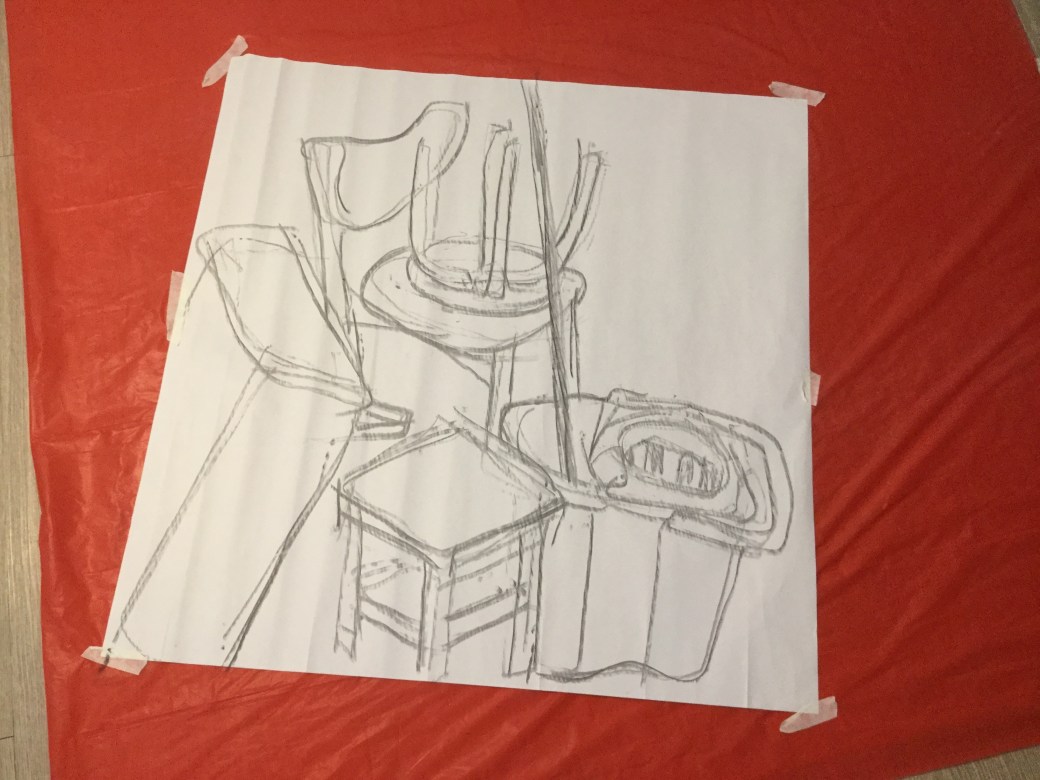
IMG_2806

Reflection :  Experimenting with mark-making:

I was suprised with the fact that it was not a bad drawing. I used a broom stick with a distance of around 1.50m between where I was holding and the medium and yet I could capture the lines and my coordination wasn’t very affected by the method. I didn’t feel like I broke the relationship between my brain and the marks I was making. It was more  informative lines. In a way it is good not being able to add many detalis or being accurate in lines but in images as a whole. I like the simplicity of it and how I still managed to depicted the whole view I had from my set up large still life. I think laying the paper on the floor made things easier and I use my foot to hold the paper at some parts where I want to stretch some lines but the paper would wrinkle a bit. I used a very  fine paper I buy here in Malaysia, called  ‘Mah-jong’ paper. It is used to place the tiles of the game, similar to domino. It is cheap and the size is about 80cmx80cm, a great size to draw big scale drawing on the floor. I think the result of this project is good. If I had the chance, I would like to extend the distance between my hand the drawing medium, maybe draw from top of a ladder since I my coordination seemed to be not too affected by the distance of the broom stick. I can say that my experience in this project is losing control and I feels as if I was sending a message from my hands to a far end to deliver the movements I was doing.

Research Point: ‘The abstract Expressionists’

The abstract Expressionists use of gesture was caught up with notions of authenticity and even of prity of intent. The influential critic Clement Greenberg wrote in his article ‘Avant Garde and Kitch’ in 1939 about the good artist painting ’cause’ and the bad artist painting ‘effect’. He also tas about what he describes as ‘the inflections of the personal’ becoming a legitimate subject. For example, the artist Jackson Pollock talked about wanting to paint from his emotions, not to illustrate them. What is your response to these comments?

Clement Greenberg became an art critic in a very unique time for art when he published  Avant-Garde and Kitsch in 1939 for the Partisan press. He was living in America, New York when the world was under wars and issues and art had been influenced, as fascist war rolling over Europe,’culture’ had been appropriated by the totalitarian powers of the Soviet Union, Germany and Italy. Artists had to find ways in communicating with the public with a certain amount of freedom they could use to express themselves. The public was largely illiterate about art due to limitations imposed. Greenberg basically defined ‘Avant-Garde’ as a ‘superior consciousness’ associate with a minority of intellectuals who were able to understand and had the time to be trained in what  concepts of art was. Concepts which included experimentation, the medium acting itself, techniques that were formed, flatness and abstraction. He believed it would bring art value for a long term in  culture. In contrast ‘Kitsch” was the popular art, mass consumption, profitable activities associated with the proletariat, non intellectuals  who still had a thirst for some sort of a medium for culture but highly influenced by capitalism. Avant-Garde was purposeful  beauty  and Kitsch accidental beauty. 

For Avant-Garde public, Jackson Pollock technique and paintings were appreciated as it was not only about ‘splattering and dripping’ painting on canvas, he had total control of it. He had it purposely planned even if it was unconsciously done.   

Project 1 -Drawing blind

Aim: This project should make you very aware of how your brain works when you’re drawing –  by changing the sense that you’re translating into physical movement from sight to touch. As you will see, translating the visual processing of three dimensions into a physical movement sesigned to leave a trace on two dimensions, which in turn may give the illusion the three dimensions, is a hightly sophisticated process.

Method: Choose a smallish object you know well, preferably sometihng with a fairly distinctive shape. Position it on a table with a sketchpad next to it. Put your pencil in the middle of your sketchpad then close your eyes. Reach out for your object an feel it; as you do this, make a record of what you feel on your sketchpad with your pencil. Feel free to take a peek and reposition your pencil at any time, but do so as little as possible. Make several studies until you feel that you’ve arrived at something interesting.


Reflection :  Drawing blind 

The touch in this project completely replaced the lack of sight. I constantly felt every line, texture, shape and curves of the object. I tried in different scales and first with pencil and after with graffiti which gave me even a better understanding as I was drawing while feeling the object. More I drew, more I could record some details and texture. I like the results of lines and I think considering my eyes closed, the final drawings were quite close to the real object. I first drew a shell and after a pencil sharpener. I took this exercise a bit further and tried some self-portraits which I first observed myself in a mirror for a few minutes, then I closed my eyes and drew without taking much the pencil off the paper. I find the result really interesting. It really intrigued me working mostly from memory with the self-portrait and by touching the object. I think it worked well, I would try with different and more intricate objects but I couldn’t find anything else at home. The shell worked quite well but the drawing from the pencil sharpener is more interesting.

More scenes and ideas

I am sketching almost everyday, If I don’t do it daily and compensate by doing more when I am inspired. My eyes get tired easily these days and I need a break one day or another even if I don’t feel like it. Ideas pops out in my head and I try to keep it there until I can sketch them. Sometimes I just take quick notes of what I am thinking.

I am trying to reach images that I am happy with. I like colours, bright and exaggerated but sometimes I like it simple and plain in a limited pallete. I like doing neat work, meticulous but at times I just enjoy when my mark making can be seeing all over the paper. I haven’t decided yet how to present this project and I will discuss with my tutor in the next video session.

These images are from my Parallel project sketch book, includying the cover I am working on. I think the chaotic scenes in a everyday domestic life is becoming more attractive to me. I like my home spotless, neat and clean but in order to reach that, I need mess and chaos to see the difference between them. I think that is where is satisfaction comes from. When the work is done…. then the kids arrive home, and everything will be back to step 1again : mess and chaos!!!! That is my domestic life and although it is exhausting, it is also beautiful. It shows there is life in my home.

Expressive Abstract

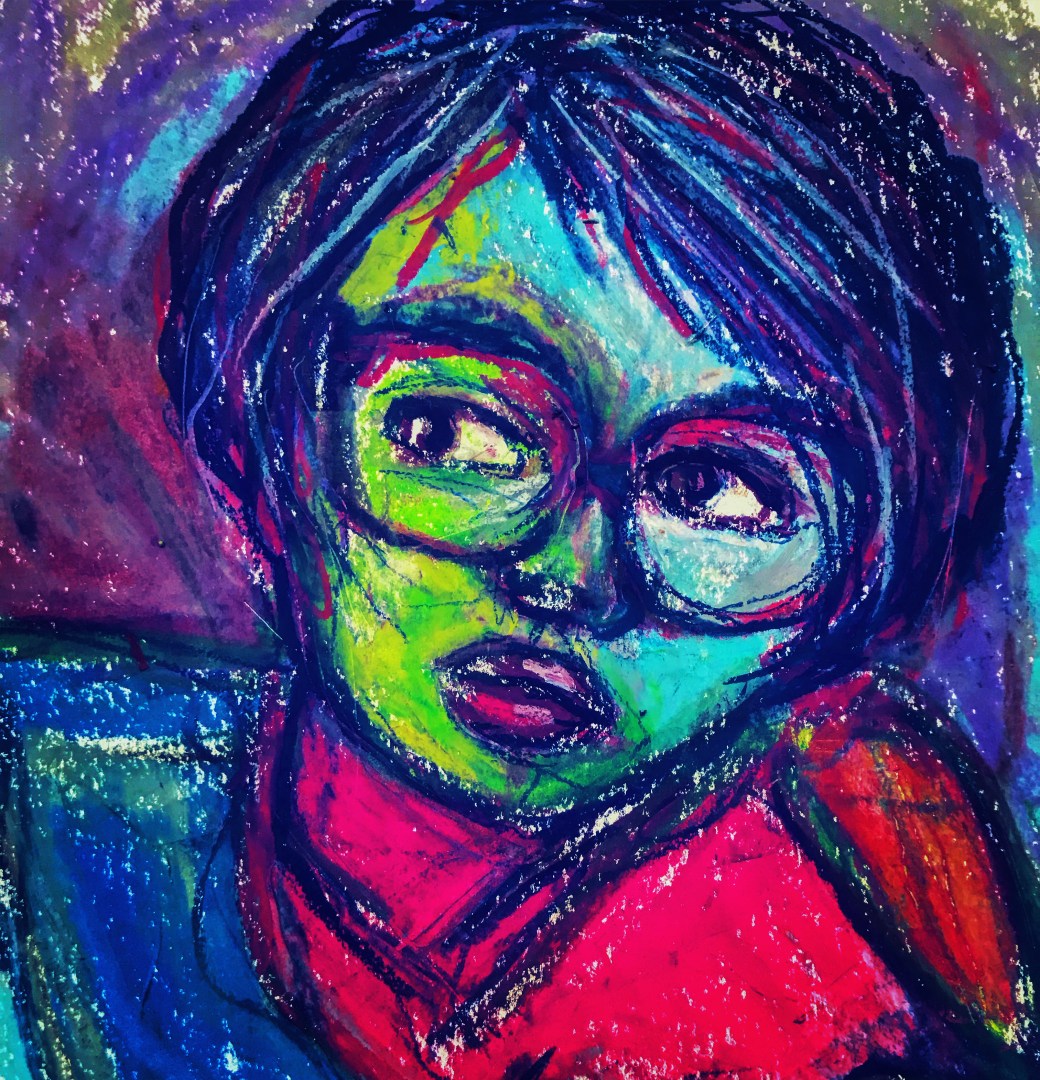
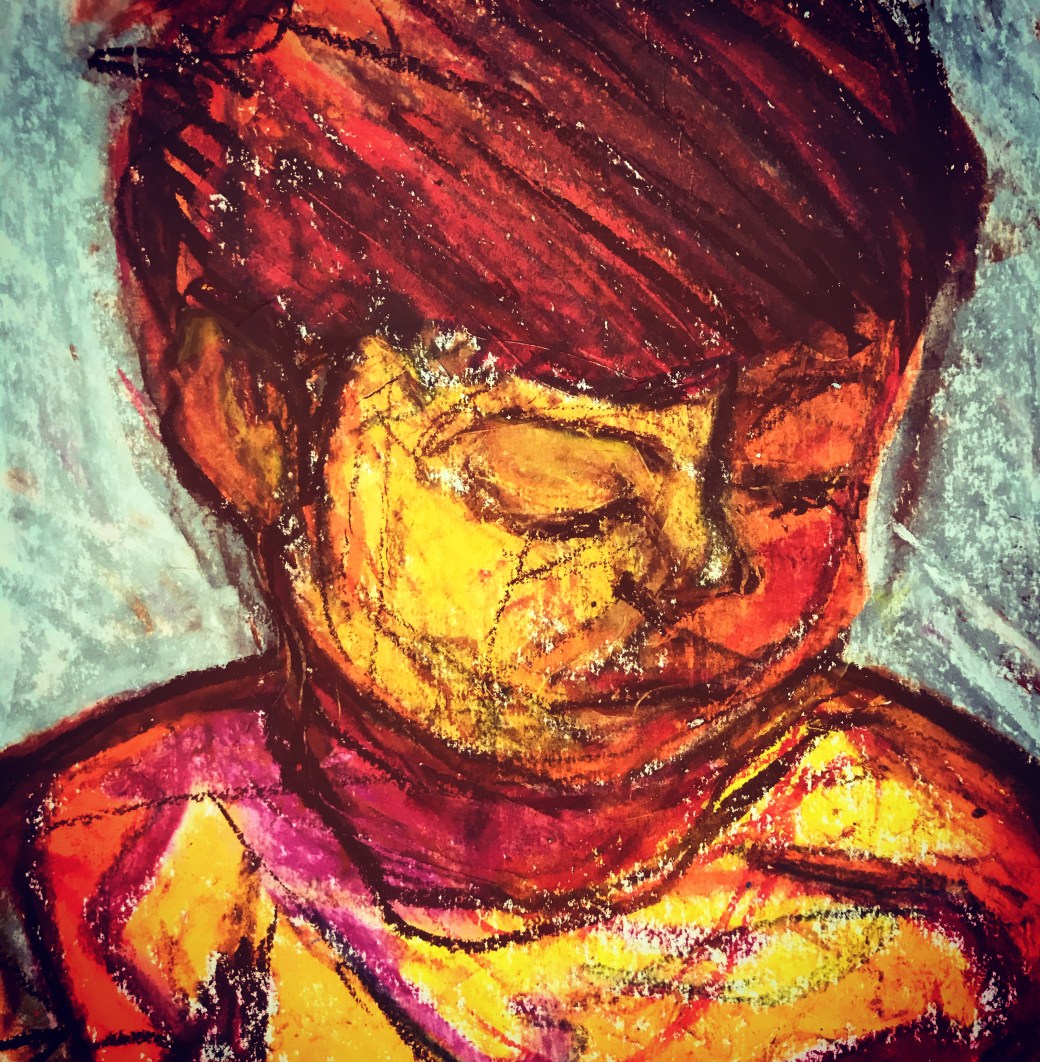
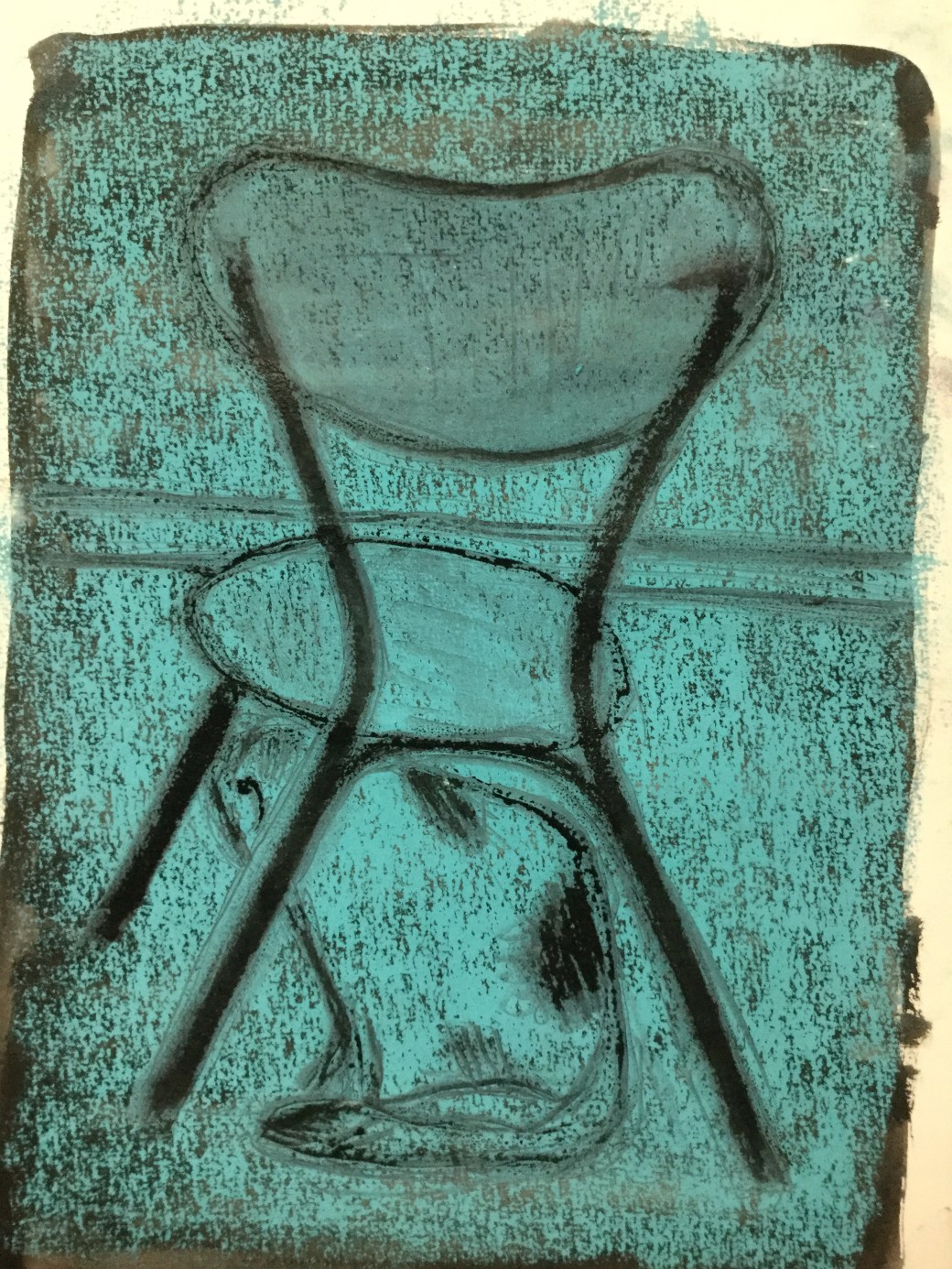
I have started Part 3 while I am waiting to have a video session with my tutor. I really enjoyed Project 1 and after drawing an object by touching with my eyes closed, I decided to extend the experience by drawings some self portraits and my son’s portrait by observing the features for a few minutes, closing my eyes and trying on the paper. I tried with pencil and then graffiti. The result was very interesting, and since I am reading about De Kooning for Research point , I took these drawings further by giving some details to it ( with eyes open!) and add some colour, expressively and spontaneously.

I am considering trying this technique for my domestic life Parallel project just to see how it would work. I really feel in my element when I am very expressive and go with the flow without much planning.


162C1A1B-0F5F-4086-AC56-4F456F8E9B355831B2F5-8C9B-4E61-8E96-84F0188EEDA2

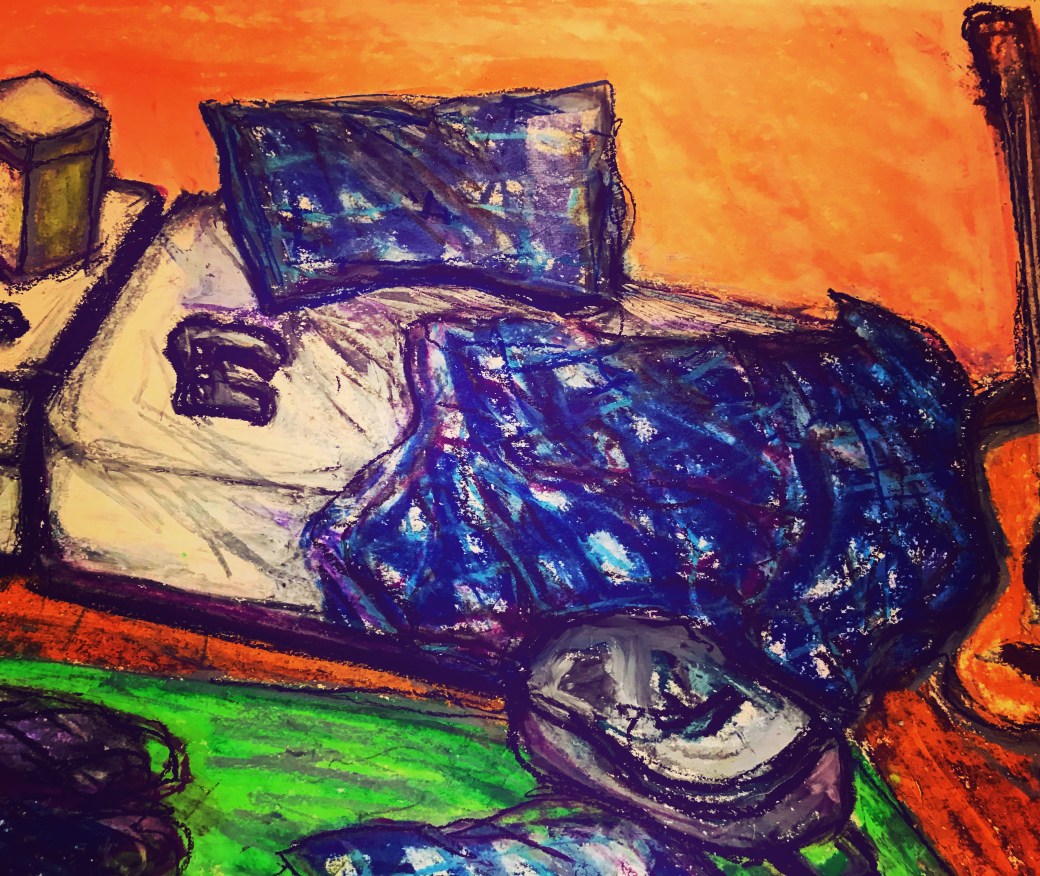
I also drew a quick sketch of my son’s bedroom and something similar came out but I am planning to add collage with paper and textiles and see how it goes….

30DACE68-0AFC-4F90-A1AD-7703C5210D77

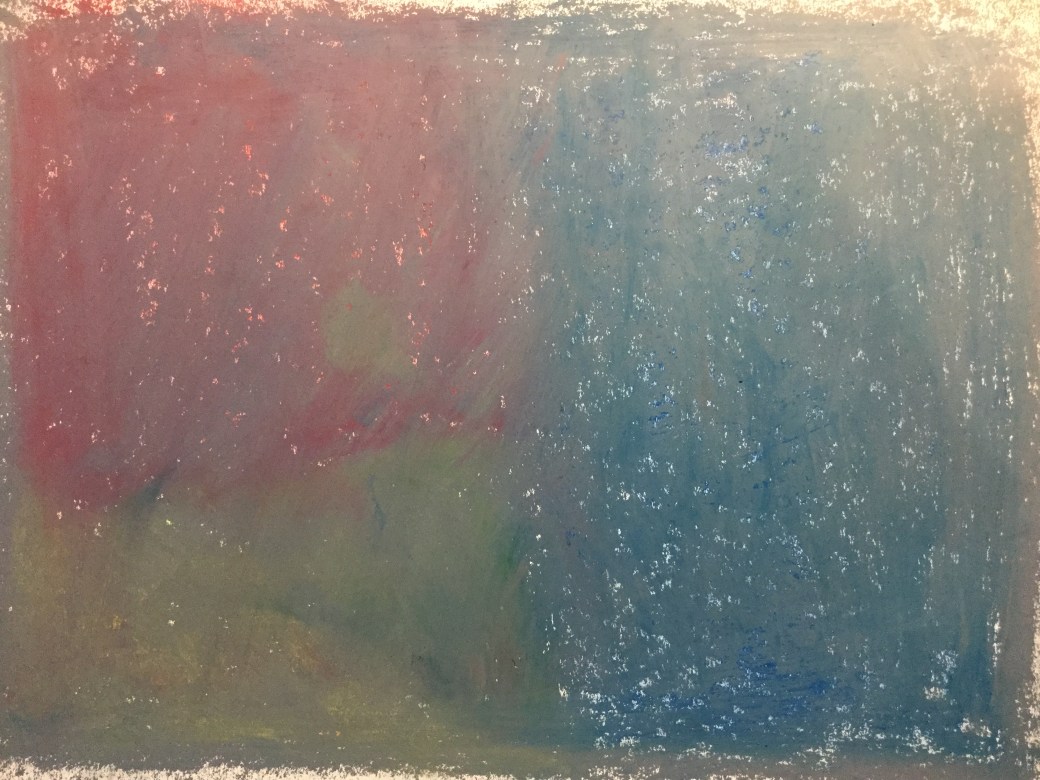
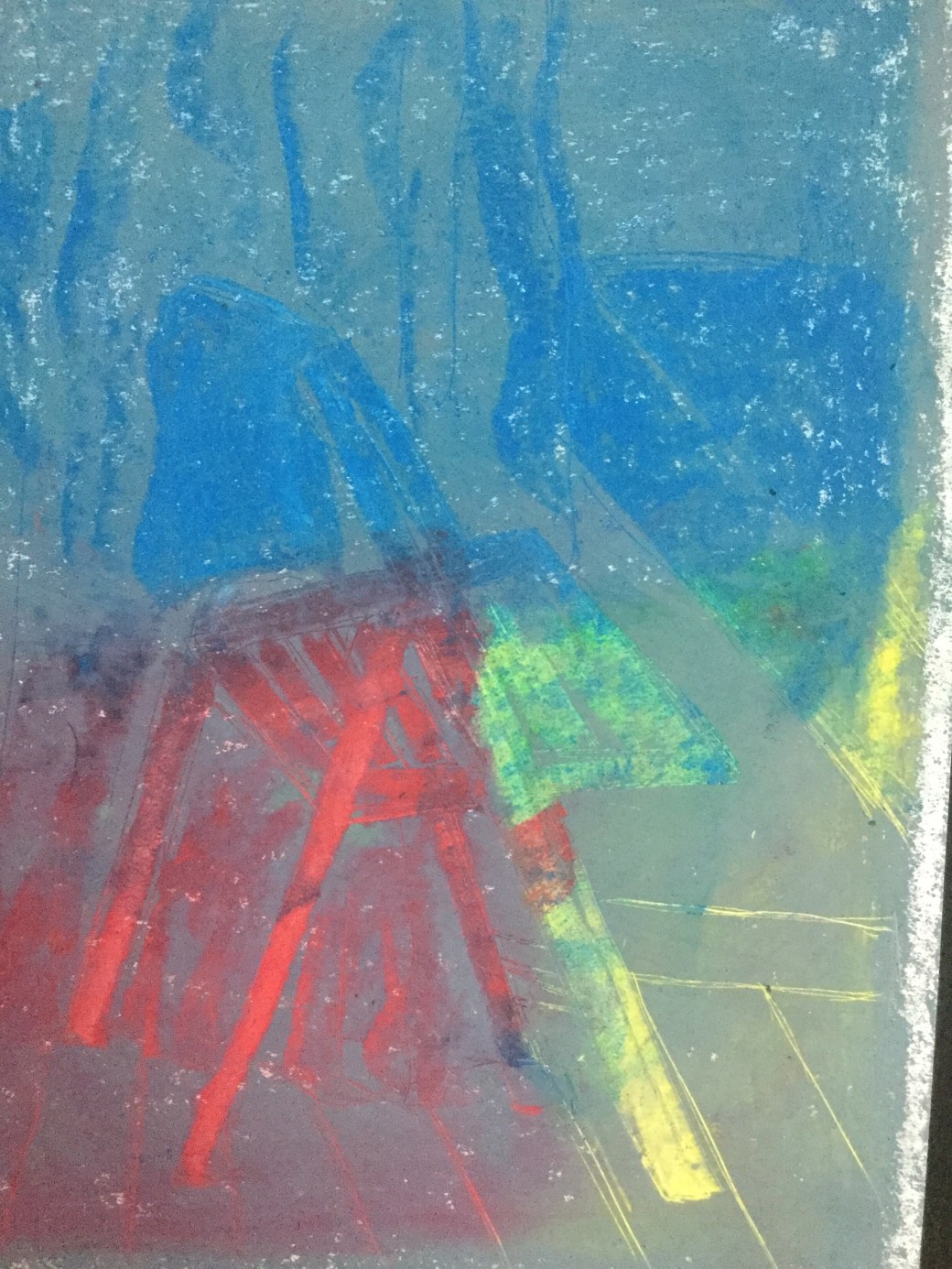
Oil crayon on paper, using scratching and scrapping techniques to achieve certain lines.

Assignment two

Make a drawing of a subject of your choice using the subject itself or tools constructed from the subject, dipped in ink or paint.

Sketch book ideas: 


Final Pieces : 

IMG_7106

IMG_7110

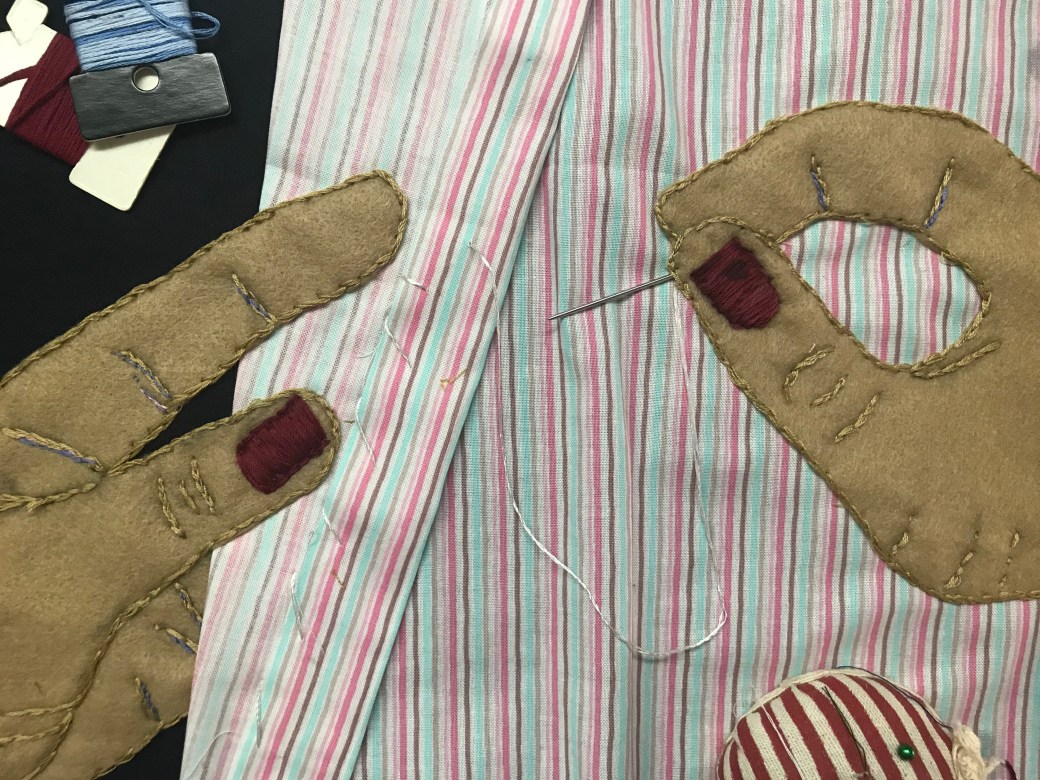
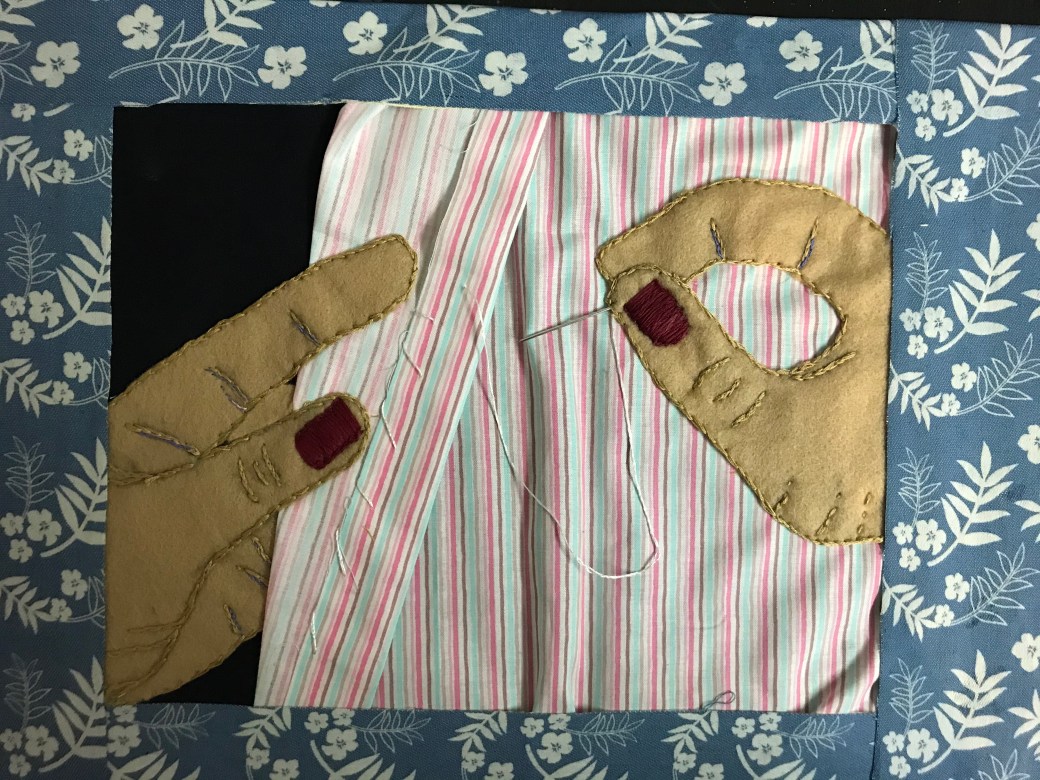
sewing hand – sewed with felt and cotton


IMG_2776

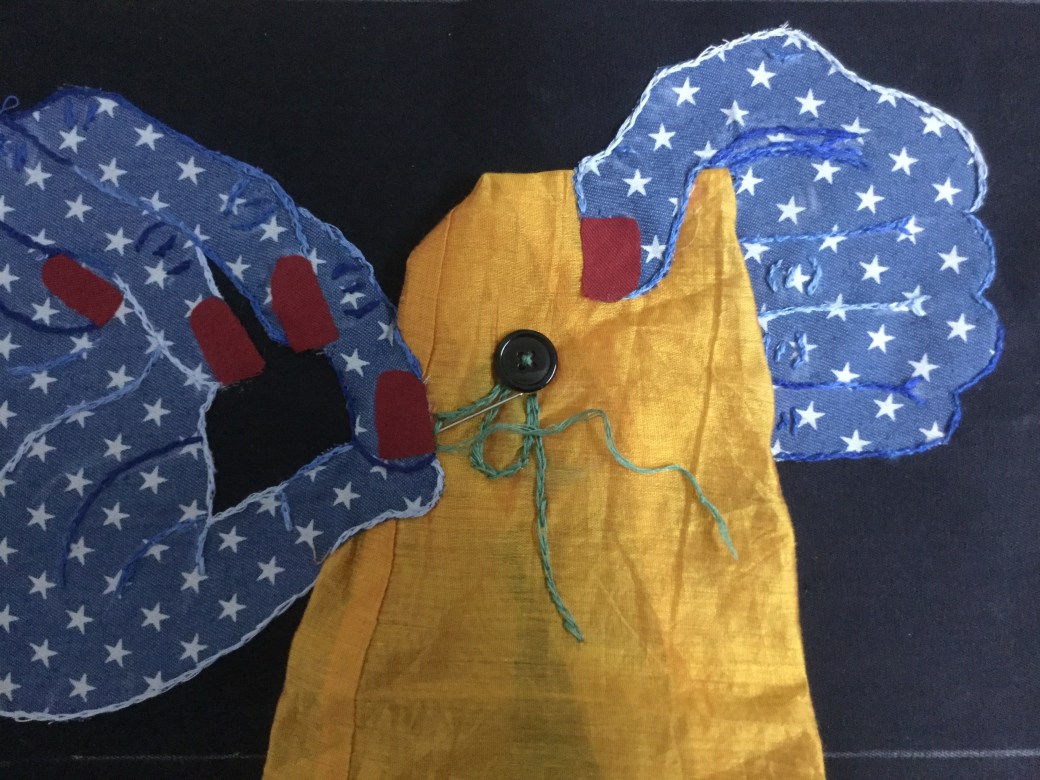
Sewing hand2- sewed with cotton and silk

Reflection on Assignment 2: 

The decision on this Assignment came very unexpected. Before I even start sketching, I have ideas, many of them. Sometimes, I go to bed thinking of all of them, sketching in my mind. Then I decide which ones I would like to test, how would it be possible and what I need for it. It has been a very long time, but I have always being fascinated by sewing. As a small child I use to watch my eldest sister knitting and doing crochet. She taught me a bit of crochet and I loved it .Looking at the basket full of soft and coloured threads were so beautiful to me. My mum had an old Singer sewing machine at home, it was very precious thing to her,  no one could touch it. She was very skilful using it and made us clothes and many amendments of things we didn’t like as it was. I have always enjoyed looking at the coloured thread bobbings ,pins, needles, different textiles and the noise a sewing machine makes .She used to always give me pieces of left over textiles and I made a few ‘clothes’ for my dolls. I liked the buttons and zippers and even followed her to what we call ‘armarinhos’ in Brazil, where you buy anything related to sewing. It is a childhood memory and I left it there. Back a few years ago I followed a friend to a textile shop, she was also  a very skilful person with sewing, and had starting with upholstery items for her new home. Again, everything in the shop fascinated me, specially the amount of different textiles. I wished I could sew things, choose textiles and material, use a sewing machine, but I didn’t know how, never gave it a try. I don’t want to make clothes or amendments and nor I wish to do upholstery items. I have NEVER consider doing art with textiles and sewing! At the moment I ask myself: Why not? Then I discovered the artist Grayson Perry in EDM module. He works with tapestry. His methods are very advanced but his art work pieces are big tapestry of colourful images with many messages and strong concepts . It is more  made out of embroidery and he has his ideas digitalised before execute each work. I also found about Njideka Crosby, a Nigerian-American artist who adds traditional Nigerian fabrics in her artwork among many other artist who uses textiles in various ways and styles. I decided I wanted to do a sewing piece of work by sewing it myself. I sketched a few drawings of what image I wanted to sew. I have only very basic skills in doing it but I rediscover a new passion to apply to my art: textiles. It feels so refreshing finding out ways beyond traditional art materials and tools, and is so engaging knowing that I can improve and  challenge myself with something new. Working with the material of the subject itself was very rewarding. I have had a very enhancing experience in this assignment. It is simple and very basic but I definitely will try more, learn more and I am seriously considering purchasing a sewing machine. It is satisfying figuring out that I do not need to be a clothes designer, amendments lady or upholstery expert to work with textiles. I can use textiles to draw!

Crosby, Nijideka – Wikipedia at: https://en.wikipedia.org/wiki/Njideka_Akunyili_Crosby

Perry, Grayson – Wikipedia at: https://en.wikipedia.org/wiki/Grayson_Perry

Katia_Chester_ID2

Feedback on Assignment 2 report 

I have to say that I felt a bit disappointed with the comments on Assignment 2. Not because I do not agree with my tutor, I completely understand what she meant by it being ‘tamed’ in the sense of disciplined, restricted. I am trying to go out of my comfort zone, following her advice as in making mistakes. I try, but somehow I still worry about doing something completely wrong or  not matching the  sucess criteria requirements. I know it could have looked more interesting if I took more risks, making drawings over it, or using thread to draw instead of sewing. I took it too literally and it didn’t quite work well as an outcome. I still don’t have much discernment between what is expressive and spontaneous or what is a bit too messy and don’t work well visually. I only see what went well and what went wrong after I have a session with my tutor. Despite the  comments on Assignment 2, Diana Ali gave me many positive suggestions about what my strenghts are and how I could improve them.  I want to try to be more expressive with my work, I work well with charcoal and I might try another piece with it. I am sketching and thinking a lot about my PP and keeping it simple, be spontaneous, maybe use a bit of repetition which could really work in the project. I like bright flat colours and clear, simple images as much as I like busy scenes. Food for thought for now.

Project 3 – Narrative

Method: Think of a person for whom you have strong feelings or hold a strong opinion. Find an object or item of clothing that reminds you of that person. Make a piece of artwork that uses the object to provide the imagery but uses the materials to give the viewer a sense of the person. In effect, you’re making a portrait of a person as an item of clothing. You could use your daughter’s first shoes, your mother’s hat. Thinking more widely, you could use a blue tooth device and tie to make a piece of work about bankers or an old school tie wrapped around a silver spoon for our poticial class. Experiment widely and produce as many pices as you need to until you arrive at something which you think fits.

Sketch book ideas: 

I sketched a few ideas and made an percussion instrument out of cardboard and brown paper. All the paper ( music notes, poetry and poems I aged by dyeing with tea. )

Final piece: 

Reflection: 

I had many ideas, it would take a lot more planning, time and material to execute it. I wanted to fill up a book with words, poems, poetry, song lyrics, photos…I am pleased with the result, specially because I have managed to dowload the video on youtube for the first time and it gives a bit more of insight to the work. I am looking forward to my hang out video session with my tutor  to hear the comments and what she will say about this project. I also sent the video to the person I made this artwork based on , I hope to have a good feedback as well. It was a very engaging type of work. I think material tells a lot about the subject portrayed. I am enjoying Part 2 mostly for the experience of trying material connect to the subjects itself. It is also my first experience working with 3D art and doing a piece using the subject materials.

Project 2 – Mark-making materials and Research point

Method: Build up a variety of surfaces using whaterver comes to hand that has two differently coloured layers. Make several drawings by scratching through into the second layer. You can use wax and acrylic paint, oil glazes on board, household paint on wood. varnish on metal. Vary the scale of the drawing depending on your support. Choose a subject from your sketchbook or learning log and push through to make complet drawings, not just squares of texture with random marks. That way you will really learn what the materials can do.

Experimenting first: 


Drawings: 

IMG_2755IMG_2753IMG_2752

IMG_2756

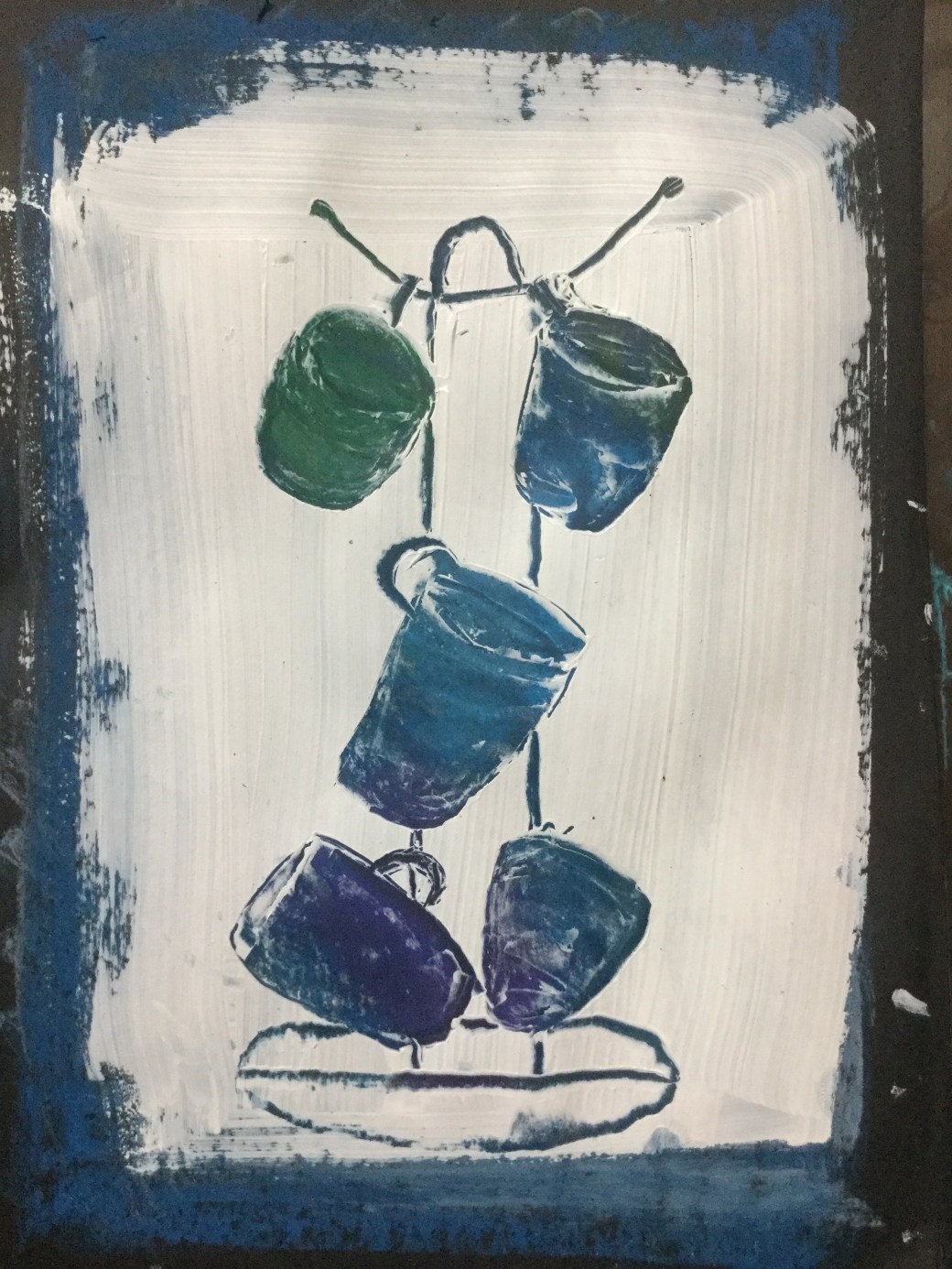
Oil Crayon on oil Crayon 

IMG_2758

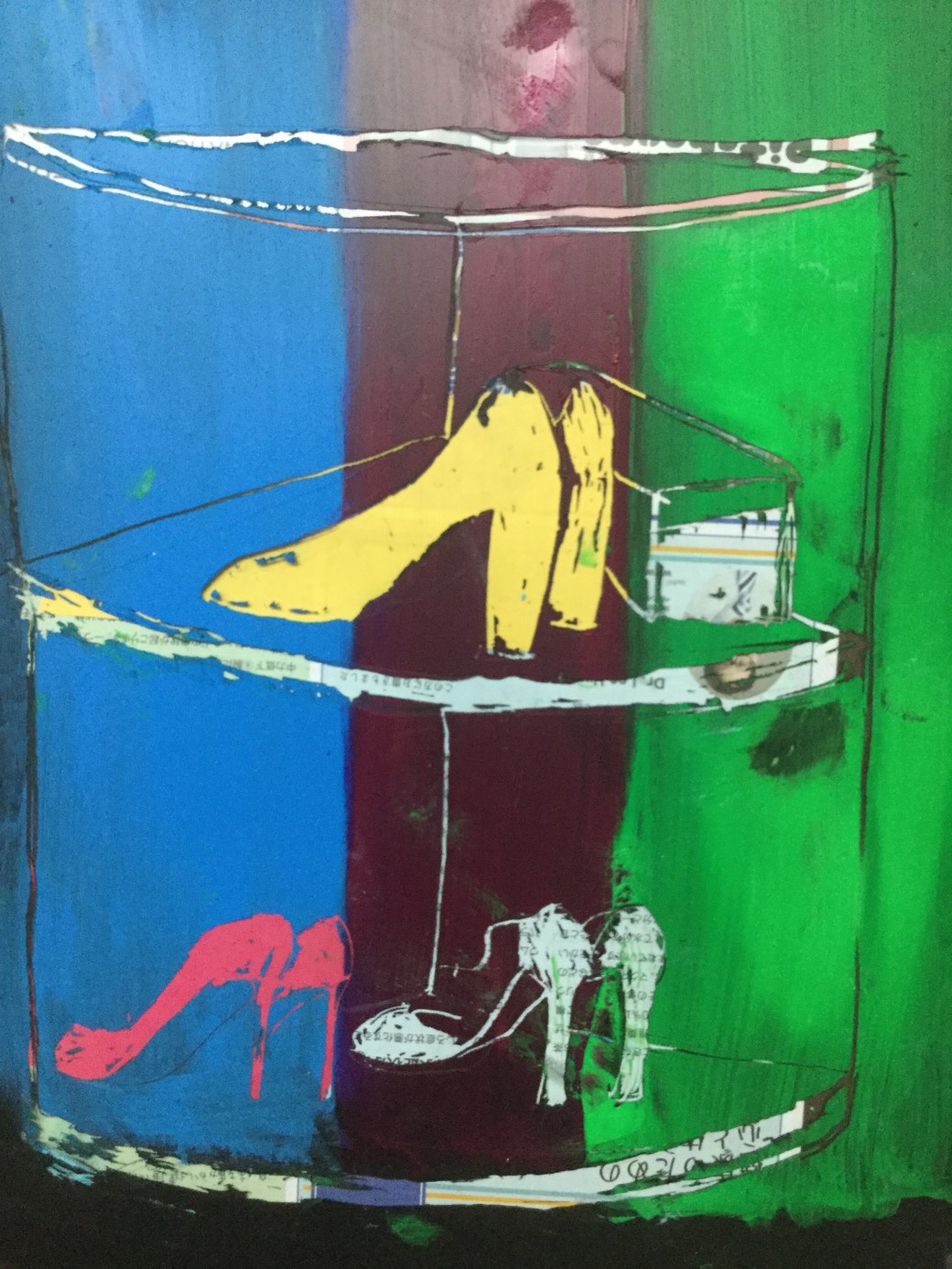
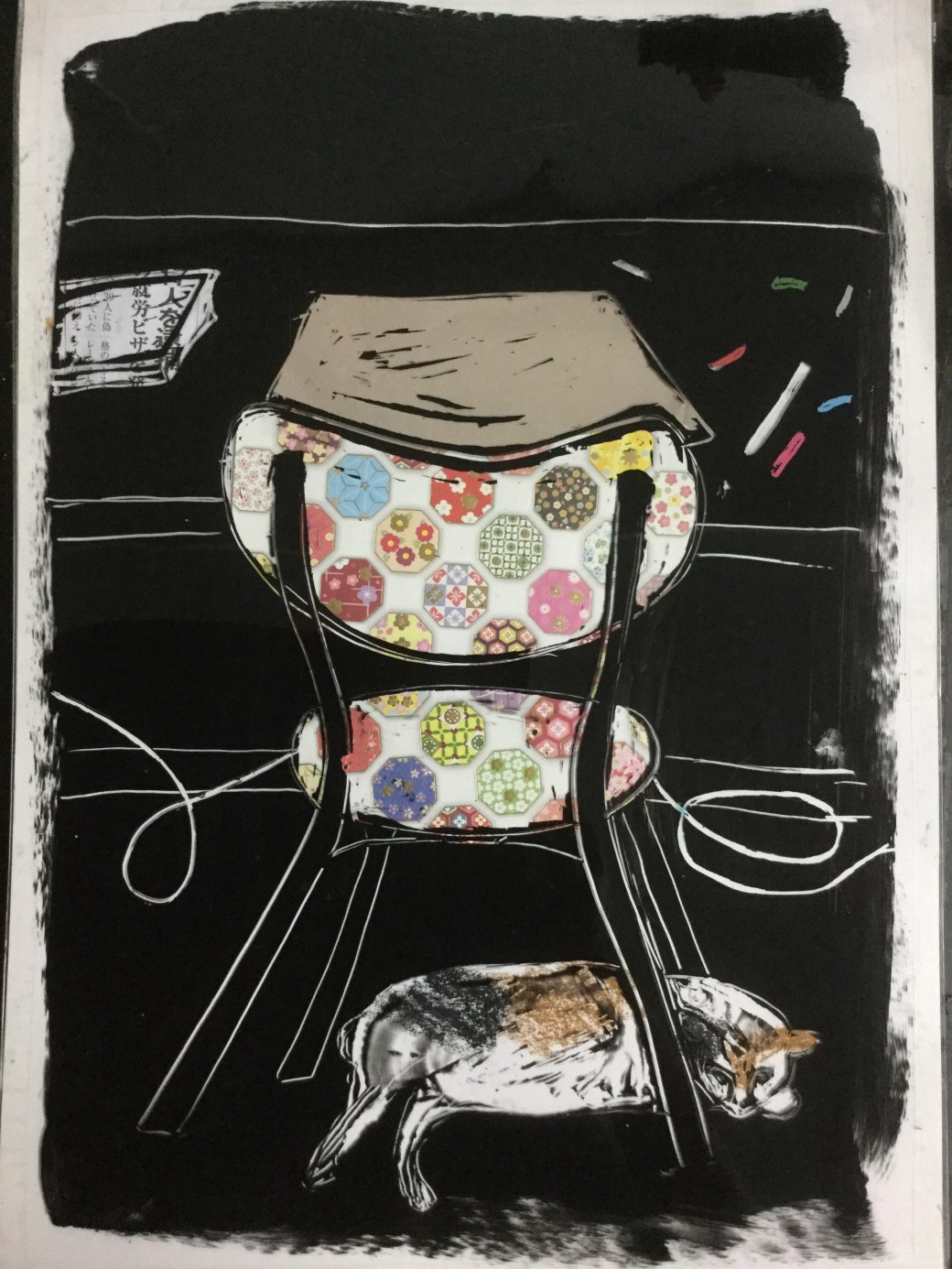
Acrylic on Acetate sheets 

IMG_2757

Oil crayon on watercolour 

IMG_2759

Acrylic on Acetate sheets and origami paper in the background 

IMG_2760

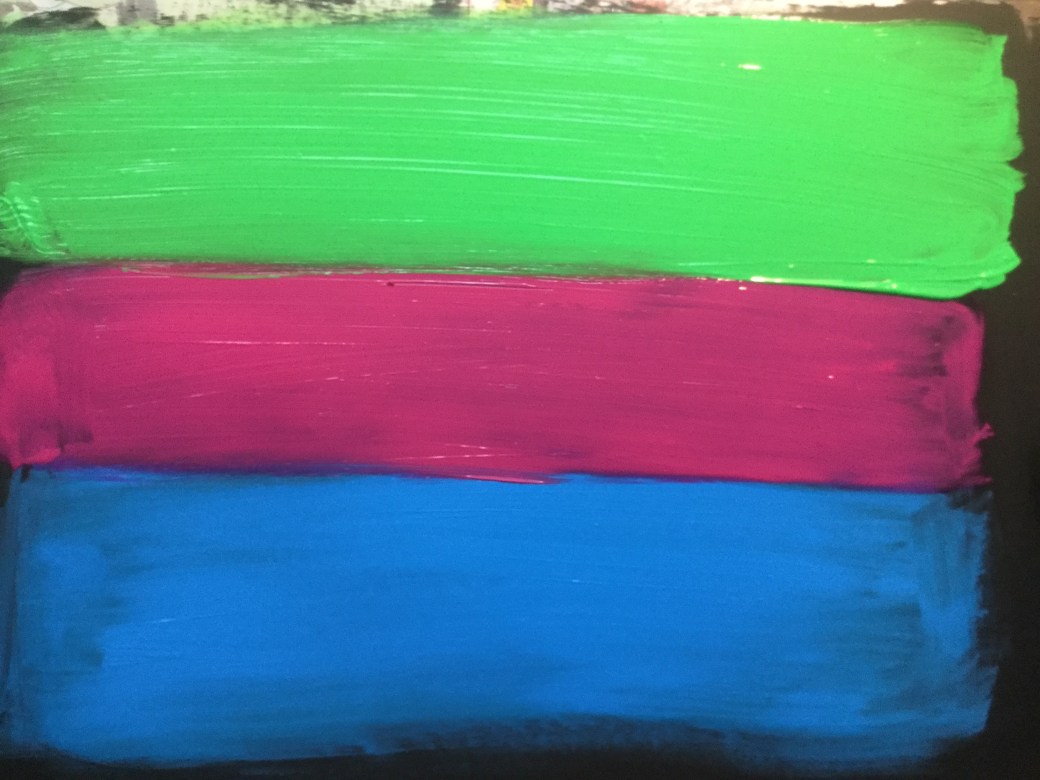
Acrylic on oil crayon 

Reflection :

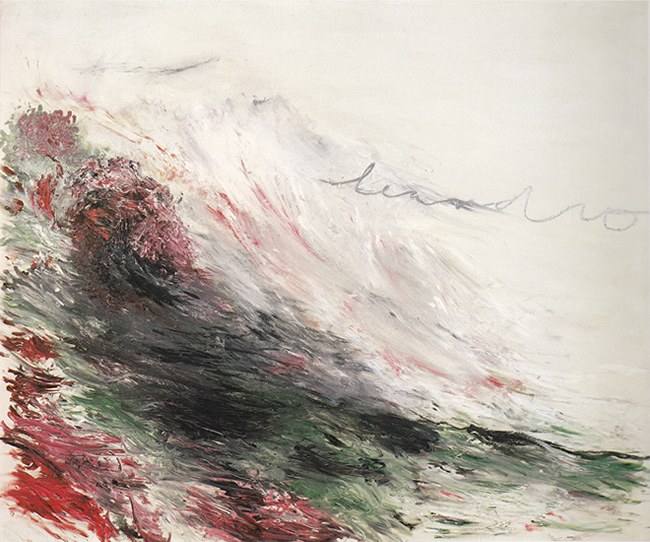
When I think mark-making one of the artists who comes into my mind is Cy Twombly. He might not have used a variety of tools in different ways or scrapping as it is suggesting in this exercise, but he achieved great final images with very expressive marks. I didn’t have many different surfaces to test or unusual materials. I tried with what I had, mostly drawing, painting medium. I always enjoyed using layers of oil pastel and scratch the layers to mix of uncover the first layer colour. This time I tried watercolour, acrylic and different papers. The most interesting surface I found and it was the best result for this project was : acetate sheets. It is not a very environment friendly material but it gave me the painting and scratching result desired. It was something so new to me, very graphic and surprising. I used couple images from my sketch book and coloured paper in the scratched areas to give forms to the shapes I drew by scratching. 

https://www.theartstory.org/artist/twombly-cy/

Hero-and-Leandro-A-Painting-in-Four-Parts-Part-I-1984.-©Cy-Twombly

Timelessness by Cy Twombly 

Research Point :

https://www.angelaeames.com

Angela Eames:  British Artist and practising drawer who explores drawing in relation to technology. Angela’s methodology is innovative, approaching materials and virtual outcomes. She experiments using raw data producing intriguing and unfamiliar images or landscapes. I am not using any sort of technology to investigate drawing at the moment, I would like to but I don’t know how, since I don’t have knowledge in softwares that provides that source of material. I still believe that through this module I am working with similar foundation : experimenting, investigating and exploring ways to produce images using a variety of materials, methods and techniques. 

https://ocula.com/artists/michael-borremans/

Michael Borremans: Belgium contemporary artist whose paintings shows clearly influences and inspiration from artists such : Manet, Diego Velazquez and Francisco Goya. I personally see great similarity with some of Goya’s paintings as in intensity and explicit in the human psyche relating to darkness and death.  Borremans paintings has this depth of sinister and dark. How he presents his subjects in his paintings is enigmatic. His human figures usually  have a frozen state, incomplete bodies with the absence of limbs.

It triggers strong feelings of human beauty in darkness. There is some things in his paintings that reminds me of Jenny Saville artwork. His forms are impeccable and realistic. He uses video, models  and photos to support his creations. In my opinion there is a certain fascination in many of us in death, sinister and frighten images. I relate the work of Borremans and this project in investigating how to trigger through paintings/drawings, human deepest feelings and in finding a variety of supporting material to achieve a desirable result. 

https://www.simonleegallery.com/artists/jim-shaw/

Jim Shaw: American artist and creator of fictional religion called Oism. Shaw’s artwork is a mixture of pop culture, comic books, pulp novels, rock album covers and more. He mixes many materials to create intricate visual imageries. His artwork creates connections between his own psyche and America large political, social and spiritual histories and its conflicting forces. I see the relation of Jim Shaw’s art and this Part 2 as in how endless are the  sources we can use to represent subjects and narratives through our art. In my opinion, Jim Shaw work is a mixture of protesting, confronting and  his own personal feelings against the modern society we live and the culture he lives in.  


Project 1 – Space,depth and volume

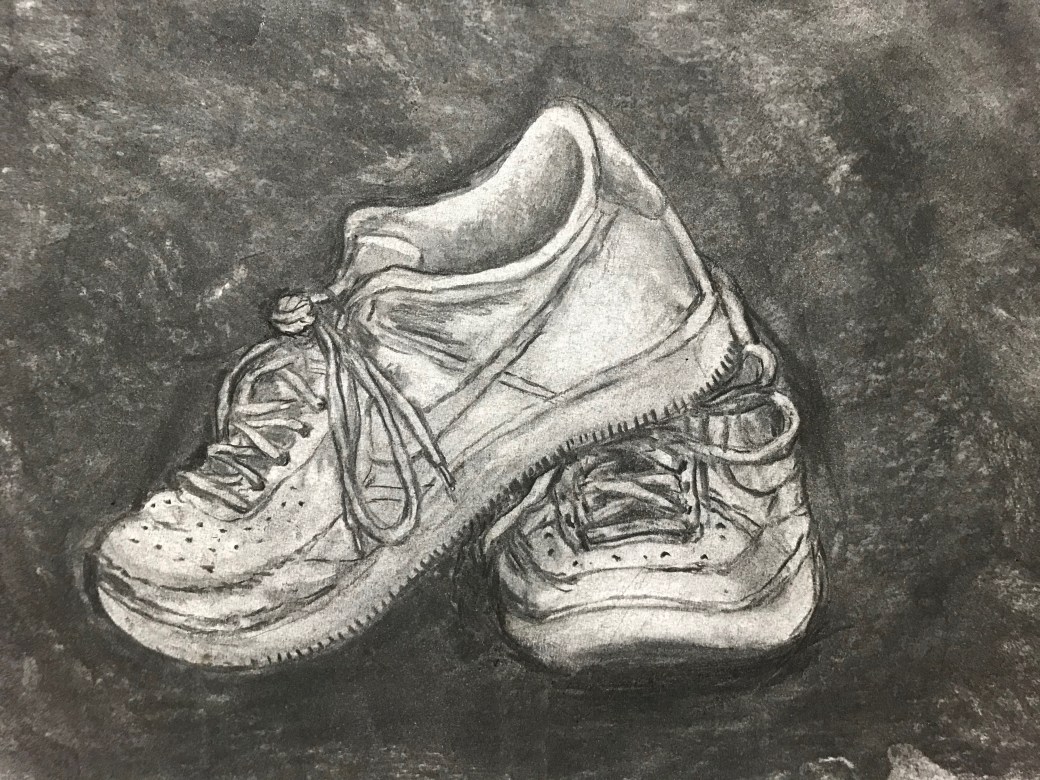
Method: Cover a whole sheet of paper with charcoal so that you have a blank black rectangle. Make a drawing form a subject of your choice by drawing into the charcoal using a rubber or selection of rubbers. When you’ve worked into the charcoal for a about an hour using just a rubber, go back to your charcoal and begin to redraw in darker tones using the side off the charcoal.

IMG_7033

Reflection:

What was very interesting about this project was the fact that for the first time I was drawing in a way that I had to set up my eyes and brain in observing and giving shape and form to an image the other way round. By starting in a paper covered with charcoal, opening up areas with a rubber to depict what I was seeing gave me a completely different perspective to discover the subject. I am not sure if I gave it the sense of depth but I definitely experiment a new method of drawing that made me see the subject ,by having already a set up background. It is more difficult to work from light to leave shades rather than draw something and observe the shades afterwards. 


Textile art

I am keeping my sketch book most days capturing scenes and objects I find interesting for this parallel project. After Assignment 1, I am thinking about trying to develop something using textiles, sewing, glueing or mixing medium and see what happens.

I like looking at these artists work:

https://en.wikipedia.org/wiki/Njideka_Akunyili_Crosby

https://en.wikipedia.org/wiki/Grayson_Perry

I like how they use so many patterns and colours and yet, it is still engaging to look at. It tells a story. Grayson Perry is very conceptual and so is the work of Njideka. I am now looking more on how they apply textiles and the compositions.

My Sketche book :

I am thinking of trying to transfer one of these drawing into a fabric, or trace it and use textiles to achieve a similar image.

The parallel project

In helping me to decide what I would like to develop in this project, my lovely tutor Diana Ali, asked me a few questions such as: what do you really like to do? What does make you feel like you want to draw? What is Something you are passionate about?

Well, there are so many things I like drawing and painting and I am passionate about and although I haven’t found my voice in art yet, I wonder if I will ever be consistent in my art. The choice of subject for my drawings or painting is always influenced by the moment I am living. Sometimes it is about feelings or people and sometimes about what is going on around the environment I am living in  or simply about emotions I can’t explain. Right now I enjoy experimenting drawing and the process, more than be consistent to a specific topic/subject. For this project I have chosen ‘ domestic life’. The reason is because I am unemployed and spending most of my time at home. Despite the fact that I need and miss a job, I love staying home. I enjoy looking after my children, cooking and organising my place. My home at the moment  is nothing like what I wish it to be. It is a rented place, fully furnished. All the furniture, fixtures and most objects were not chosen or bought by me, but it is still my home for now. I just tried to added a few small changes and little things to make it cozy and more personal. I try to recreate in my drawings the warm feeling of my home, no matter how it looks like. Being at home most of the time, makes me feel a bit isolated from the outside world but I don’t mind. I like my ‘home world’ and I have a very intimate relationship with it. Through this project I am trying to depict how I feel about home and  to turn into art ordinary household appliances, objects and everyday simple situations such as how my dishwasher or how interesting and intricate my iron wire can be. I want the viewers to experience through this project my personal approach to  domestic life and how I see beauty in simple objects such as a plant pot placed in a certain area of the house, or the cat under a chair or on the couch. In order to achieve that ,I started searching for artists who are known by painting ‘domestic life’, ‘still life’ or ‘landscapes’. Among many, my favourites ones are:

  • John Bokor
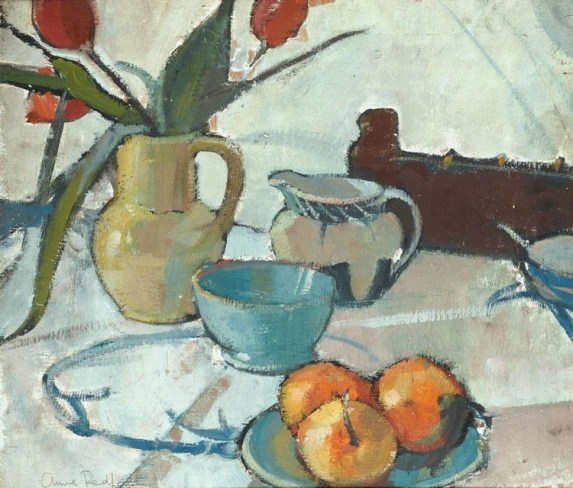
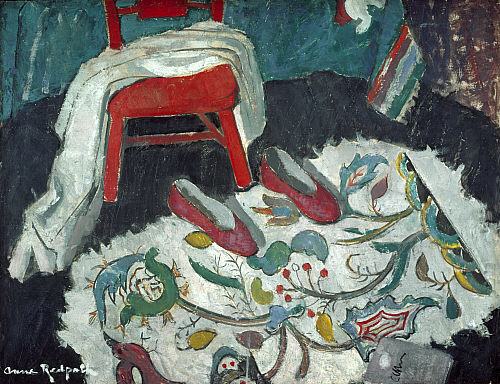
  • Anne Redpath
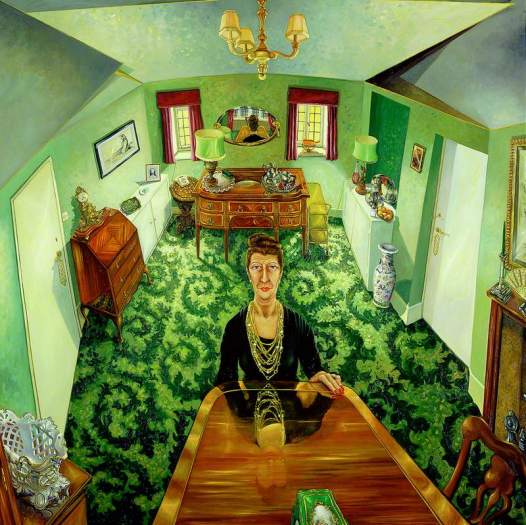
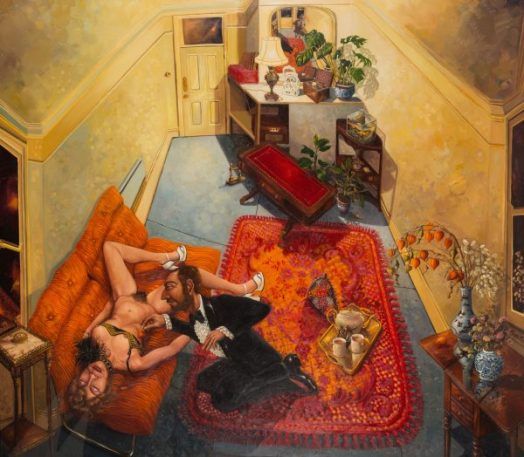
  • Anthony Green
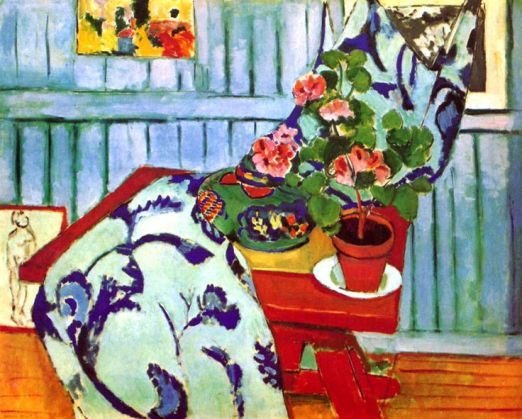
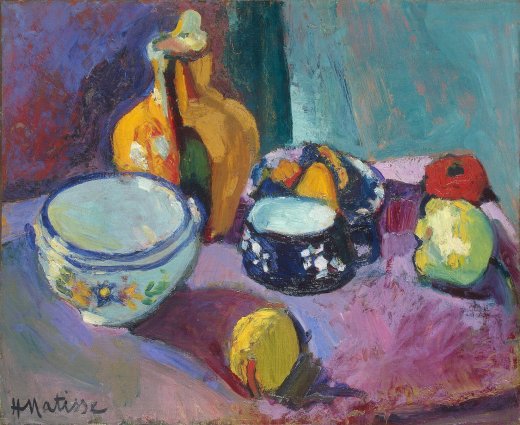
  • Matisse
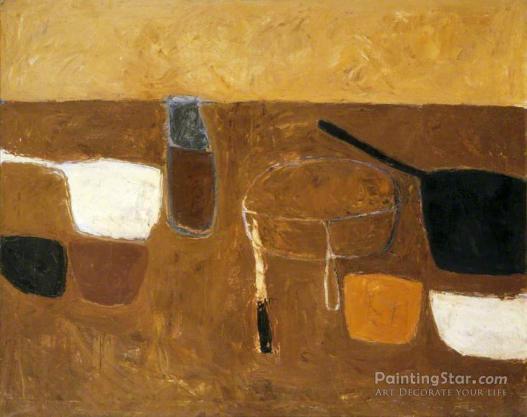
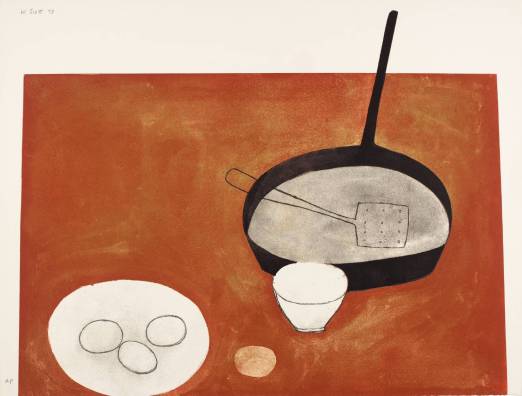
  • William Scott

Researches on Artists who paint domestic life, still life and landscapes 

https://www.talkingwithpainters.com/2016/09/29/ep-8-john-bokor/

John Bokor – Australian artist award winning for landscape and still life painting. What has brought interest in John Bokor’s paintings is the use of bright colours, spontaneity , emotions and lively energy he transmittes in  everyday life situations. It is what I am trying to capture for my project but in my own personal way of seeing things around me and how to relate to the close environment. Painters such as Pierre Bonnard and Van Gough were sources of inspiration for John. He uses carbon pencil for most his sketches, something I haver never tried. Through the website above, listening to his interview and watching his videos, I found out his process and tecnhiques very helpful and motivating to start my project . John Bokor shows the importance of sketchbooks in capturing scenes, re work in images, invent, add or remove pieces when working on a final piece.

https://www.nationalgalleries.org/art-and-artists/artists/anne-redpath

Anne Redpath– Scottish painter (1895-1965) knew by her domestic life, still life paintings. Redpath considered Matisse one of her inspiration and her use of patterns in the  background reminded me of some Matisse’s work. Her paintings are expressive, colourful and calm. Redpath uses perspective in a similar way of post-impressionist painters. In some of her paintings I feel a certain formality and solitude as well as the feeling of home and tranquility. Many of her still life with flowers are bright, and there is no much dark/light contrasts.

anneredpath.jpg

Still life with Red tulips by Anne Redpath

anne-redpath-the-indian-rug-1942

The Indian Rug  by Anne Path (1942)

https://en.wikipedia.org/wiki/Anthony_Green_(painter)

Anthony Green- English painter, known by his own middle calss domestic life and unusal perspective of polygonal forms in large irregular shaped canvasses. His subject is mainly chornicles of his family and surrounding private life. In additon to his unique way of using perspective in his work, what fascinates me when looking at Green’s paintings is the warmth, passion and love in his domestic life. There are so many painting of moments of intimacy with his wife which are revealing and erotic but at the same time innocent and sweet. I like his interior descriptions of the english home feeling with ornaments, rugs and differents patterns in the background.

Green, Anthony, b.1939; My Mother Alone in Her Dining Room

Anthony Green, 1939

anthony-green-the-chinese-lantern-600x524

Chinese Lantern by Anthony Green – 1974

https://www.theartstory.org/artist/matisse-henri/life-and-legacy/

Henry Matisse– French post-impressionist painter(1869-1954) , sculptor and printmaker. He is known by bright colours, patterns, interior scenes, still life, nudes and Landscapes. Inspired by painters such as impressionist Van Gough and Paul Cezanne, Matisse was the precursor of Fauvism and one of the greatest artist of the 20th century. His still life and interior paintings are emotional and strong. His cut outs towards the end of his life shows his passion and innovative ways of keeping doing his art. I am very inspired by some of his compositions.

420124@2xMatisse Henri - Dishes and Fruit

http://www.artnet.com/artists/william-scott/

William Scott -British painter (1913-1989) and influenced by Georges Braque and Paul Klee, Scott abstract paintings are flat and use limited colours palette. His still life paintings are abstract but still with a fair amount of description in forms and shapes. He founded an Art school in Pont-Aven in 1937 when he lived in France, lectured in Bath Academy of art and met Jackson Pollock, Franz Kline and Mark Rothko when he visited US in 1953. His paintings have an interesting  use of space , flatness and I like the simplicity in how he describe domestic life objects and  lines.

william-scott-brown-still-life-1957-s205086

Brown still life by William Scott (1957)

Still Life 1973 by William Scott 1913-1989

Still life by William Scott (1973) 

 Sketch book samples:

I try to go around the house almost everyday to sketch rooms, furniture, objects and situations I find interesting. I hope to have enough for  a selection towards the end of Assignment 5 so I can have a clearer idea of how and what I want to present for this project…

Me, objects, environment and views of domestic life

 While doing my research about the artists I chose and are known  by their work on domestic life, still life and landscapes, I am thinking about trying to define how I look at objects, what drags my attentionto them, what feelings and emotions I would like to put into my work when it comes to home and my drawings and paintings for this project.

I was born in Brazil, from Brazilian mother and Japanese father. I grew up in Sao Paulo but when I was 19years old I moved to Japan for 5 years. I came back to Brazil when I was 24years old and soon after I met a British man who became my husband and father of my two children. I married when I was 30years old and lived in England for one year before moving to Malaysia. For the entire time I was married ( 10 years) I visited England twice a year and became very interested and familiar with English culture. Although I love Malaysia and it has been my home for 15 years, besides my connection with my home country and second home country which is Japan, England has a strong influence in who I am today. Malaysia is where I live, it is beautiful, warm and welcoming but I still struggle with the culture and religion. I lack the sense of belonging here.

When I think of these four cultures that influenced my upbringing, married life and adult life, I want to use all I admire in each of them to add to my artwork and choice of subjects.

Brazil– childhood memories, music, my roots, modest home, the smell of fresh coffee and cakes, sunny days and home drama!

Japan– food, language, art, discipline, simplicity and wisdom .

England– Tradition, formality, celebrations, family oriented and cozy homes.

Malaysia – Colours, spices, friends, diversity and exotic fruits.

In conclusion, I am trying to depict the domestic life I have experienced through these cultures. Using some objects, subjects and imagery that evoke certain feelings and emotions. I would like to try describing it simple but colourful and emotional. I want to present to viewers a personal narrative of what ‘home’ means to me.