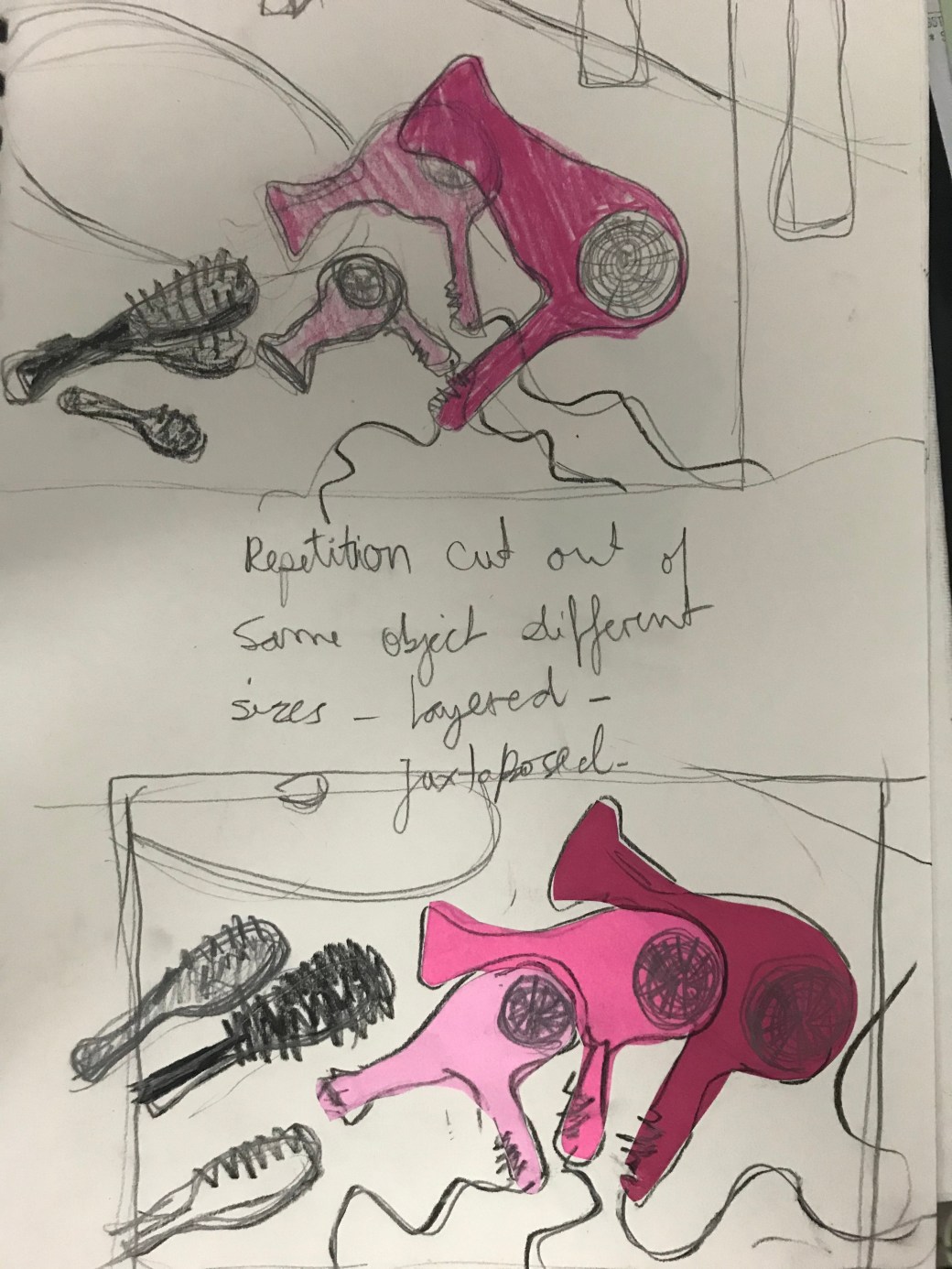
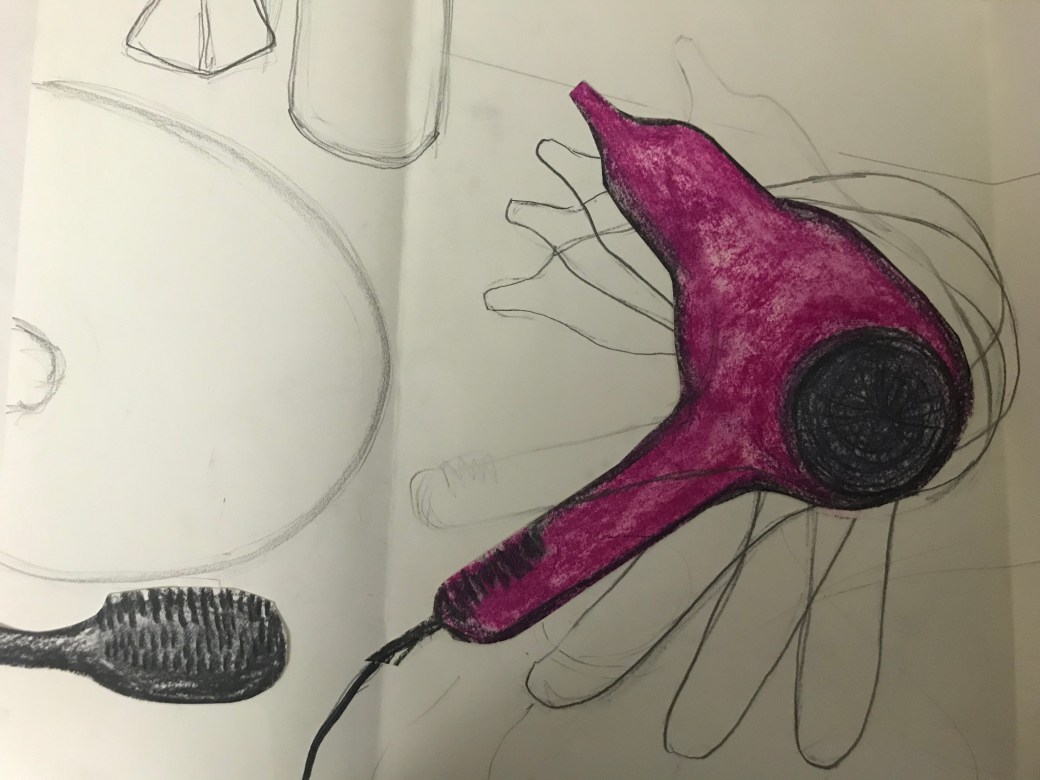
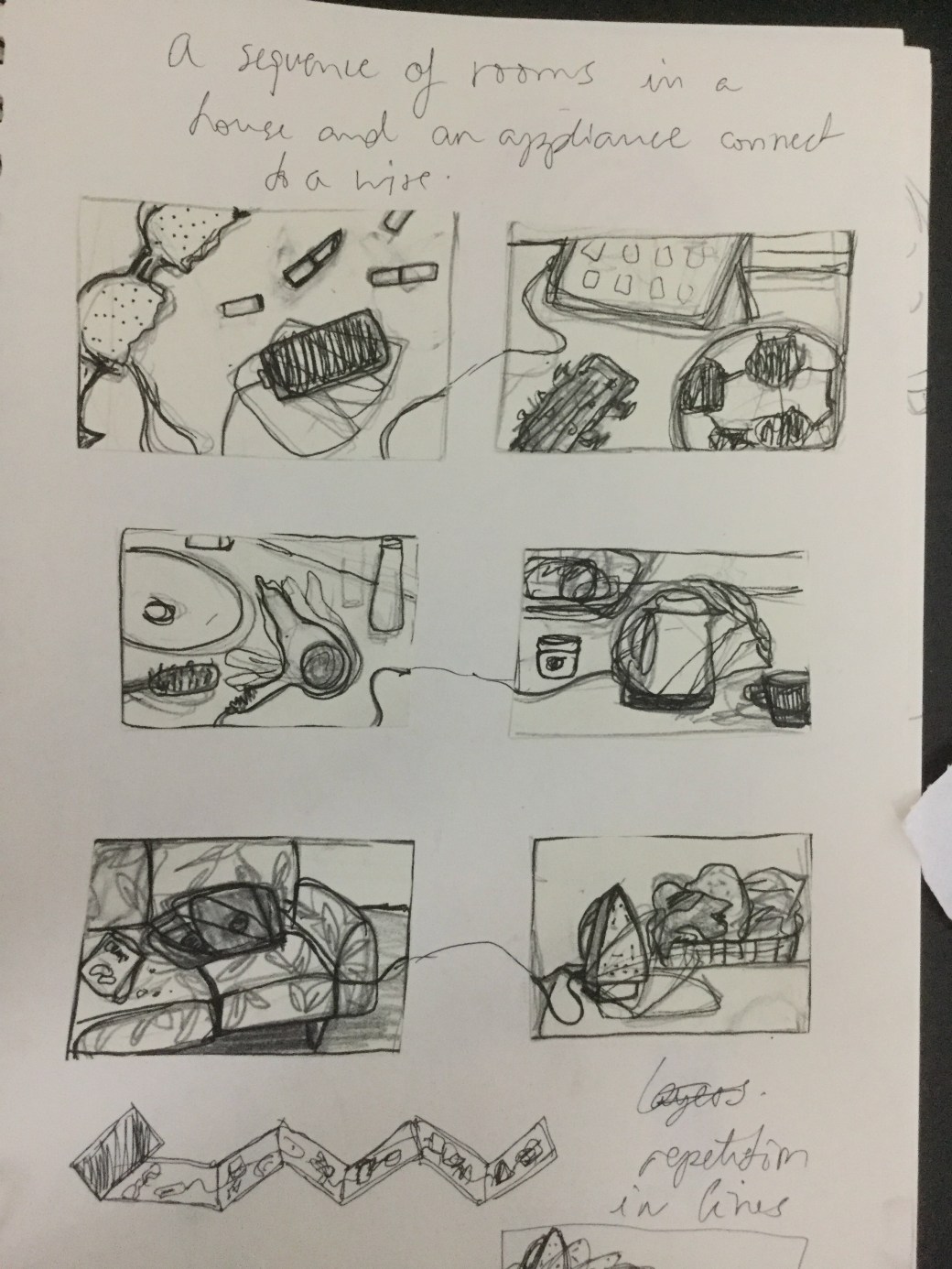
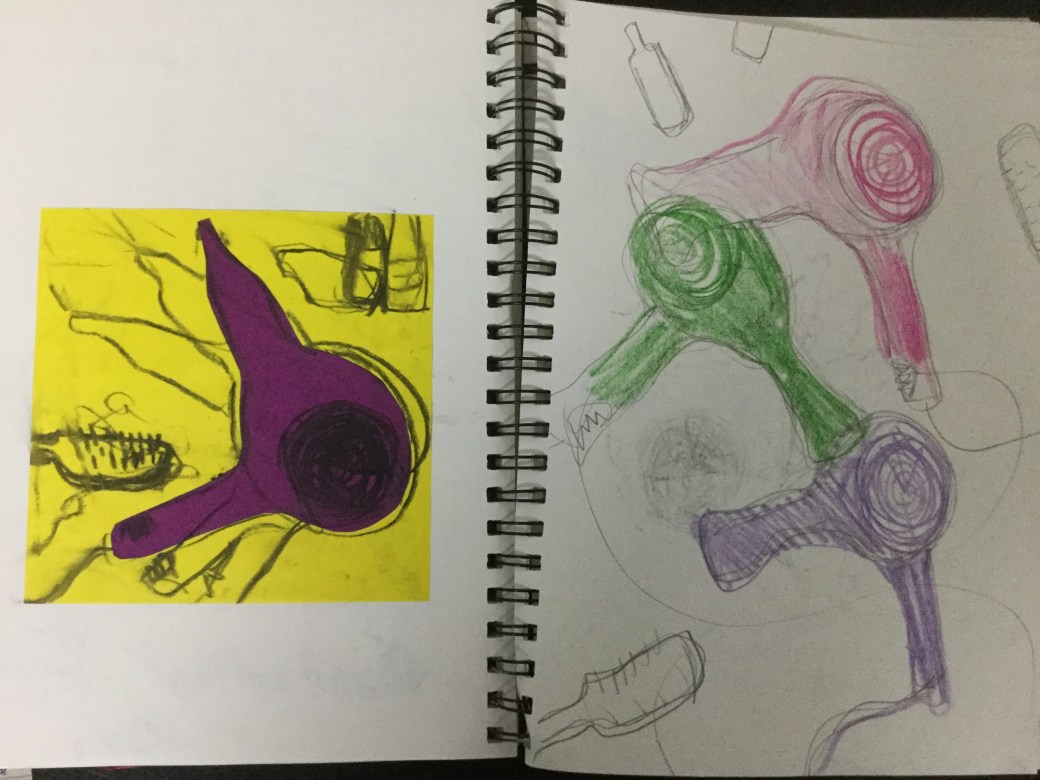
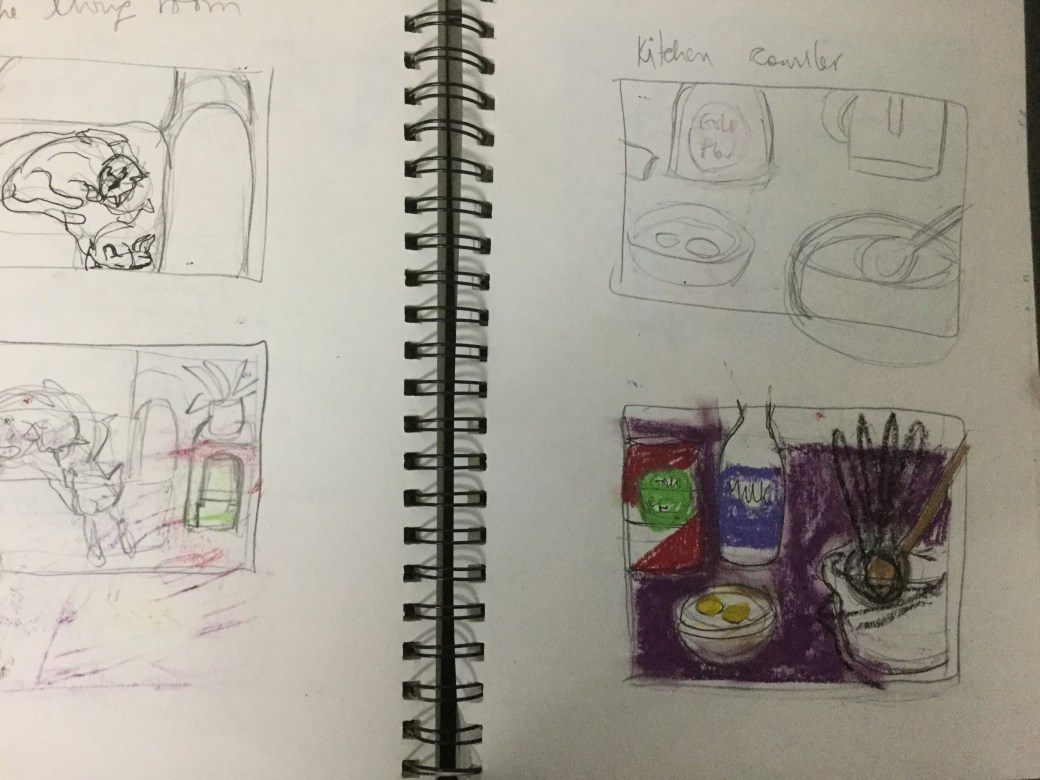
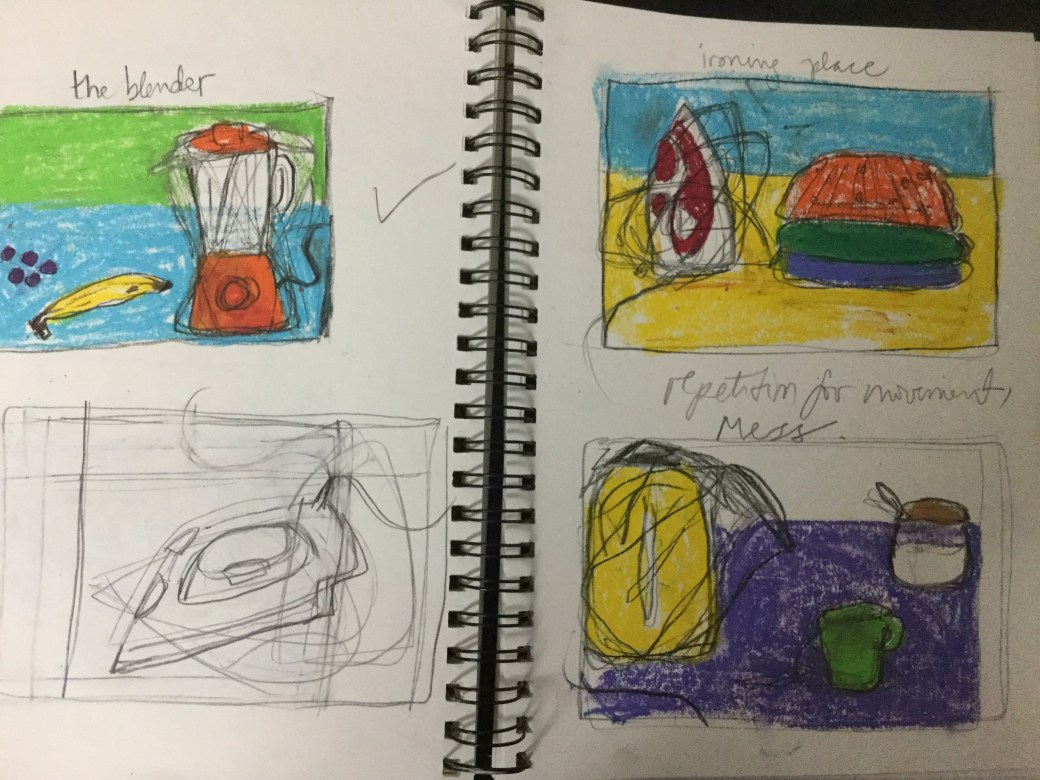
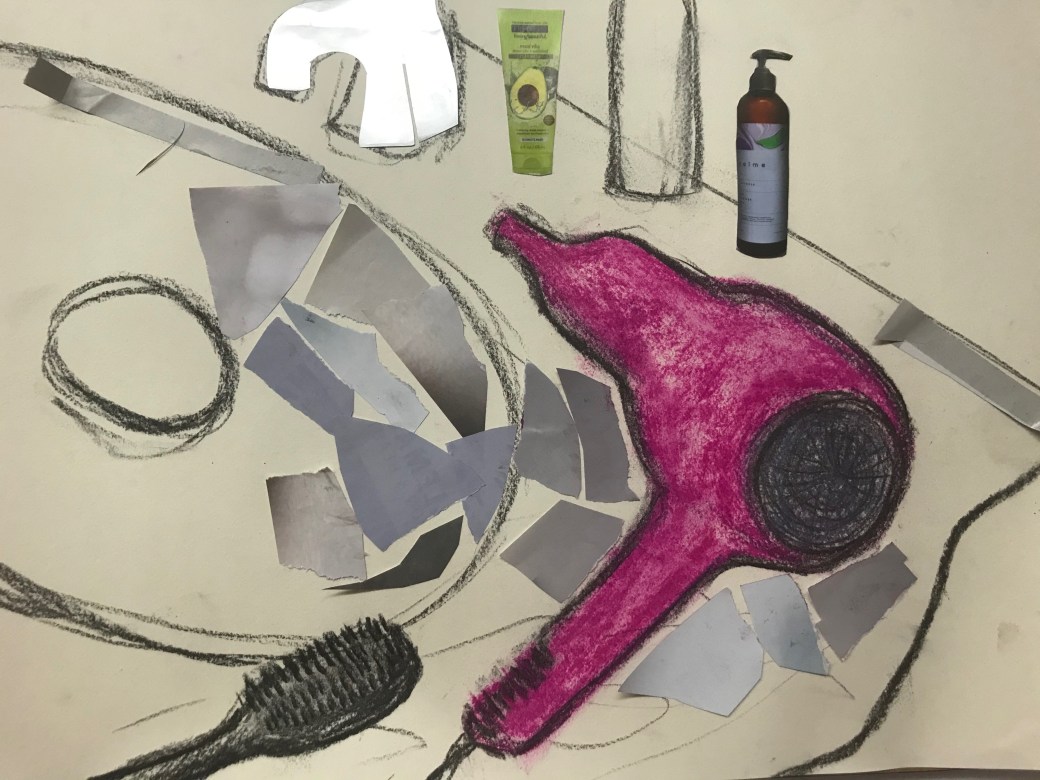
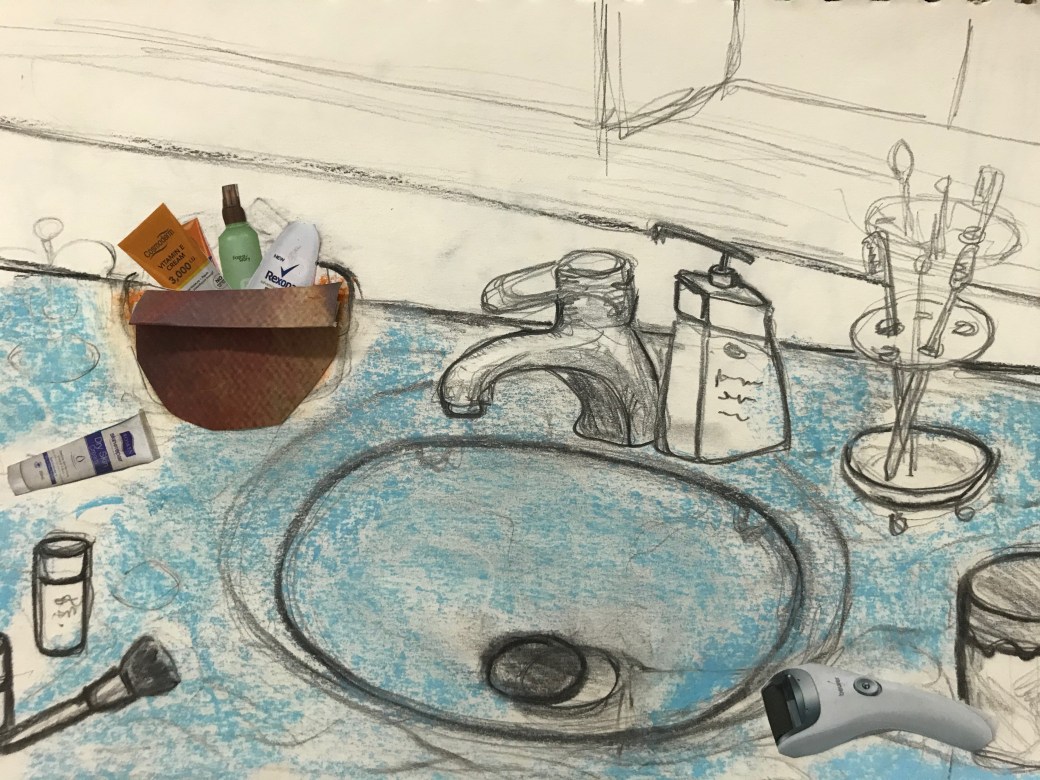
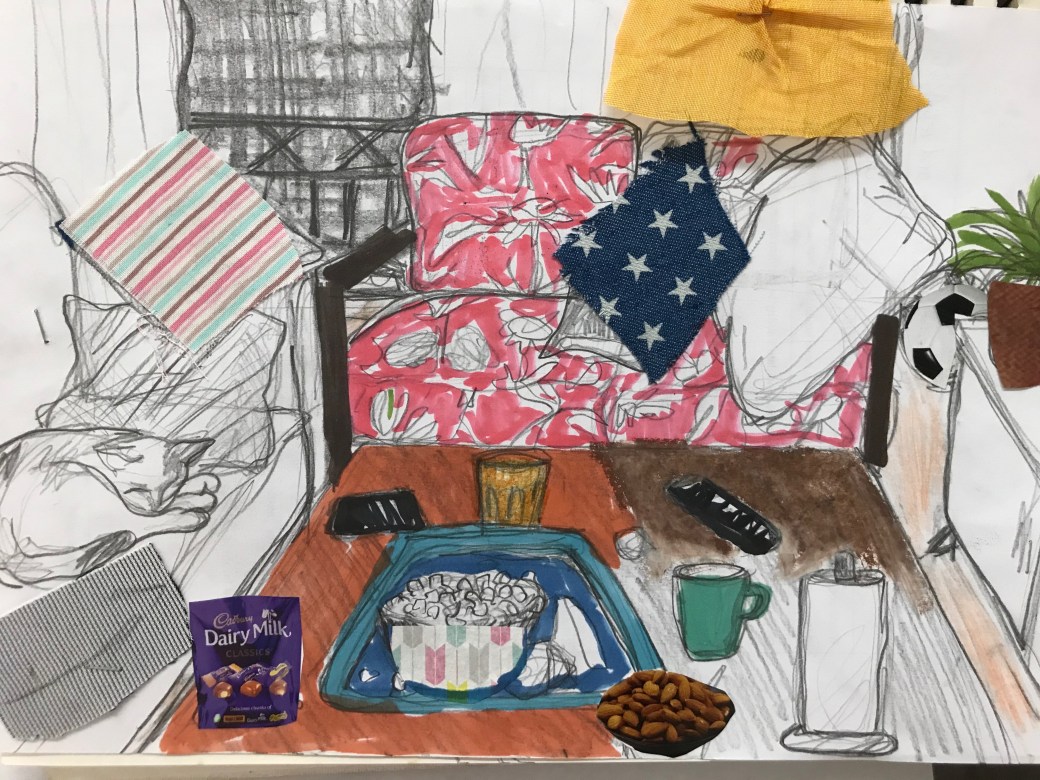
I am sketching, planning and I am still not sure what my tutor Diana Ali meant by ‘repetition’. I like the idea but is it really what I literally think is? I am sketching the same image over and over and when I decide what I like and then I will proceed to other images I have chosen for this project. I want to focus on main appliances I use in my domestic life daily : hairdryer, iron, vacuum, a mixer, kettle, laptop or a phone. I want my images to tell a little story about my home, a scene, a couple objects around, bold bright colours the movement of a chaotic and yet lovely home life. I like the lines that follow the object as if it is in movement. The repetition in tonal range might work as well but I need to ask my tutor opinion first.
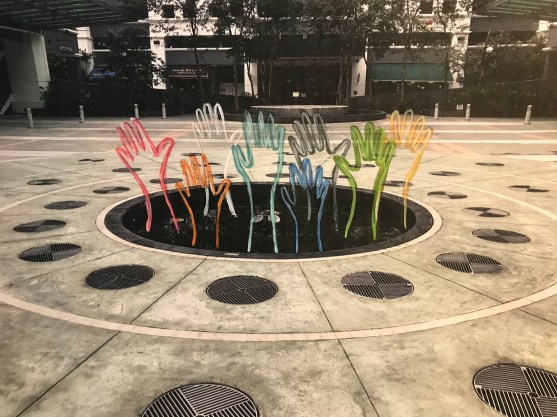
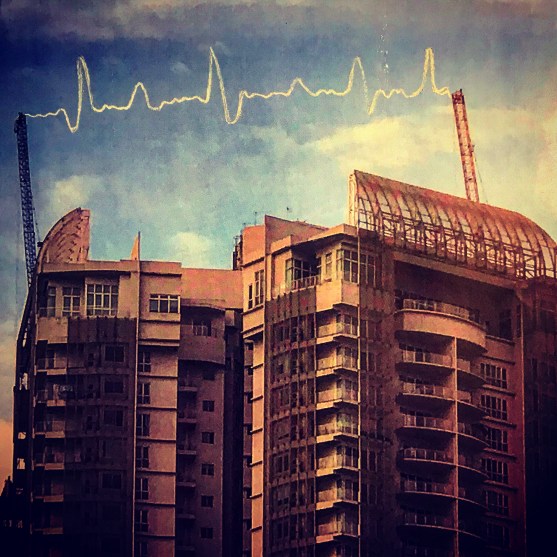
Find a place of significance to you to create a site-specific artwork. Responding to features of the site, add a drawn element or select a found drawn element which you will extend to express something you find interesting about the site. Relate your art work to your research in your log and synthesise what you’ve learned about installation and environment art with your own interests.
Trials:
Final pieces:
Reflection on Assignment four:
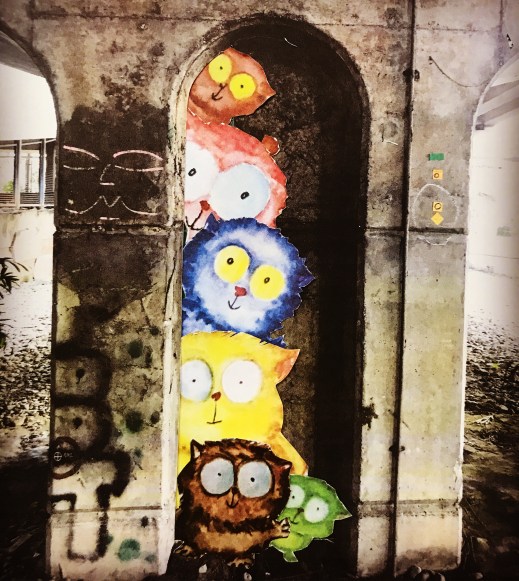
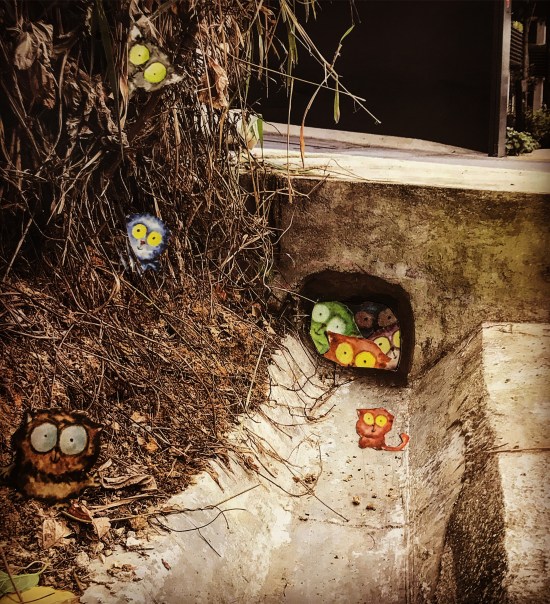
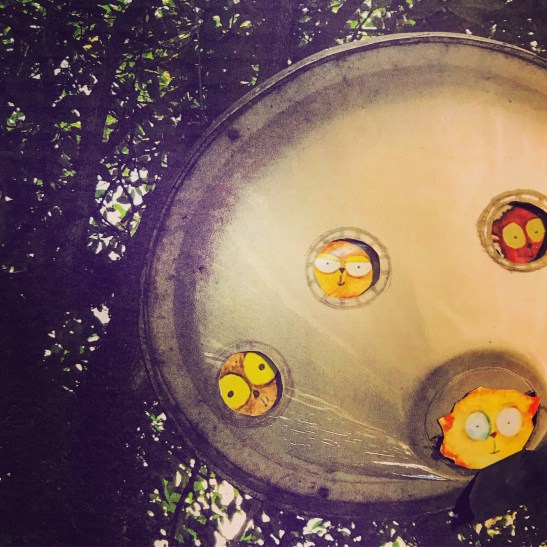
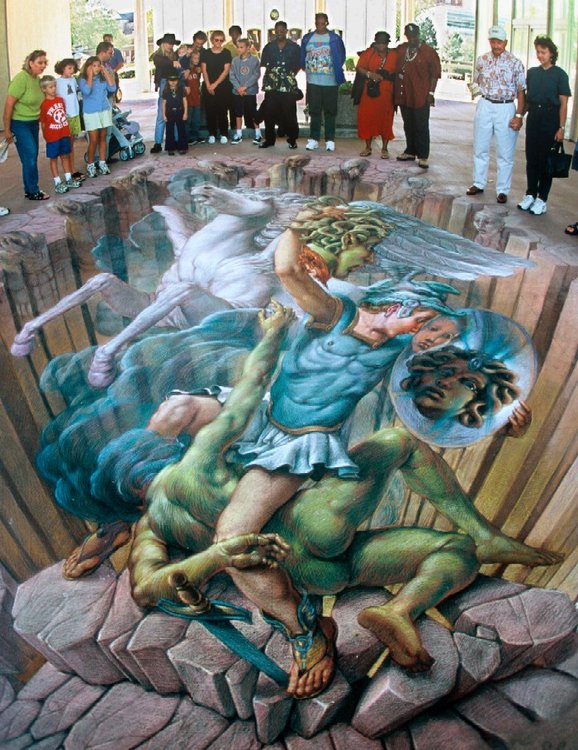
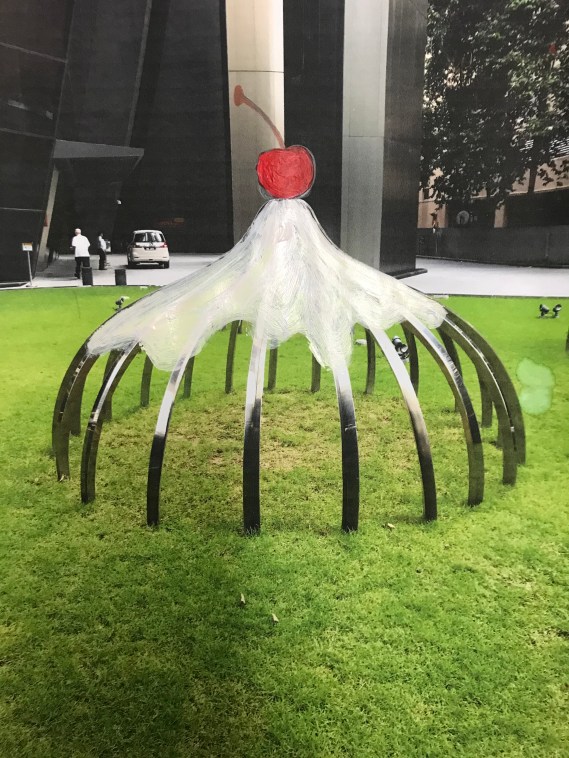
This Part was a very new experience. I find it very uncomfortable to work outdoors or look for sites I find interesting due to the weather in Southeast Asia. Project 3 (Installation) was more interesting and prepared me for this Assignment which, in the end, I really enjoyed. I was a bit apprehensive when I started going outdoors looking for sites and thinking what I wanted to find. I wanted to use my own drawings, I had a few that I really like, to interact with a real site . Using photograph and photographing places for a piece of artwork was something I have never done before. I went around my neighbourhood area and took photos of a few interesting places to work with. There are a lot of concrete surrounding the area where I live, and I wanted to add something fun or very colourful to make a contrast between the real grey world and an imaginary happy world. My favourite site was the alcove featured in one of the pillars under a flyover . As soon as I looked at it, I saw that something could be seeing on the other side of it. A secret passage or an imaginary door that would lead somewhere completely opposite of the concrete jungle around me. It is a typical urban site that pass me the feeling of being a dodgy place when it gets dark, somewhere that not many people would just hang around. I know it would be a lot easier if I had or knew how to use a drawing software, or it might be the same as it took me patience and time to cut figures, re scale images to fit the photograph, play around, photograph the images I like again and again, looking for the right time of the day and light. This experience made me think that photography is a quite fascinating practice. I enjoyed creating an image interacting an urban site with my drawings. I was inspired by the work of street artist Kurt Wenner and Edgar Mueller . I wanted to create fantasy and fun for the viewers to experience. Something to break the dulness of the concrete and make the site bright and attractive to look at. My favourite combination was adding my ‘creatures’ that I drew a long time ago for a children’s book story. They are special to me, I like how they make me giggle. They look cute and naughty at the same time as if they are always up for something.I decided to put them in other sites of photographs I took for this assignment. It is like I am telling a story. The street drain really worked well with some of them hiding behind the bushes. The least successful part I think was the one of the street lamp that I tried to makelook like a spaceship. Something didn’t quite fit like the other two images. Hand cutting just lacks that polished finishing that can be done digitally. Overall I enjoyed the process and I like the result. If I had to do anything differently I would like to learn and try to do it using any drawing software, to give it more accuracy and professional look. For instance, the shadows and layers should blend together in better ways. I think through this Assignment I gained a bit of knowledge in photography, how to see things with a different perception and how art can extend to places we live in a more ‘alive’ sort of ways. I would like to explore it more in my next pieces: the mix between photographed images and my own drawings.
Kurt Wenner is known by the artist who invented the 3D Street Art painting. He started his career as a scientific illustrator for NASA but left in 1981, sold all his belongings and moved to Italy to study figurative drawing and art from the great artists from the Renaissance. In 1991 he was commissioned to create a work of art to honor the visit of Pope John Paul II to the city of Mantua.
In the 2000’s he first introduced 3D pavement art at the Santa Barbara Museum of Art. Shortly after he founded the first street painting festival in the United States. Wenner has inspired hundreds of artists around the globe to create their own versions of street art.
He studied Anamorphism that existed in the 17th century but he created his own geometry method that he affirms is very unique from other artists.
Researches suggested on report 3: Yinka Shonibare
Yinka Shonibare MBE- ‘I’m the rebel within’ (2016) [user-generated content online] creat. TATE on 14 January 2016 at : https://youtu.be/WroXoWaGfL8 (accessed on February 2020)
Yinka Shonibare is a Nigerian- British artist who works with painting, sculptures , photography , installation and recently has been working with film and performance. Born in 1962 his working medium key is theAfrican motifs printed fabric in bright colours .Shonibare thinks artists at some point will ask themselves questions such as : What do I want to make? Where do I want to get? He describes his art as post-colonial hybrid.
Shonibare has always been a very versatile artist who changes all the time, always wanting to create something new.He produces conceptual art exploring politics, culture, history, philosophy and identity and the interrelationship between Africa and Europe. According to him these explorations broaden people’s awareness.
He states that in art school, you learn all sorts of techniques, methods and mediums . All these information can be very confusing and that is the reason he has adopt fusion in his style in art. Shonibare approaches art in a more poetic rather when didactic ways.
He founded a project in his studio in East London called “ Guest project”, which serves as a space for artists to experiment and fail. It involves around 150 artists. A platform for artistic to create their art becoming pro-active and taking ownership of where they want to take their art planning exhibitions, marketing and enterprising within themselves.
I find his art very ethic due to the use of colourful African patterns. It isbeautiful and dark ,with headless figures or globes replacing heads and a certain stillness in his installation but he also creates performance where movements describes his ideas. He definetely doesn’t limit himself to form and shape. Shonibare art is also very sophisticated usingthe colourful fabrics in colonial European outfits as a contrast of races, racism and history.Yinka Shonibare is not only an artist who creates and executesart in various ways butalso a collaborator in theart community with a project that makes art an endless cycle in life.
Micheal Readecher is a Dutch artist who works in London. Initially trained in fashion designer, he combines the traditional craft of needlework with the successful history of painting. Readecker work has many aspects of domesticity in working with fabrics, sticking and embroidery. He is a very experimental artist, using craft material and blending it with his interesting combinations of colours and imagery. I think Readecker reaches the right balance in his tonal range in his monochromatic paintings. The lighting, softness and smooth look blended with stitched details, forms simple and intriguing compositions with a touch of texture of fabric, thread or embroidery.
John Michael Craig Martin is an Irish -born (in 1941) conceptual, contemporary artist and painter. Martin grew up and studied in the United States but lives and works in London since 1966. In the late 1970′ he started line drawing of ordinary objects. His central idea in his art is the relationship and tension between objects, representation and language. In 1990′ he made a decisive shift in using bold outlines, vibrant colours in flat, clear representation. Through exacting draftsmanship, he uses composition to explore spatial relationships by juxtaposing and layering color. Martin is interested in ordinary objects and the purpose of them. He intended to abstain from style using tape to draw objects without having his own drawing style, doing it by hand and yet, it became his style. He brings out in every ordinary object the beauty and the function of it in using vibrant colours . These colours make them stand out almost as they are alive characters, but not in a cartoony way because it is elegantly traced with its real features .They as represented exactly as they are. Michael Craig Martin gives us a different perception of everyday ordinary objects most people possess, in a energetic and impacting way. His very intriguing work might be ‘Oak tree’. A glass of water placed on the shelf which in the proof of that impossibility, it also deals with language, meaning and what we created and give name in our minds. The preconception we have about material things. It questions our belief in things around us.
Elizabeth Peyton : Faces contains their time (2015) [user-generated content online] Creat. Lousiana Channel on 09 November 2015 at: https://youtu.be/3Hwl1l_j2vE (accessed on 16th Feb 2020)
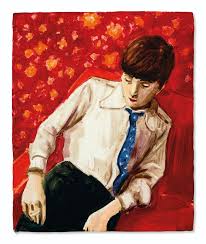
John Lennon (1965) by Elizabeth Peyton in 1990′
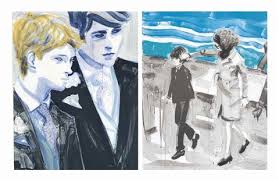
Elizabeth Peyton is an American artist born in 1965 . She is known by her small scale portraits of friends, celebrities and historical figures. Her painting has a transparency and her strokes varies from watery to deep, visible shapes and shades.She works from photography, printing or live models.
“Peyton’s portraits, distinct in their female gaze, explore contemporary concepts of identity, sexuality, and beauty using similar techniques and styles that have become de rigueur in modern fashion illustration. Men and women become elongated and androgynous, blushed with feminine hues, evolving and reviving the Romanticism of 18th and 19th century British portraiture. ” (theartstory.org)
The Paragraph above describe in specific words my first impressions of Peyton’s portraits. An androgynous and very feminine feel is one of the uniqueness in her style.
I think the differential in Peyton’s portraits is not the fact that she only portrays the subject but she puts how she feels about the subject and the time it is happening. It is not static faces,but it feels as a scene from a movie or situation we see when observing people. They are emotional and gives a sense of place and energy in the ways she uses her brush strokes, colours, lighting, angles and background. The time represented in her paintings shows our fascination for beauty in the old days to modern, social media oriented life style. The intriguing behaviour of creating intimacy with people we only know from afar.
I was so glad to hear that my Assignment 4 was successful! This part had it’s big ups and downs. Working with outdoors environment was really hard and I don’t think I did or do well. I tried my best and I still tend to take the projects explained on the module to literally. It is a difficult situation and part of long distance learning. I rely mostly on my own understanding of what I read. I am also glad that my researches went well. Diana gave me a good reminder of relating my work to the artists I have been learning about. I must keep it in mind in the next coming projects. Overall, I am really taking into consideration comments such as : take ownership of the projects, turn it around to resonate to me more. I need to lose the fear of doing something wrong! When I put all my heart in my artwork, when I draw what really gives me joy, the result tends to be a successful one. Assignment 4 proved it. Next part I will do more work per project, dig into what really inspires me, relate my work to the artists I have been searching and start defining what I want and how to present my PP.
Now that I feel I am getting somewhere with my PP, I am sketching subjects about my domestic life in a simple way, using bold colours, trying a repetition technique and I want to explore some mark making.
I don’t know yet how to balance these aspects. I am almost sure about the subject, I know the colours I want but repetition and mark making is still unsure.
I like lines, messy, overlapping, scribbled. Would it suit the composition? I like the colours flat and bright. I want the subject to be simple and clear but If I want to depict chaos, shouldn’t I draw very busy scenes???
Method: Make a drawing that realtes to its environment in a way that creates and interesting dynamic between the artwork and the space around it. Think about ways that drawings could take part in a kind of dialogue with the space they inhabit. Text might be one way, or drawn object in partnership with its real world equivalent. A drawing of flowers might be positioned behind a vase. A drawing might be used to ‘join up’ the view between two windows.
Pierrete Bloch was a Swiss French artist born in 1928 and considered one of the most renowed artist of Post-war Abstraction. She used materials such as ink, charcoal, pencil, mesh and horse hair. The description of her using ‘poor material’ could be the fact that her work is unpretentious, transmiting only the pure essence of her artistic endeveaours achieving rhythm, fluidity and simplicity. The term ‘poor’ suits her work as in modest. The choice of black and white and repetition, continuity of lines and forms depicting space and time were explored in various unique ways with materials such as horse hair,creating linear drawing or sculptures. The use of mesh on canvas gave texture and weight to one of her art pieces. Her choice of materials lend to her subject the lines and natural shape.Bloch just let the material evolved with little or no intervention in the process. Her action seems to let the material act itself and she just respond to how it appeared by applying less or more pressure when using ink, charcoal or pencil to repeat forms, shapes or lines that surged as in a dialogue like a dance or music. Her gestural creativity and free expression resulted in powerful but soft pieces, almost as if it is writing art . As an admirer of Cy Tombly’s work, Pierrete Bloch’s work brings me the similar feeling of spontaneity, simplicity, innocence and affirmation in her work.
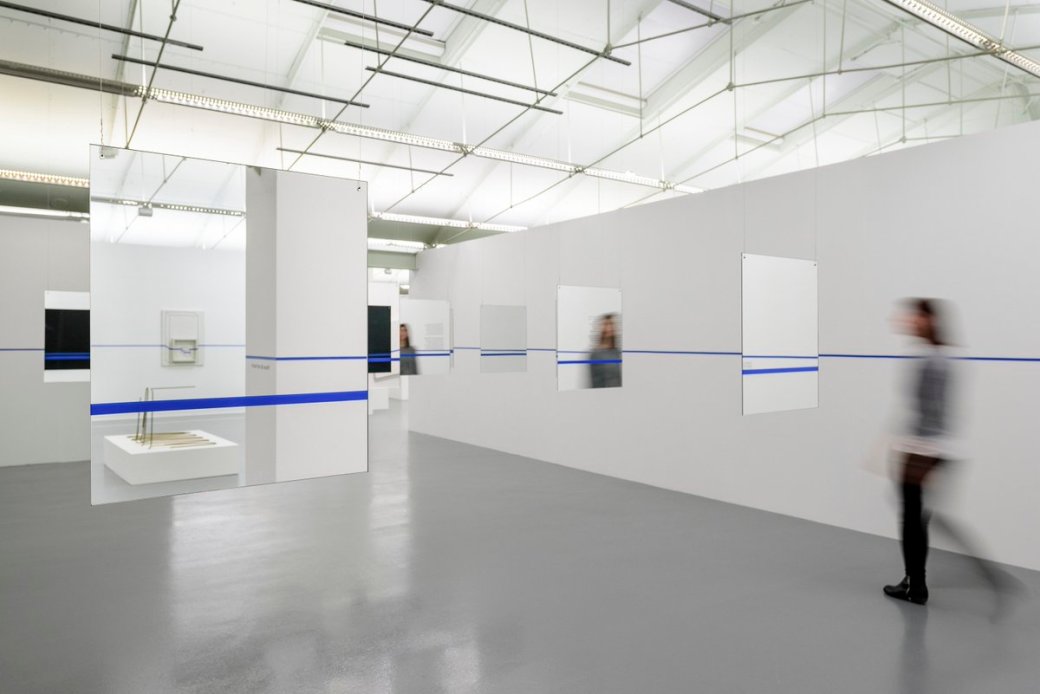
Untitled – Liverpool Tate in 2001 by Edward Krasinski
Edward Krasinski was a Polish artist born in 1925. He was also another post-war conceptual artist. Krasinski started his career as an Illustrator and after marrying an art critic he decided to dedicate himself fully to art. He started sculpultures, simple, minimalistic ones. In August 1969 he started his installations with the ‘blue tape’ and it became his trademark. He attached it on everything on his way from furnitures to places and paintings. He never had a clear explanation of the meaning for the blue tape, he let it explained itself since it became part of his installations. I think It could be related to ‘time line’, ‘continuity’ to blue veins? The viewers can decide it.
Louise Bourgeois, French -American artist born in 1911.Borgeois is known for her many sculptures, one of the biggest called Maman, measuring 30ft high and 33ft wide. Her family worked with tapestry hence the symbology of a spider representing her mother as well as meaning nurturing and protective. Borgeois always explored a variety of themes such as : domesticity and the family, sexuality and the body, death and the unconscious . The momument Maman started in 1947 as a series of ink and charcoal drawings and became a sculputure in 1996. Like most of Borgeois sculputures, they all started as sketches/drawings before becaming a 3D shaped pieces.
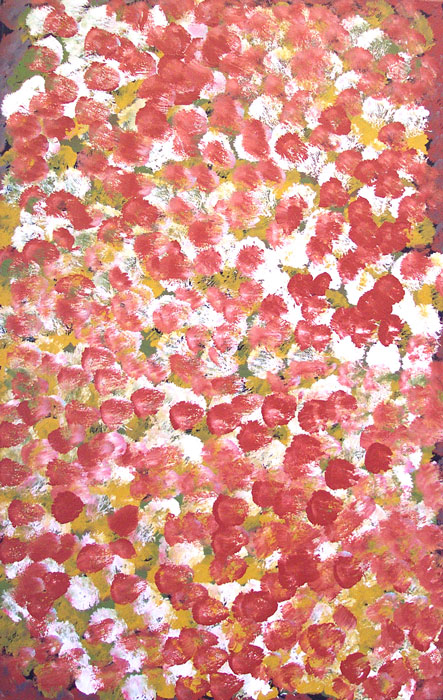
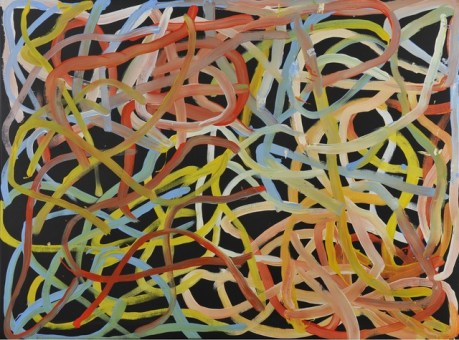
Emily Kame was an indigenous Australia painter born in 1910 in the community of Utopia in the Northern Territory. She only became famous by the time she was 80 years old. During her very short carrer as an artist, she changed her style many times. From small to bigger dots, lines,patterns and sizes. Her work is organic and cultural. It is part of her identity in her community. The use of the root ‘Yam” as theme in many of her paintings shows her connection to her people and how meaningful Yam was to them. Emily painted with her heart and soul, her work is intriguing, colourful and at the same time very harmonic. The use of black background in most of her work creates a sense of dimension almost in 3D perspective. The repetition of lines and dots are continuous as in life source of time, a time that keeps going, no ends, no drama or extreme changes in mark making. It is consistent and drags the viewer attention to wonder over it again and again. There is a fine line between her work being drawing or paintings. In my opinion they are more of paintings because of the tools she use to do it and the non planned, on the go approach, similar to Jackson Pollock, with emotional flow and letting the material works its own ways.
Reflection: The importance of place and belonging for you in your own work.
Opposite than Emily Kame, I never had consistency or cultural strength in life. I have always wanted to draw and paint as a child and was constantly pulled away from it with the affirmation that Art and being an artist could only be a hobby. I stopped drawing during my 20′ and 30′, trying to be interested in something else that would help me have a career and make money. I was brought up in a beautiful country – Brasil , with a lively and warm culture but at home I was hightly influenced by the Japanese culture. Sense of belonging is not something easy for me to define. I feel torn between the two cultures. Most of my adult life was far from my home country and now as an adult, trying to become an artist I still struggle finding my voice in Art. I have wanted to be a children’s book illustrator for so many years and it didn’t happen. I made some money being commissioned for portraits but I never had any passion for doing it. Since I start this course I have learned so much and there are so many things, styles and techniques I like but it is still not defined in my own work. Through the PP I am trying to come out with something more consistent and using my strenghts to achieve it. I definitely like bright, bold colours. I like simple but I enjoy messy and lose mark making as well. Drawing my surroundings and everyday subjects/objects I interact with is what most interest me at the moment. I think place is more important to me than belonging at the moment.
Aim: Drawing in a favourite or inspiring place can be very rewarding, but a great deal of translation goes on – in terms of scale, for example, as well as the information from other senses than the visual which is harder to convey. Creating a site-specific artwork enables the artist to manipulate the participant’s experience of the actual environment, rather than presenting a simulacrum in two dimensions for the spectator to reconstitute imaginatively, or a remnant left over from the artist’s own experience.
Method: Take a walk in a place you know well and make five different small drawn interactions in the environment using only what you find around you and your own body and without damaging any plants or animals in the process. Try to do things which will affect the way a visitor to the space would perceive it, either by directing their gaze or by changing the qualities of the place. Look at the work of Andy Goldsworthy and reflect on how he uses his own body and movements and the way he emphasises his own involvement in balance with the natural material he uses. If you prefer, you can translate this project into an urban setting, but be careful not to commit any acts of vandalism. Arm yourself with a decent camera so that you can record your work.
Reflection: Interacting with the environment
I live in a very urban environment and I do not know how I could interact with it. I don’t like it. I feel mostly comfortable and at peace confined in my home space. My outdoors space is noisy, busy and very suffocating, but I have no choice. There is nowhere I could move things around and I could not think of anything or anywhere I could make drawings. It was very frustrating. In the end I found the playground in my apartament building complex and although there is not much nature around, I managed to work with what I found. The feeling of manipulate natural objects is very good. Working with the organic, colours and shapes, using only my hands to arrange them is being part of the finished product. I wish I could have access to the woods or a bigger space with more nature around me to explore. I have experienced natural sites in the UK, Japan and Brasil. Malaysia has plenty of it but I live in the middle of the capital city of Kuala Lumpur, in an very urban area . I don’t drive and I can’t afford to go anywhere at the moment. The beach is another place that I think I could manage to do a lot. I hope I can get somewhere by the end of this module so I can add something more interesting to this project. Making art in nature can be rewarding and frustrating. Maybe depending on the space and viewers the work can be appreciated before ‘nature’ takes it away, but in the city, people don’t seem to take the time to look of what is not man made as much, they don’t appreciate or look after their environment . The flower I made in the playground was quite big scale and took me nearly an hour. The problem working outdoors here is because it is very hot and humid with mosquitoes pestering you all the time. I like my finished product and after taking the photos I sat in a bench thinking about what else around me I could use to create a new drawing. Two kids came straight after and although the comment of one of them was nice : Look! it is a flower made with different coloured leaves! They soon decided to just step and kick it, with the parent nearby who could at least motivate them to appreciate it a bit more or maybe even having a go doing something…. but he was too busy on the phone.Sad times of the urban modern days.
We share a connection with Stone ( 2011) – TATE shots [user generated content online] creat. Tate on 01 december 2011 at: https://youtu.be/9DjCMqtJr0Q (accessed in February 2020)
Andy Goldsworthy is a British sculptor , photographer and environmentalist who works with natural material in natural and urban settings. He arrange and rearrange things such as flowers, twigs, stones, wood and mud in almost a poetic way. His concept is mostly about nature, us as part of it and the inevitable death and decay as part of the life cycle. His art has a minimalist aesthetic aspect in simple motifs includying circles, snaking lines, spirals and holes. The passage of time and eventual dissolution is central to Goldsworthy work. He rejects the idea of art as a commodity to be exhibited and sold. He is interested in the social history of the land on which he is working and that includes its human population. he feels it is important to acknowledge the site’s history and the various connection with the people from that land. I think Andy Goldsworthy work is a very organic and draw attention to environmental preservation and protection. He shows the need of making and release his own art as almost a religious believe in creating and let nature take care of it. Goldsworthy’s ideas and projects play a very important role of art bringing awareness about our endangered enviroment these days and raise a new generation of spectators and artists to work towards valueing and preserve natural sites for the generations to come. Being a participant in the process of making art like he does is the essence of his work.
Aim: The aim of this exercise is to open up your mind to new possibilites in terms of understanding what line can be. So often, nature does it better. This is your chance to go out and look at how drawings reflect life, and at life drawings in the observed world.
Method: Lool for natural processes that produce a drawing, for example the opening of the gilss of a mushroom to release its spores, the droppping of lily pollen, anumals scratching agains trees or fooprints in wed mud. Even the sillhouette of tree brnaches against the sky can be read as a drawing. Coolect photos and sketches of nature’s drawings. If you prefer, you can do the same thing for industrial or urban processes.
Sketches for project 1
Reflection: Found Images
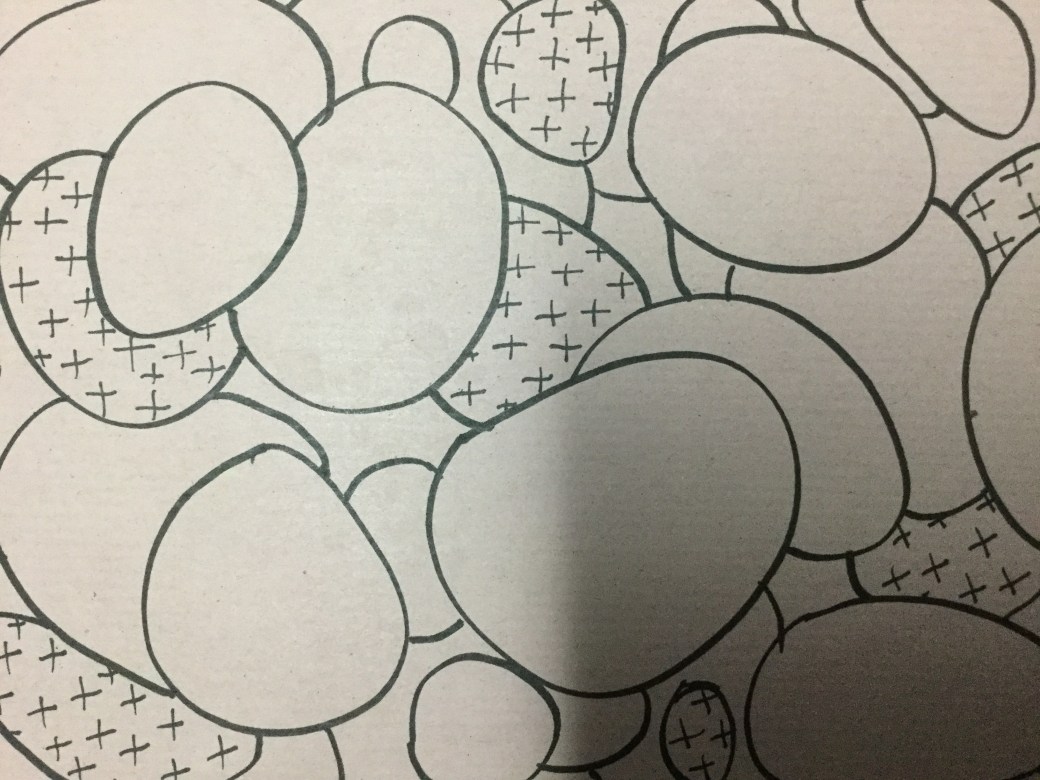
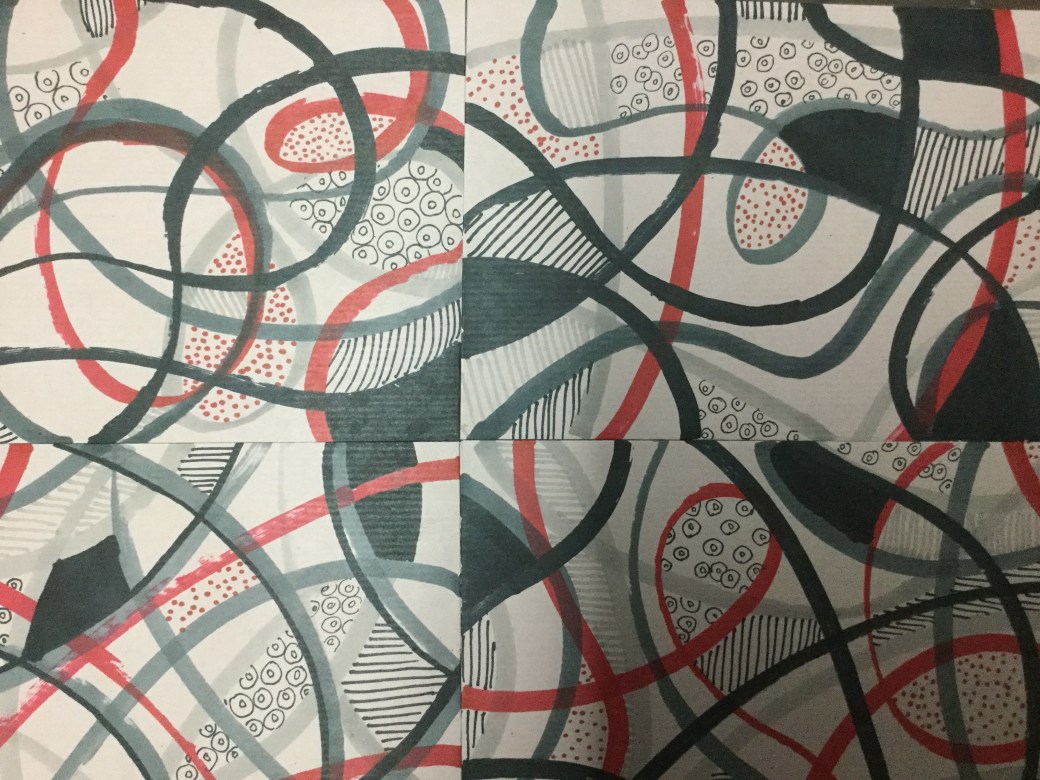
I liked the the photos of the three branches intersections, the ropes and the shadows of lines. I find interesting when lines crosses and between curvy and straight ones. I sketched some found images, but the fine branches, thick and thin, curvy and crossing in many directions were the one that I wanted to took for further drawings. I also played with a bunch of stones near a water fountain in the restaurant a visited a couple weeks ago, I didn’t take any photos but the result are these drawing of stones and branches.
‘Stones’ on A5 manila coloured envelope
‘Branches’ a panel of four A5 coloured manila envelopes
In the video session with my tutor Diana Ali, we discussed what could be the next steps to start developing my ideas further for the Parallel Project and start finding my voice in my art. I still don’t feel very confident. I am not sure I know what is my voice and if I am ready to define it through this project. I have so many ideas, I like so many ways of working, painting and drawings but right now I am experimenting, investigating and exploring so much I feel overwhelmed. I enjoyed my drawing with sewing materials, Diana thinks it is a bit tamed and she is right. I enjoyed the process but there is something not spontaneous about it and I want my art lose, spontaneous and with a dramatic but natural flow. I know when I draw something and it is ‘me’ in there. There are many things we discussed and she suggested a few things and gave me tips. I took notes but I am still a bit confused in how to present the project. The key idea for this project is : the different rooms of a home and I want to represent it between the pleasure of seen that room functioning with all the chaos that can happen. Diana said it is important to keep in mind the criteria of: technique, creativity and inventiveness . Through what she has seen now it is true that I like flat, bold colours, expressive lines and details. I need to select now some of drawing and practise how I could present it in the project. I need to keep it simple, be careful with my colours scheme, chose a technique and try to add more sophistication to it. I am working on a bathroom and living roon image. I have a couple images and Diana suggested if I could apply layers to it or repetition. I will try!
Aim: Push the concept of marks as a tracery of movement to its logical conclusion by making marks incidental to your own movement.
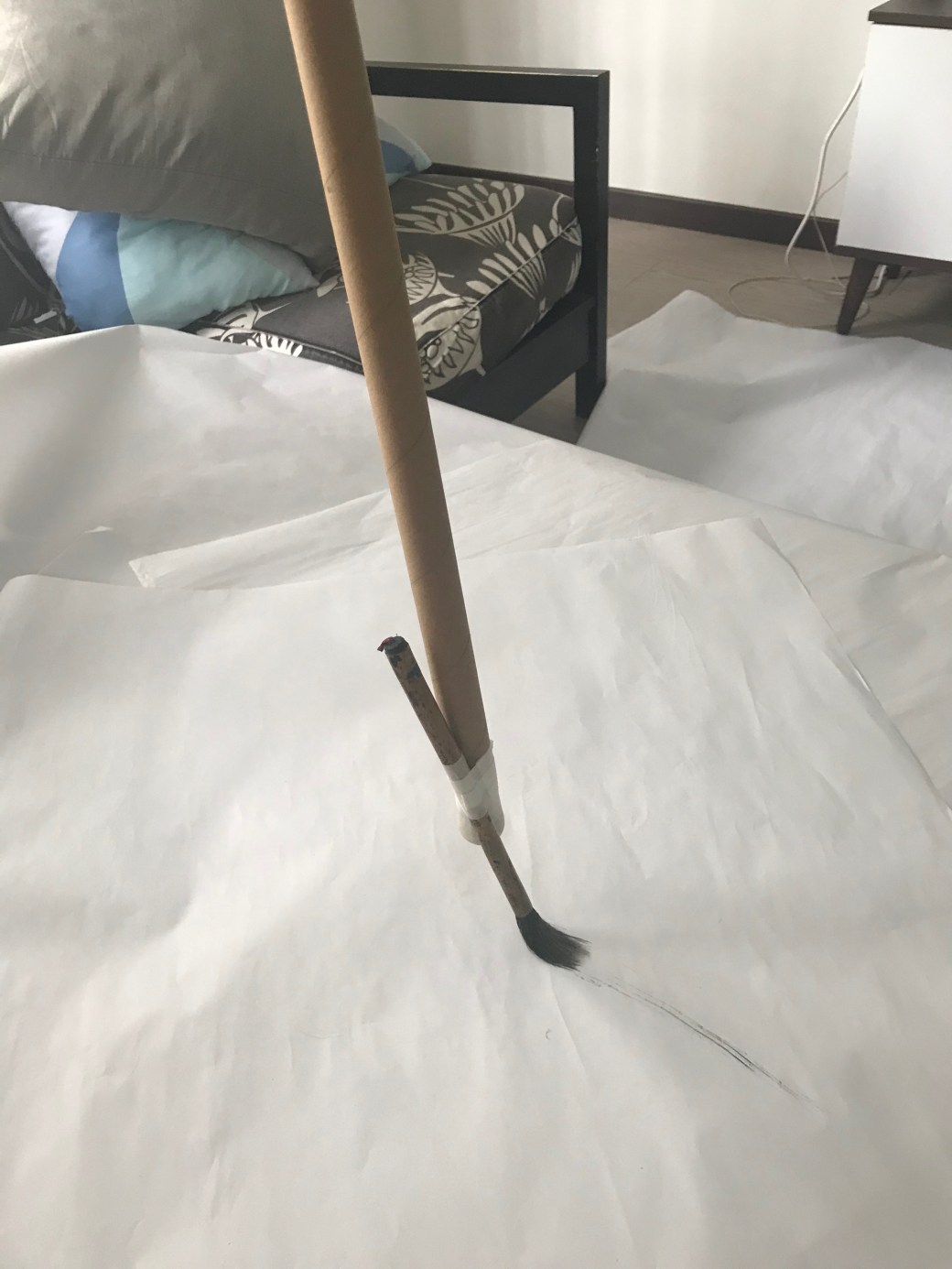
Method: Find something which moves and attach a drawing medium to it so that it creates a drawing by itself. You might use a remote control car, a clock face, a door which is opened regularly. Develop this automatic drawings using source from from your sketchbook or simply by responding to what you find as you experiment. Not carefully what happens when youshift the drawing from automatically produced marks to considered ones.
Rebecca Horn more than showing and constructing her drawing machines, she is also a performer and a video and installation artist. Her work explores and experiment with almost all senses using sounds, textures, vision and even smell. Works such as ‘Pencil mask’ in 1972 and ‘Fingers Extensions’ in 1974 explore mark marking with tools that extends from the body, where the human act has no much control of the outcome artwork. Through experimenting ways of drawing with a variety of materials and constructing machines to do so, her work includes the performance of drawing concepts. I think Rebecca Horn shows certainty in her ideas, she shows the possibilities that leads to different levels of drawings. Maybe her work with ‘drawing machines’ intended to explore the human ability of losing control of something they had so much control constructing but when in action it acts itself , and the results are to be contemplated and to be accepted. Another reason could be the fact that due to the ilness in her young age, she was unable to leave the hospital bed and felt very lonely. Drawing machines came from many ideas she had while there, uncapable of express herself using her body freely. It resulted in creating extensions of her body to reach out what she couldn’t at the time. A way of connecting through that extensions. Her work although using machines is very emotional.
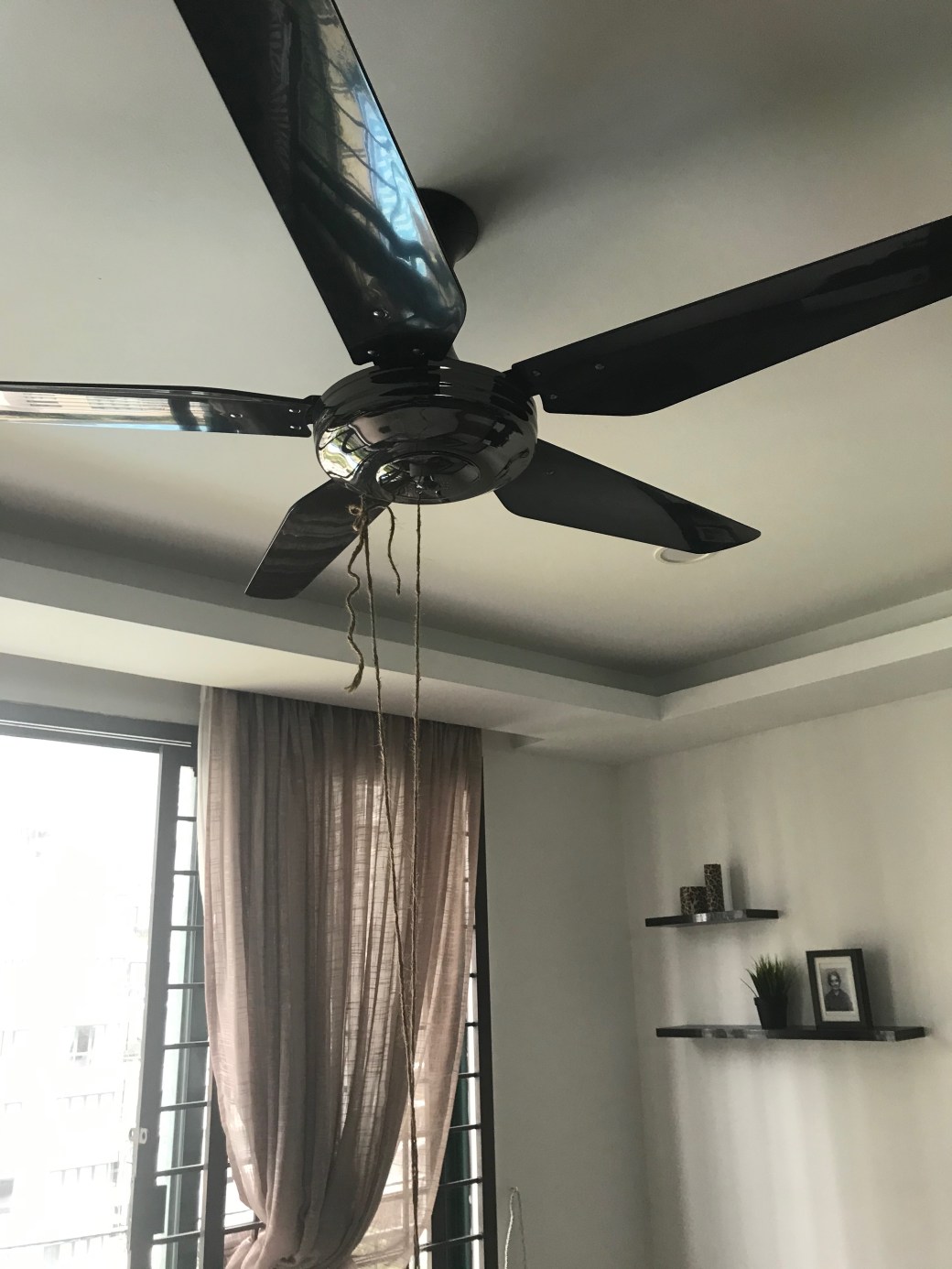
Trying to construct my own drawing machine took imagination, planning, trial and finally action. The most focused part of it is investigating my idea, looking for tools to construct it, put all the tools into place, test and get ready to experiment. The outcome of it was simply watch it, being suprised by the result, accept the outcome without interfering with it. I think my experiment was very basic and simple. It gave me just a little bit of insight in what Rebecca Horn does. I enjoyed reading about her work and exploring her method in my own way. I still like the feeling of my hands and fingers on the paper/canvas when I draw. I am not a technical person, I am not interested and not skilful at all in inventing or constructing machines. My joy comes from the organic, the mess, the feeling drawing and painting gives me in a more unplanned and natural way.
Aim: This project is in some ways the antithesis of the previous one. last time, you used an object to draw ‘for’ you; this time you will allow your own emotional responses to direct your physical mark-making.
Method: Take 10 pieces of card and give them to friends. Ask them to write down a characteristic of someone in a novel or newspaper article in the first person. Ask them to choose something which might engender an emotional or physical response. Examples might be ‘I killed 15 women’ or ‘I won the lottery’ or ‘ I feel nervous at parties’.
Ask someone to sit for you as a model. Every 10 minutes ask them to read from one of the cards. If you don’t have access to a model, make a self portrait or simply imbue another object, chair perhaps – with these qualities.
Cards sentences:
I am getting old and no one wants to marry me anymore
Follow me if you are a good one!
Who wants money?? I will give you a lot money!!!
Don’t use your bedroom for work unless you are a prostitute
I am going to have a baby!!
I like to eat human flesh even though I know it is wrong
I won the lottery today!!
I killed my baby!!
I am not afraid of death but I am in no hurry to die
I turned myself into a fly and I can’t turn it back now
Reflection : An emotional response
I am usually very emotional when it comes to make art. What I draw, how I draw and the colours I use is a reflection of how I am feeling. This exercise I thought would be a very natural thing to me. Sometimes, I would pick up a card and nothing would change the way I was drawing my self portrait. Sometimes, depending on what card I picked up, I really tried to feel the meaning of the sentence and it triggered in me, feelings and I wanted to express on my portrait. The first thing that came out when a feeling arised was to use my hands. It definetely expresses a lot of how the sentence affected me. I tried to respond with a facial expressions as well , which changed many times during the exercise. I can easly emotionally respond my state of mind on my mark making. I let it flow, I let my hands take its course and the result I think could be quite interesting. I think my cards sayings did not have a big impact in me, except the ones: ‘ I eat human flesh and I killed my baby’. My emotional reaction when I am drawing can’t be predicted, it comes without a warning, feeling and emotions just appears when I least expected and it can be seen in some of my art. This project made me feel mechanical and was not natural as I read instructions before performing it. I couldn’t let it naturally flow because I knew how it supposed to be conducted. This project could be great if I could just send an emotional response I had in a few pieces of artwork I have done the last year. Drawings I did in the middle of the night, or anytime when I was feeling sad, angry or frustrated for any reason. I think the objective is the same but the result is more real.
Contextual focus point: Erade De Kooning
Erased De Kooning – 1953 by Robert Rauschenberg
Looking at the piece online is tricky. I definetely cannot see the marks of the erased drawing and I am sure there are some. Nevertheless, it is a difficult piece to express any feelings to be honest. After researching about Robert Rauschenberg’s reason to Erase a De Kooning it then started to make more sense. First it is important to consider the time it happened: 1953. Abstract Expressionism came during a period of political instability in Europe and America was suffering culturally and economically. Abstract Expressionism dealt with that time, depicting emotions, abstraction,experimentation, exploring the subconscious .Robert Rauschenberg was a painter and sculptor and in 1951 he started a series of monochromatic painting called : ‘white paintings’ – basically canvas completely covered in white. Between 1952-1954 he worked on ‘Black paintings ‘ and then ‘red paintings’. “Erased De Kooning” in my opinion was an extension of what he was creating at the time. Rauschenberg was a conceptual/experimental artist, his project was clearly explained to De Kooning who surprisingly agreed with it. Opposite that what might could sound an act of ‘vandalism’ or ‘an scandal’ at the time, Rauschenberg needed a piece from someone that even if he erased , it would continue to be a piece of art. The drawing De Kooning gave to Rauschenberg was done in charcoal, oil painting and pencil and it took him a month to erased everything. It could be said he really worked on it. I think this work was a collaboration art and what Robert Rauschenberg did was ahead of his time because today, art is accepted in all shapes, forms and concepts.
Relaxing Classical Cello music solo soothing, instrumental background [user generated content online] creat. Frank Graffney on 7 june 2017 ( Accessed on 6 Jan 2020) at: https://youtu.be/XuSEl9OiQ_Y
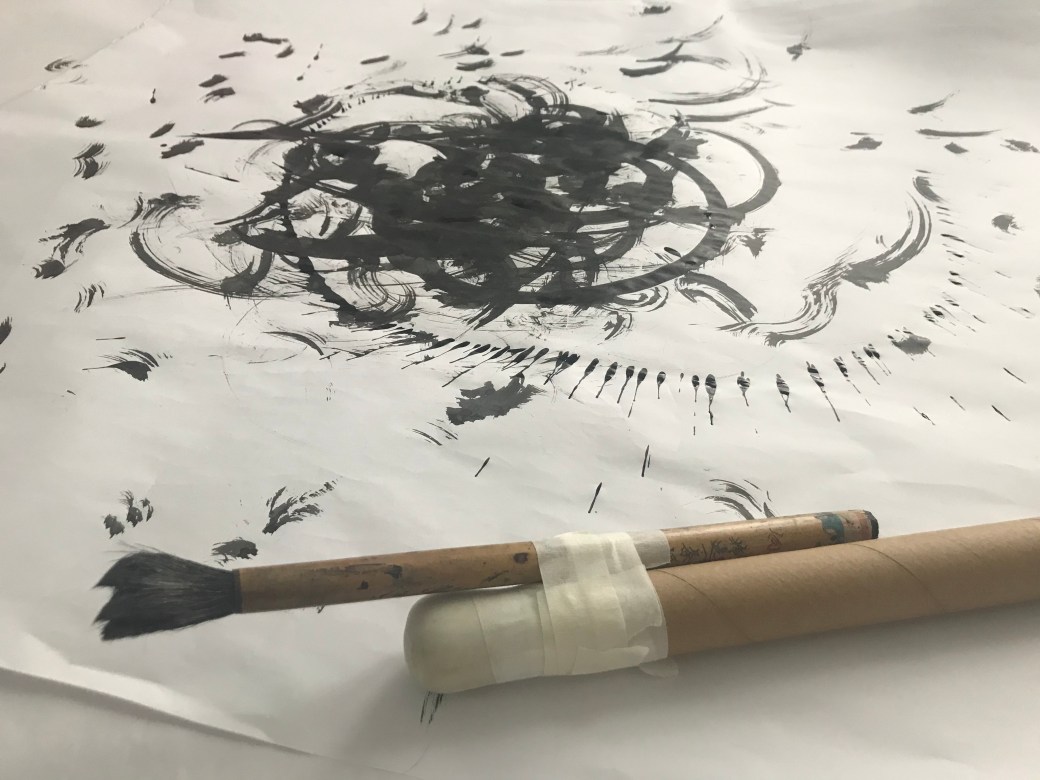
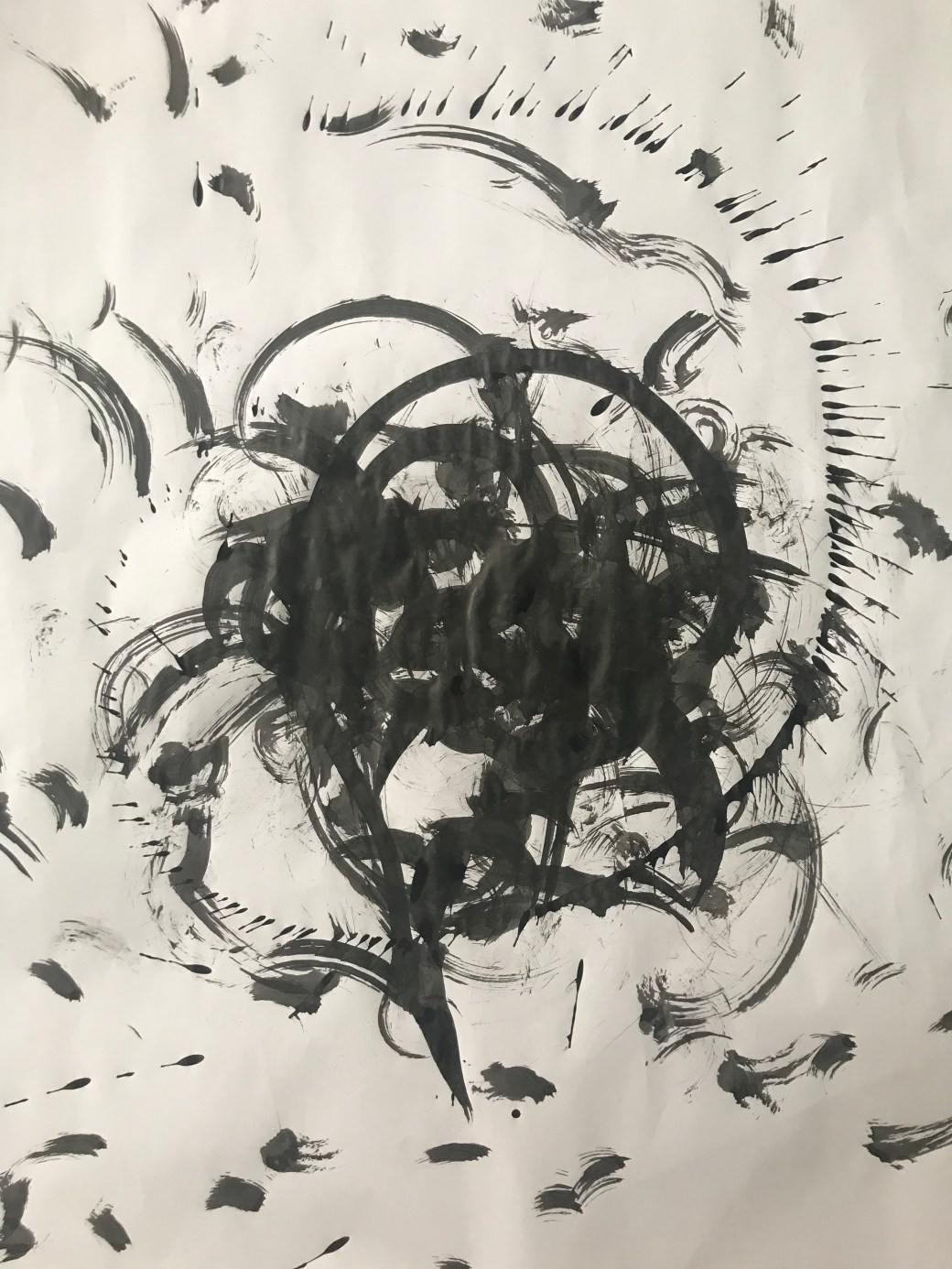
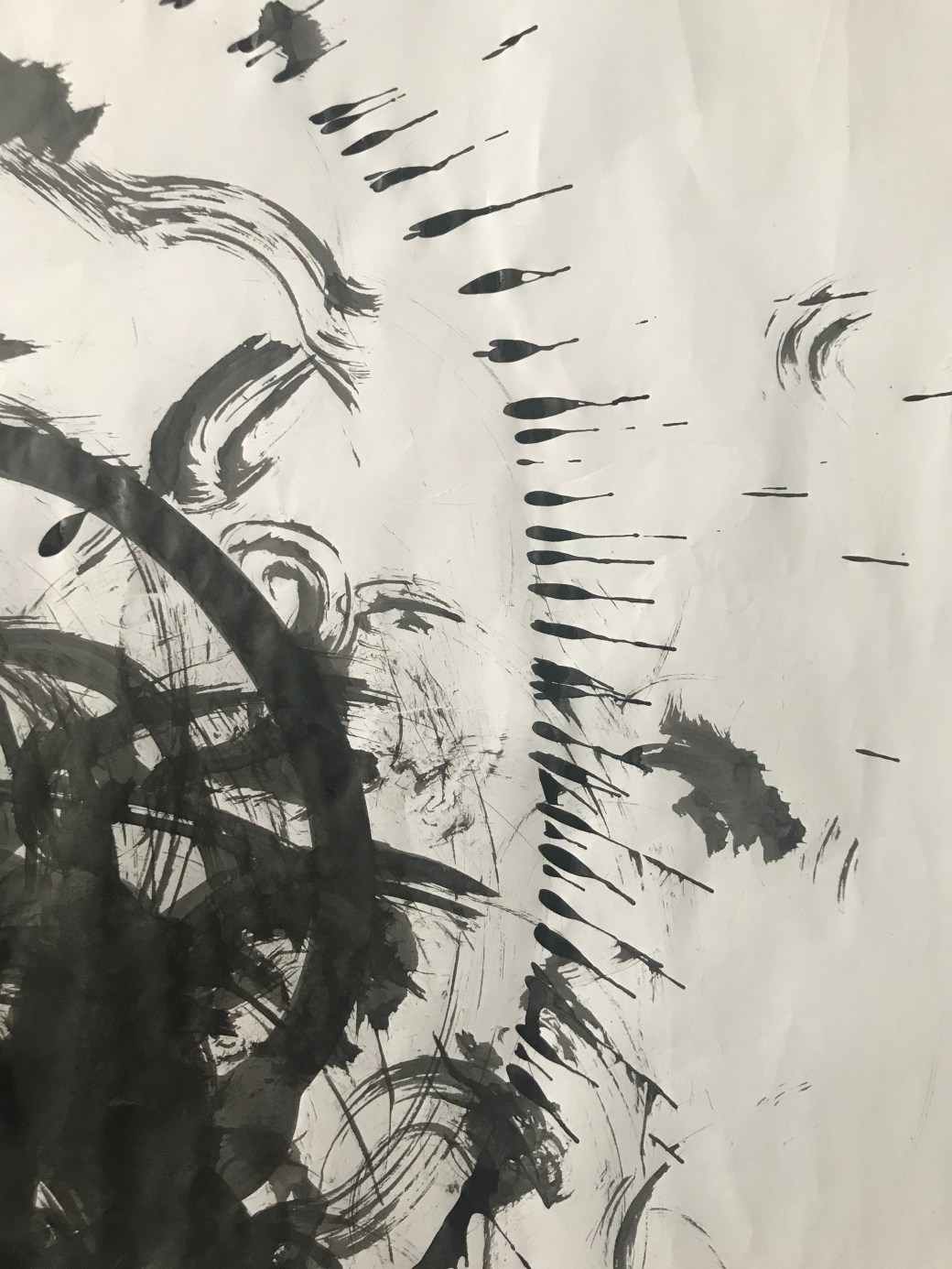
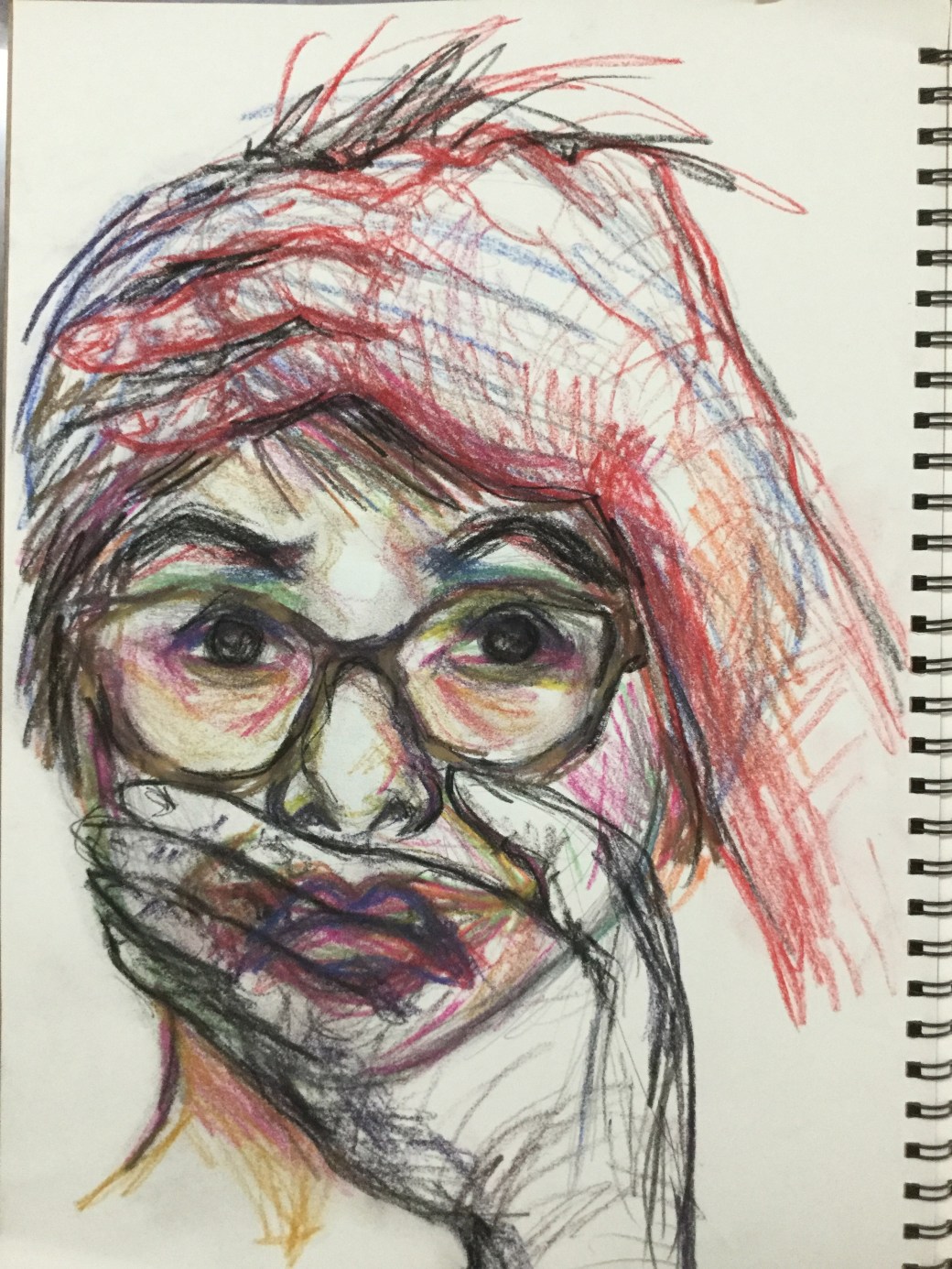
Select a piece of music and allow your movements to be affected or generated by it whilst producing a drawing. To begin with produce lines and marks solely in response to the music. After, develop this further. For example, you could introduce an observational element such as a self-portraiture and begin to explore the interplay between gesture and representation.
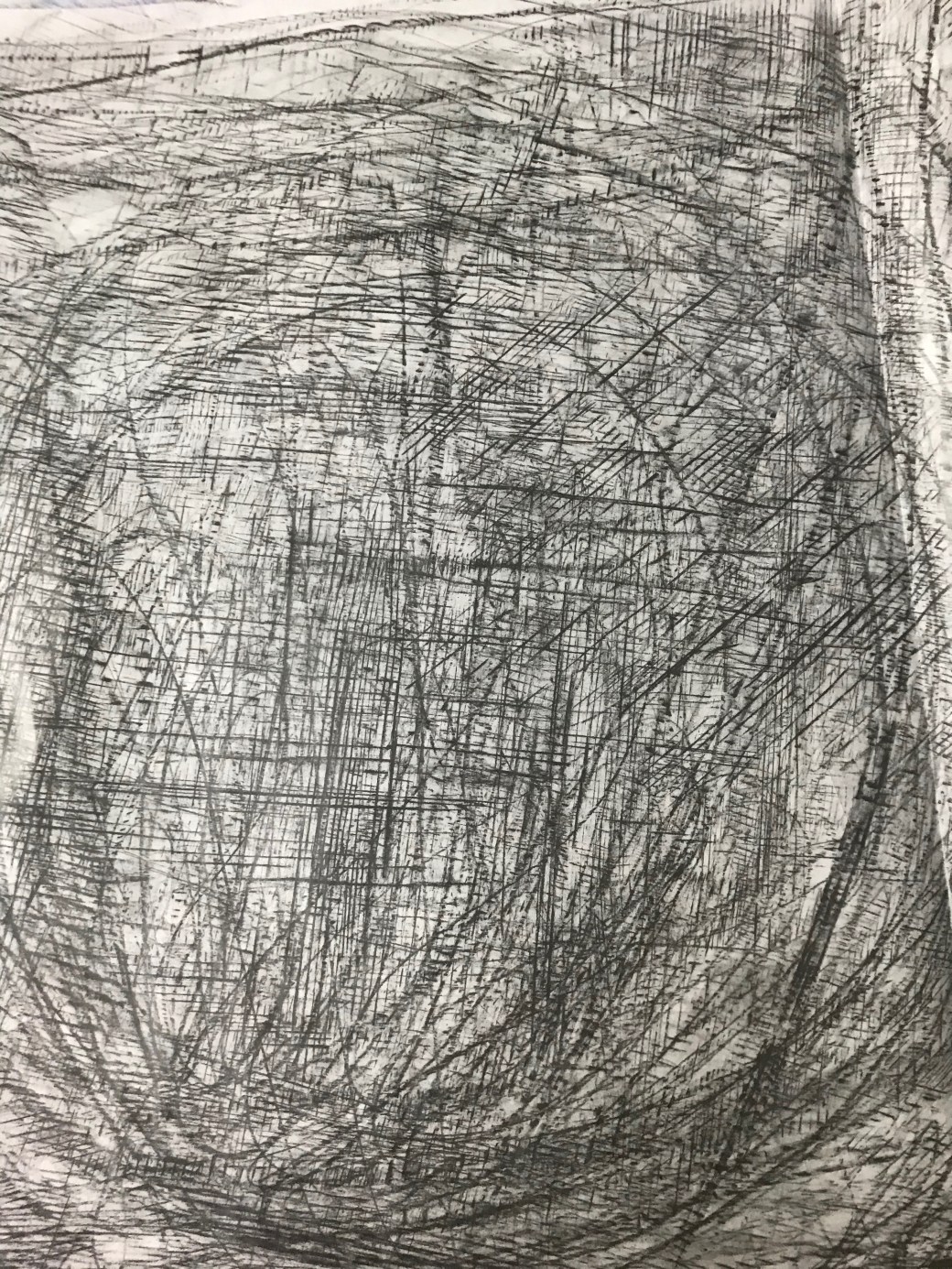
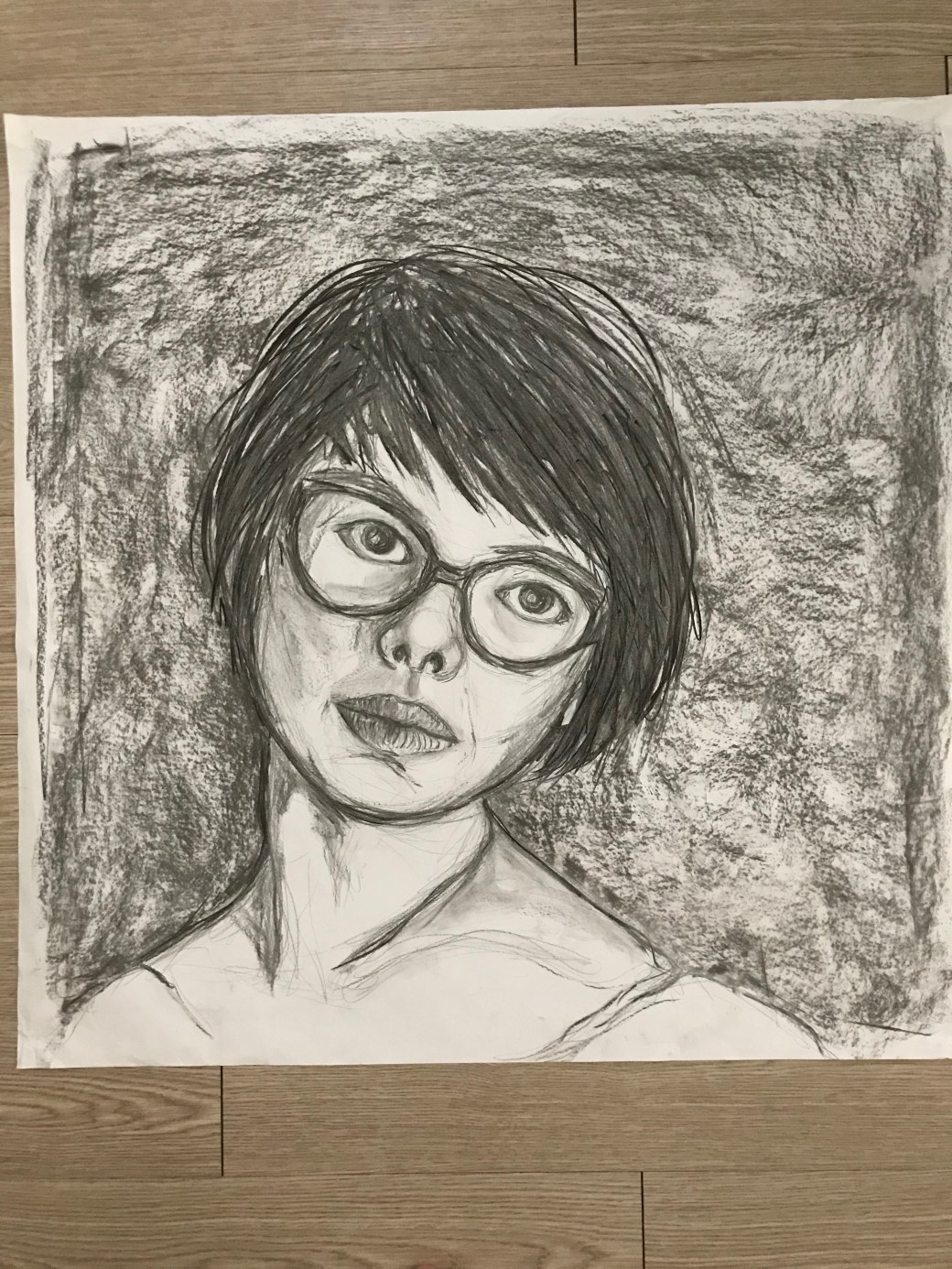
Preparatory work piece and final piece :
Reflection: Assignment three
I have tried a few times to get inspired by listening to music. I usually like to make unconscious drawing listening to instrumental music, and the result has been always very dramatic and emotional. When I work this way I even try to close my eyes times to times, to just have my hands moving according to the rhythm. Through Part Three I had explored and experienced new ways to approach drawing. In Drawing blind, I had a lot fluidity and spontaneity, probably because with my eyes closed I can’t control how the marks will affect the final drawing. Experimenting with mark-making is something I always wanted to explore as I am very keen on big scale pieces. I also enjoy losing control when the scale is large and I just have to let the media finish the job itself without worrying with small details. Drawing machines was my least favorite but taught me again to experiment something out of my control and made me think of drawing in a very unsual wasy. An emotional response was difficult for me to let flow . Reading the sentences and knowing the intention of the outcome for the exercise, blocked my fluidity and spontaineity. I think Assignment three was just another step to investigate how my drawings changes according to the approach, methods, techniques and materials I use. My self-portraiture for this assignment is far from being accurate. It is a bit out of proportion and maybe a bit stiff, but my mark making, can tell there was afair amount of movements when it was done. I think the fact that I chose to introduce the observational element and at the same time kept my natural flow, influenced in how I portrayed myself. The mark-making has flow and emotion but the image itself is static as I found it is hard to let it flow and observe at the same time. I think my preparatory exercise describes more the rhythm and movement .During the exercise I focused on the music and drawing was a secondary act. When I did the self portrait I was trying to concentrate in representing my own image without losing those movements, and that became a bit difficult and less unconscious. I would like to find out how to draw an abstract object, figure, observing but also letting the flow of mark making taking over.
Overall, part three gave me the ability to extend the possibilities of drawing. In project one, ‘Drawing blind’ I could feel in a similar way that the artist William Anastasi act in his ‘Blind drawings’ the only difference is that he didn’t try to describe anything by touching. Project 2, ‘Mark-making gave me a slightest taste of what Rebecca Horn tried in Her work ‘Fingers’ 1974 when she drew with gloves attached to sticks to elongate her fingers. Project three, Drawing machine was also a trial on how she built and connect the act of drawing with machines. I think in the Assignment I had my perception of drawing changed and my senses were more stimulated and acted, consciously versus unconsciously in what I was doing, using my feelings influenced by what I was listening, the touch of the material I used switching between graffiti and charcoal, using more and less pressure depending on the areas of the drawing. I had to work hard on how to look at it and scale on a big size. I moved my whole body around the paper do add some details, shadows and sense of depth. I like the result and if I could change anything I would like to have a try in bigger scale, very large size piece to really dance around the paper, losing a bit more control and have a more abstract result. I am still struggiling between finding what kind of expression feel right when I am drawing and what I like to develop at the end of this module.
Interesting to hear that my larger drawing and lose mark making gives more personality to my work. I enjoyed working in large scale, I think I would love to work in large scale more, but at the moment, I lack space bigger pieces. The little I did for this project felt a bit intimidating and yet the sense of freedom was rewarding. I should have tried different mediums, I guess I stick with grafite, pencil and charcoal because they might be my comfort zone mediums. I will try to be more risk and experimental in the next coming parts/projects. I thought I needed to do a piece of work per project but again, the module does not stipulate numbers and I will try to do more work per project in the future.












 Artkat Investigating Drawing