Project 3 – Narrative

Method: Think of a person for whom you have strong feelings or hold a strong opinion. Find an object or item of clothing that reminds you of that person. Make a piece of artwork that uses the object to provide the imagery but uses the materials to give the viewer a sense of the person. In effect, you’re making a portrait of a person as an item of clothing. You could use your daughter’s first shoes, your mother’s hat. Thinking more widely, you could use a blue tooth device and tie to make a piece of work about bankers or an old school tie wrapped around a silver spoon for our poticial class. Experiment widely and produce as many pices as you need to until you arrive at something which you think fits.

Sketch book ideas: 

I sketched a few ideas and made an percussion instrument out of cardboard and brown paper. All the paper ( music notes, poetry and poems I aged by dyeing with tea. )

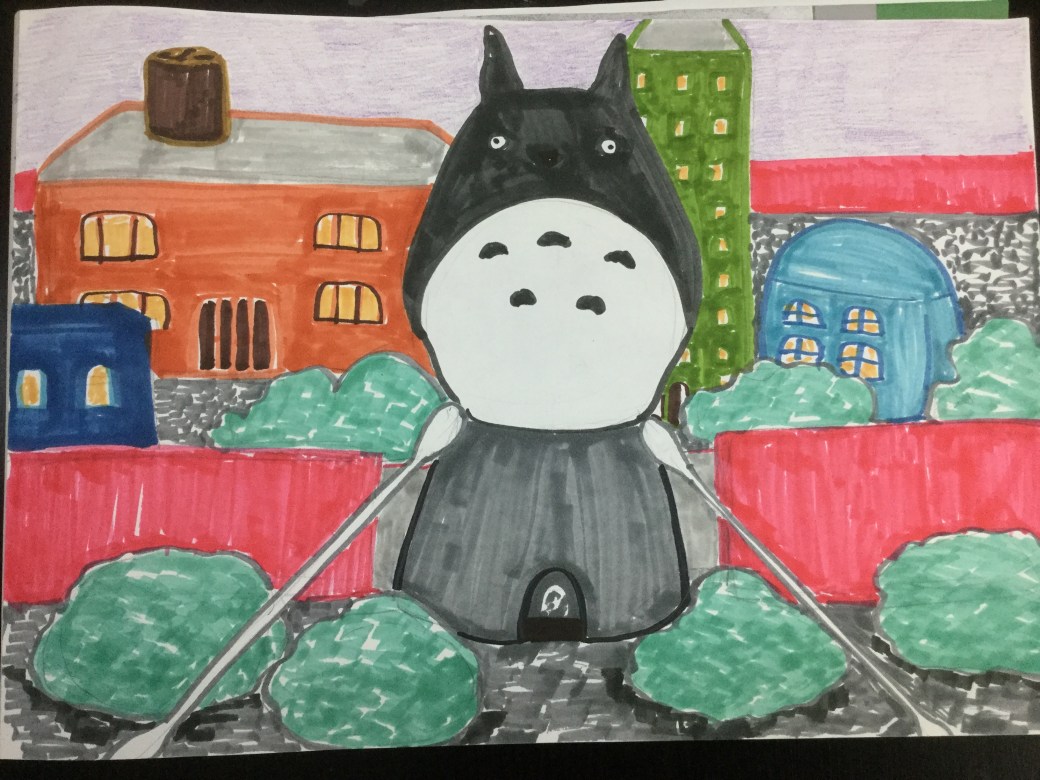
Final piece: 

Reflection: 

I had many ideas, it would take a lot more planning, time and material to execute it. I wanted to fill up a book with words, poems, poetry, song lyrics, photos…I am pleased with the result, specially because I have managed to dowload the video on youtube for the first time and it gives a bit more of insight to the work. I am looking forward to my hang out video session with my tutor  to hear the comments and what she will say about this project. I also sent the video to the person I made this artwork based on , I hope to have a good feedback as well. It was a very engaging type of work. I think material tells a lot about the subject portrayed. I am enjoying Part 2 mostly for the experience of trying material connect to the subjects itself. It is also my first experience working with 3D art and doing a piece using the subject materials.

Project 2 – Mark-making materials and Research point

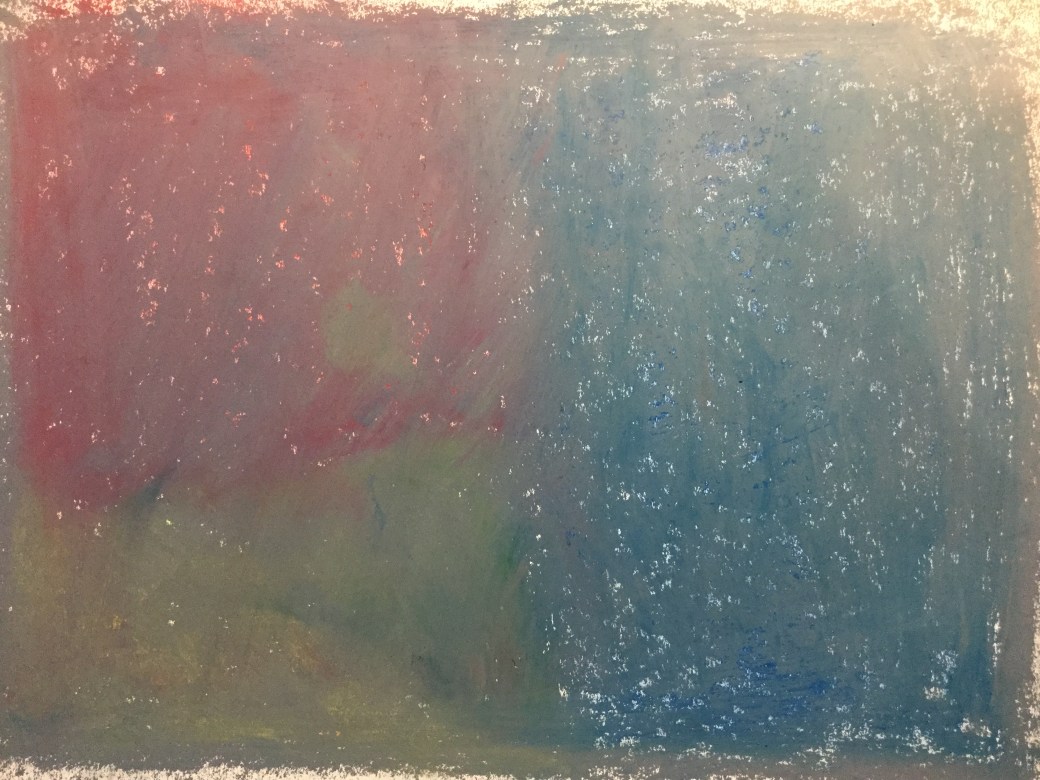
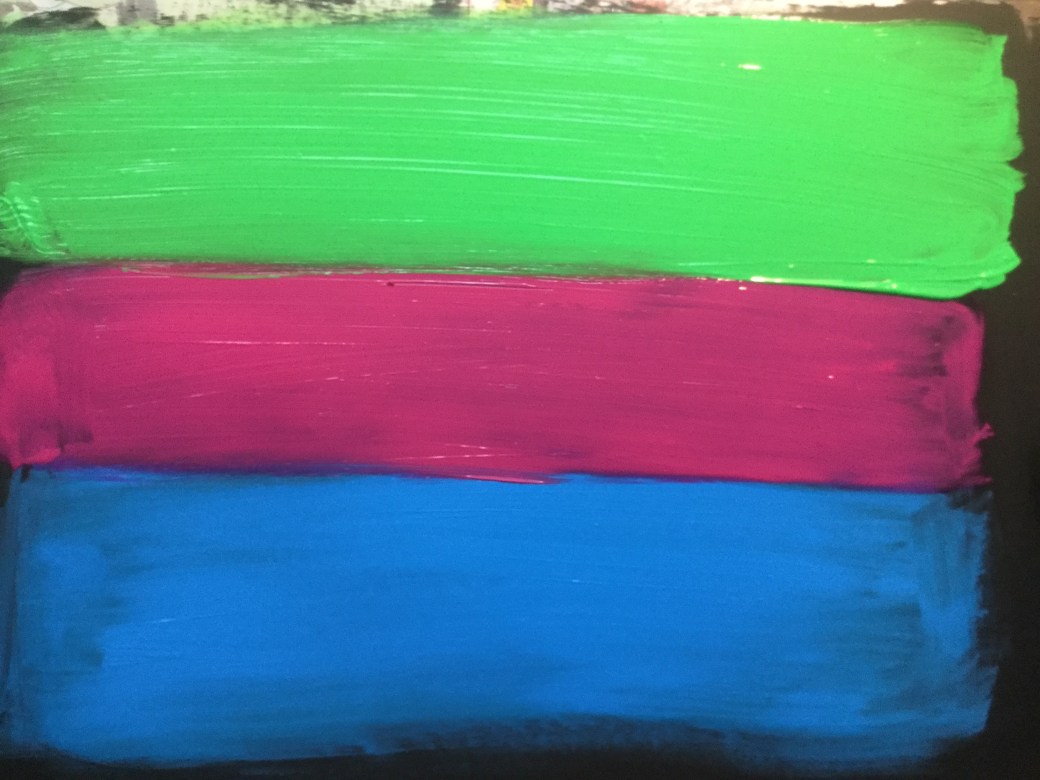
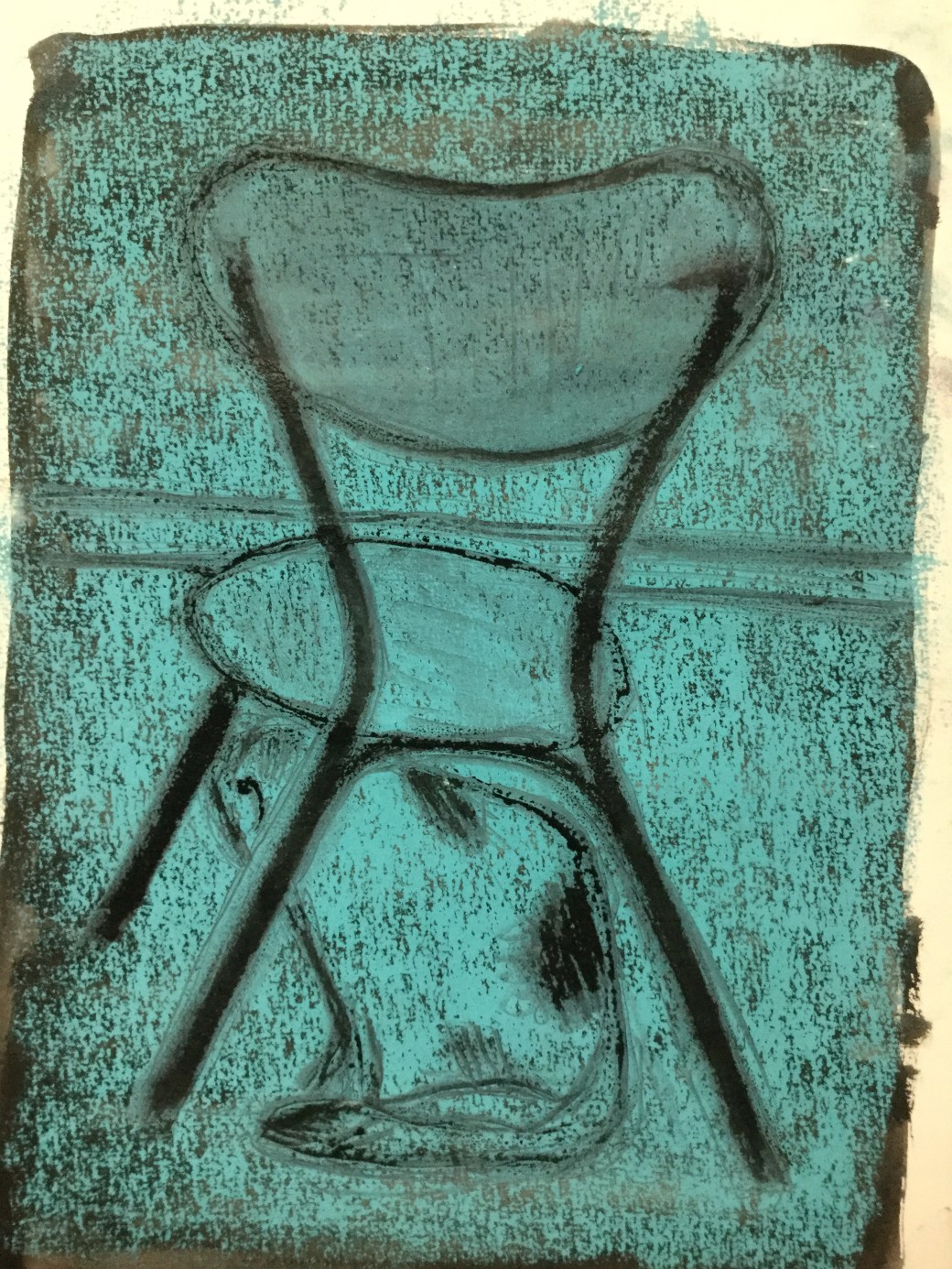
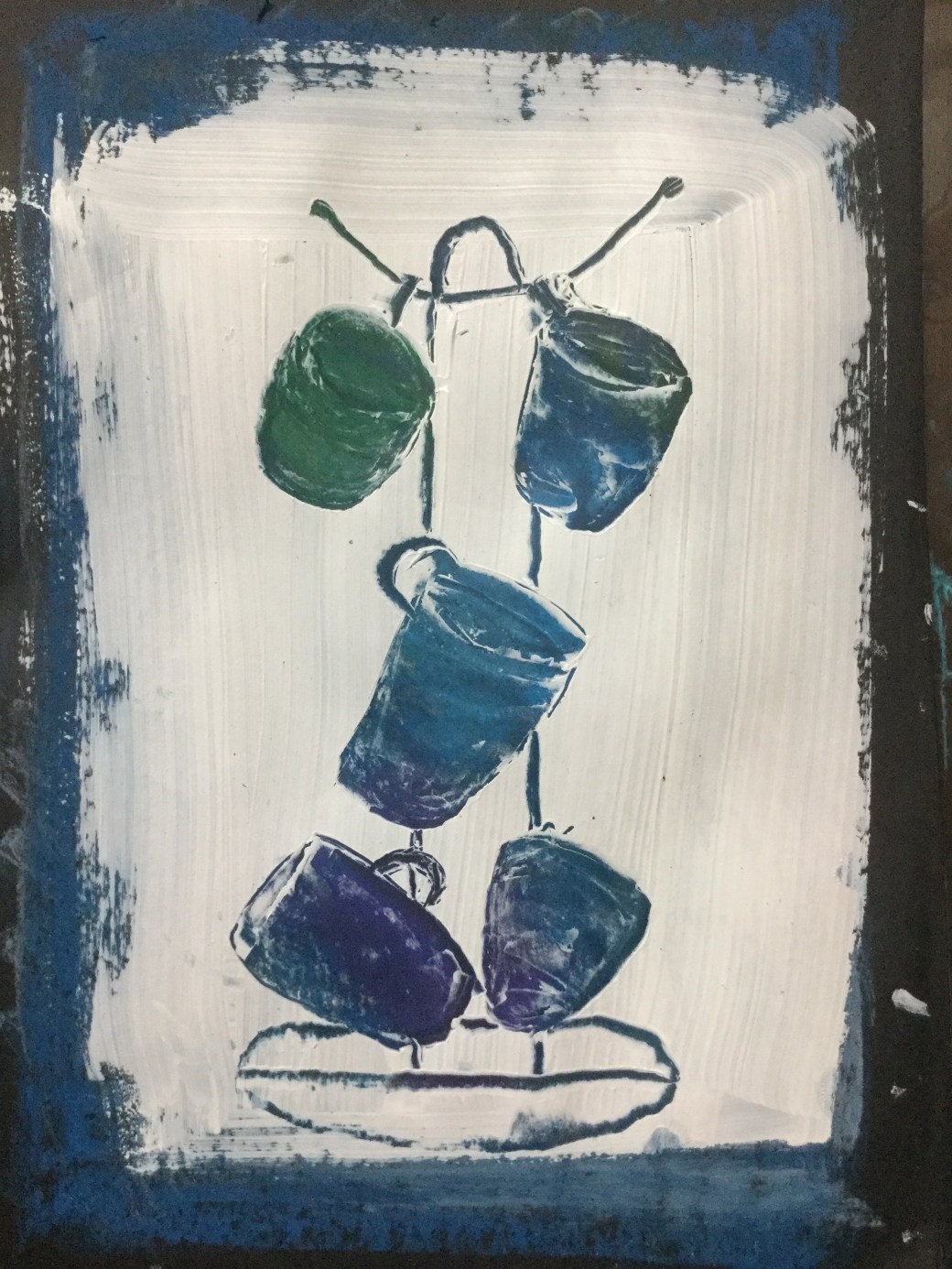
Method: Build up a variety of surfaces using whaterver comes to hand that has two differently coloured layers. Make several drawings by scratching through into the second layer. You can use wax and acrylic paint, oil glazes on board, household paint on wood. varnish on metal. Vary the scale of the drawing depending on your support. Choose a subject from your sketchbook or learning log and push through to make complet drawings, not just squares of texture with random marks. That way you will really learn what the materials can do.

Experimenting first: 


Drawings: 

IMG_2755IMG_2753IMG_2752

IMG_2756

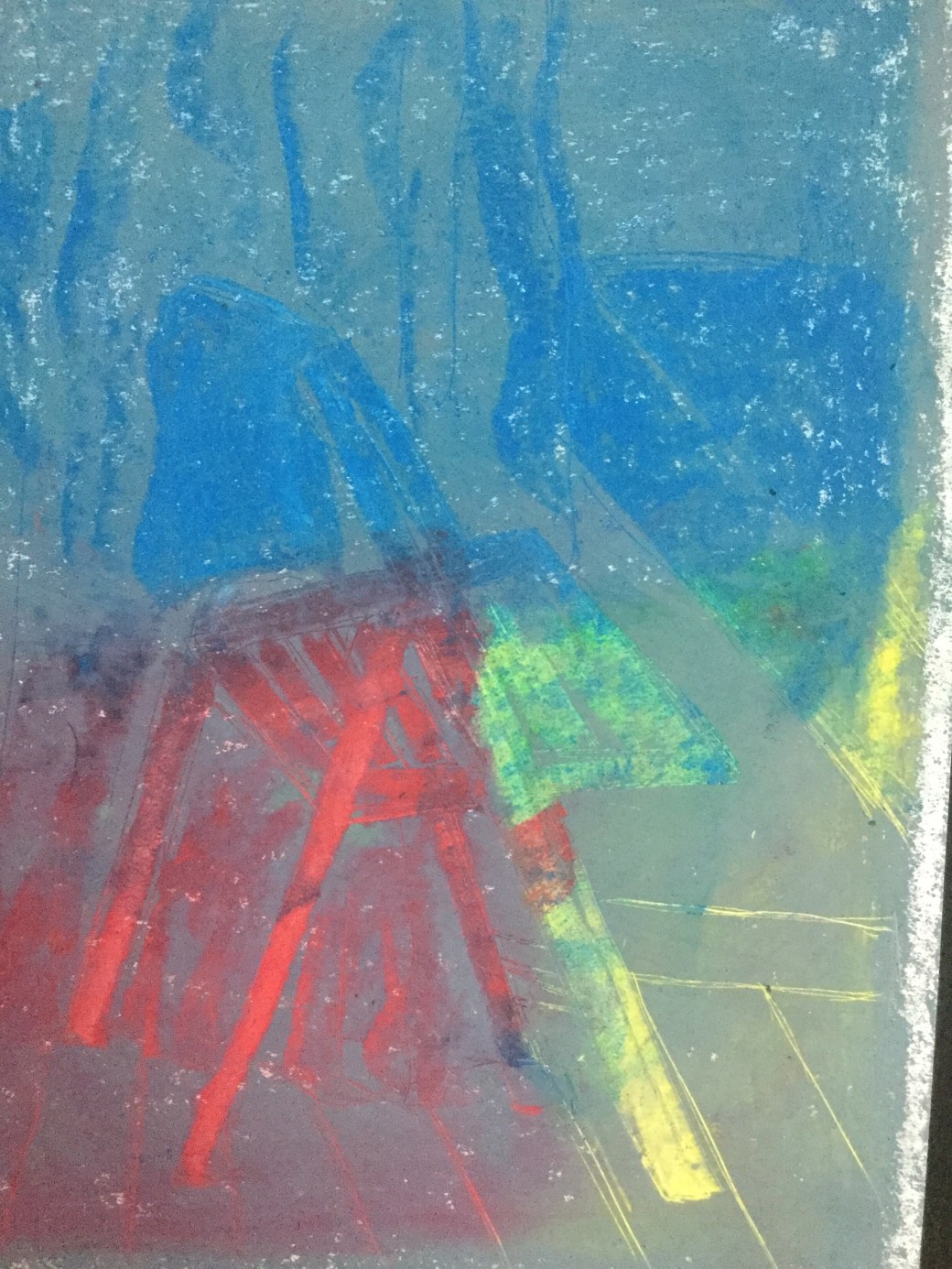
Oil Crayon on oil Crayon 

IMG_2758

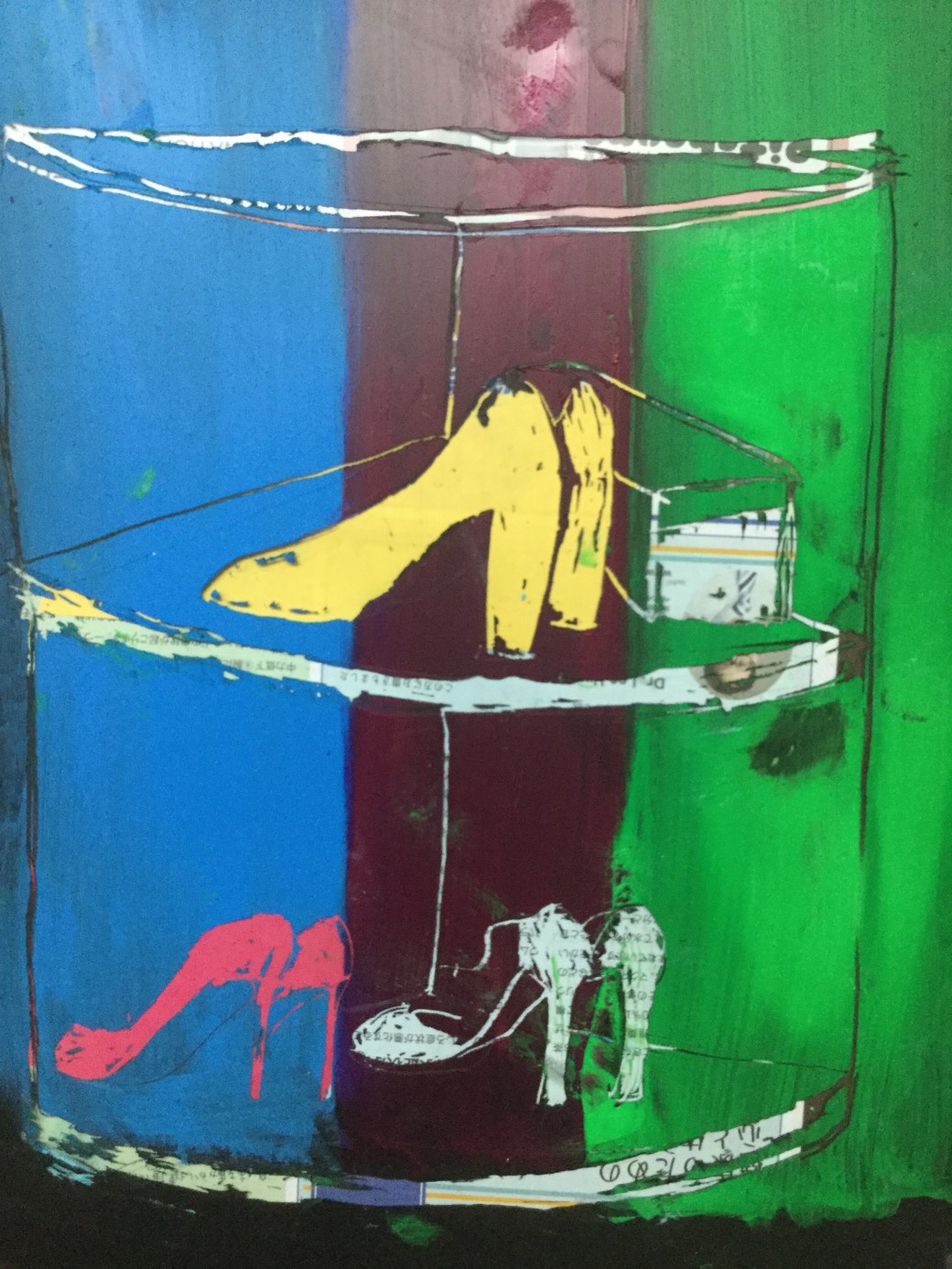
Acrylic on Acetate sheets 

IMG_2757

Oil crayon on watercolour 

IMG_2759

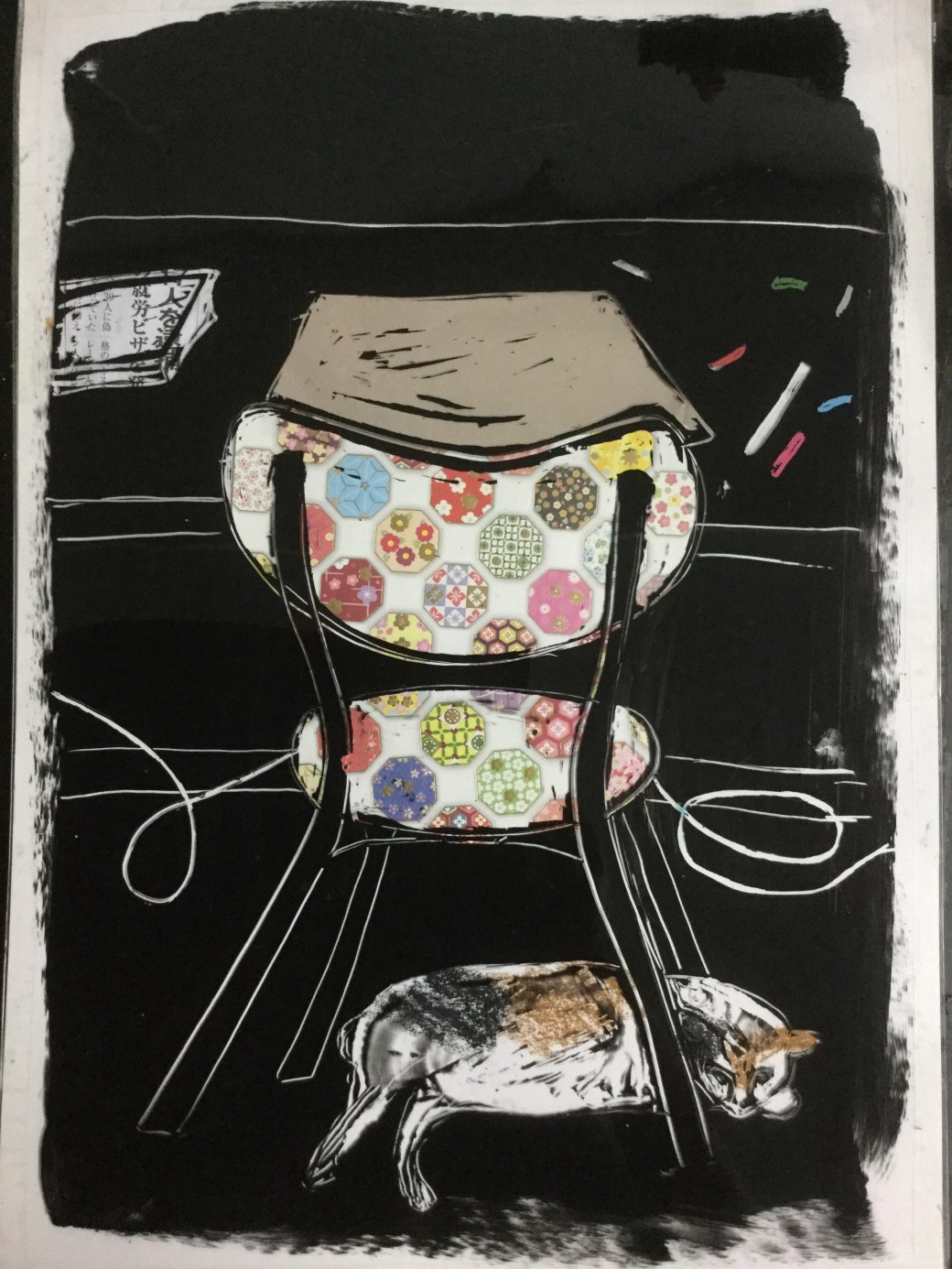
Acrylic on Acetate sheets and origami paper in the background 

IMG_2760

Acrylic on oil crayon 

Reflection :

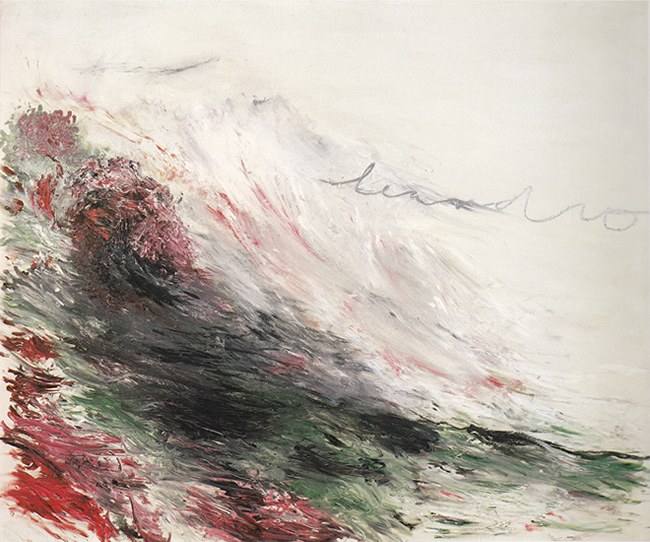
When I think mark-making one of the artists who comes into my mind is Cy Twombly. He might not have used a variety of tools in different ways or scrapping as it is suggesting in this exercise, but he achieved great final images with very expressive marks. I didn’t have many different surfaces to test or unusual materials. I tried with what I had, mostly drawing, painting medium. I always enjoyed using layers of oil pastel and scratch the layers to mix of uncover the first layer colour. This time I tried watercolour, acrylic and different papers. The most interesting surface I found and it was the best result for this project was : acetate sheets. It is not a very environment friendly material but it gave me the painting and scratching result desired. It was something so new to me, very graphic and surprising. I used couple images from my sketch book and coloured paper in the scratched areas to give forms to the shapes I drew by scratching. 

https://www.theartstory.org/artist/twombly-cy/

Hero-and-Leandro-A-Painting-in-Four-Parts-Part-I-1984.-©Cy-Twombly

Timelessness by Cy Twombly 

Research Point :

https://www.angelaeames.com

Angela Eames:  British Artist and practising drawer who explores drawing in relation to technology. Angela’s methodology is innovative, approaching materials and virtual outcomes. She experiments using raw data producing intriguing and unfamiliar images or landscapes. I am not using any sort of technology to investigate drawing at the moment, I would like to but I don’t know how, since I don’t have knowledge in softwares that provides that source of material. I still believe that through this module I am working with similar foundation : experimenting, investigating and exploring ways to produce images using a variety of materials, methods and techniques. 

https://ocula.com/artists/michael-borremans/

Michael Borremans: Belgium contemporary artist whose paintings shows clearly influences and inspiration from artists such : Manet, Diego Velazquez and Francisco Goya. I personally see great similarity with some of Goya’s paintings as in intensity and explicit in the human psyche relating to darkness and death.  Borremans paintings has this depth of sinister and dark. How he presents his subjects in his paintings is enigmatic. His human figures usually  have a frozen state, incomplete bodies with the absence of limbs.

It triggers strong feelings of human beauty in darkness. There is some things in his paintings that reminds me of Jenny Saville artwork. His forms are impeccable and realistic. He uses video, models  and photos to support his creations. In my opinion there is a certain fascination in many of us in death, sinister and frighten images. I relate the work of Borremans and this project in investigating how to trigger through paintings/drawings, human deepest feelings and in finding a variety of supporting material to achieve a desirable result. 

https://www.simonleegallery.com/artists/jim-shaw/

Jim Shaw: American artist and creator of fictional religion called Oism. Shaw’s artwork is a mixture of pop culture, comic books, pulp novels, rock album covers and more. He mixes many materials to create intricate visual imageries. His artwork creates connections between his own psyche and America large political, social and spiritual histories and its conflicting forces. I see the relation of Jim Shaw’s art and this Part 2 as in how endless are the  sources we can use to represent subjects and narratives through our art. In my opinion, Jim Shaw work is a mixture of protesting, confronting and  his own personal feelings against the modern society we live and the culture he lives in.  


Project 1 – Space,depth and volume

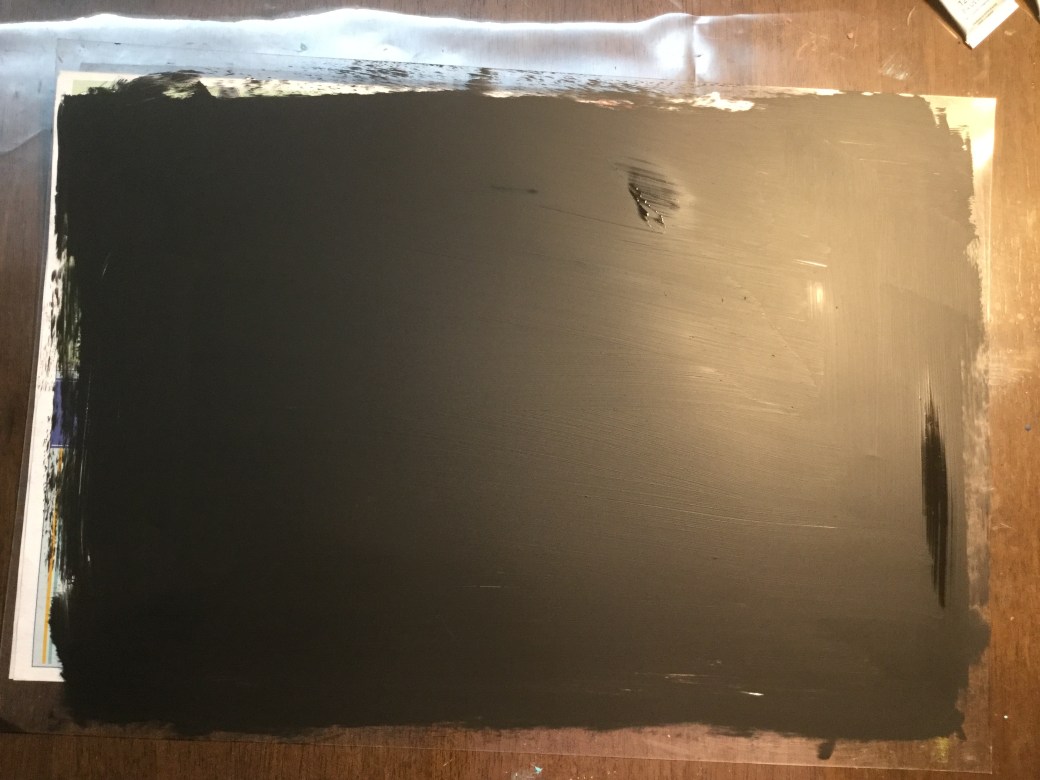
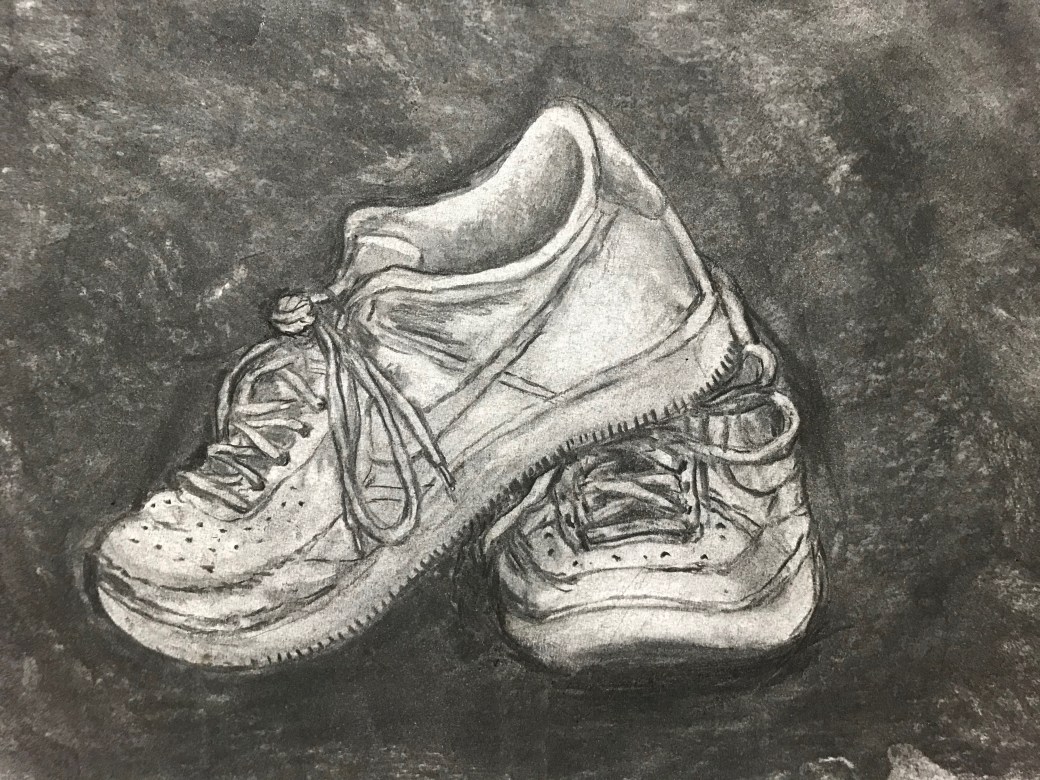
Method: Cover a whole sheet of paper with charcoal so that you have a blank black rectangle. Make a drawing form a subject of your choice by drawing into the charcoal using a rubber or selection of rubbers. When you’ve worked into the charcoal for a about an hour using just a rubber, go back to your charcoal and begin to redraw in darker tones using the side off the charcoal.

IMG_7033

Reflection:

What was very interesting about this project was the fact that for the first time I was drawing in a way that I had to set up my eyes and brain in observing and giving shape and form to an image the other way round. By starting in a paper covered with charcoal, opening up areas with a rubber to depict what I was seeing gave me a completely different perspective to discover the subject. I am not sure if I gave it the sense of depth but I definitely experiment a new method of drawing that made me see the subject ,by having already a set up background. It is more difficult to work from light to leave shades rather than draw something and observe the shades afterwards. 


Textile art

I am keeping my sketch book most days capturing scenes and objects I find interesting for this parallel project. After Assignment 1, I am thinking about trying to develop something using textiles, sewing, glueing or mixing medium and see what happens.

I like looking at these artists work:

https://en.wikipedia.org/wiki/Njideka_Akunyili_Crosby

https://en.wikipedia.org/wiki/Grayson_Perry

I like how they use so many patterns and colours and yet, it is still engaging to look at. It tells a story. Grayson Perry is very conceptual and so is the work of Njideka. I am now looking more on how they apply textiles and the compositions.

My Sketche book :

I am thinking of trying to transfer one of these drawing into a fabric, or trace it and use textiles to achieve a similar image.

The parallel project

In helping me to decide what I would like to develop in this project, my lovely tutor Diana Ali, asked me a few questions such as: what do you really like to do? What does make you feel like you want to draw? What is Something you are passionate about?

Well, there are so many things I like drawing and painting and I am passionate about and although I haven’t found my voice in art yet, I wonder if I will ever be consistent in my art. The choice of subject for my drawings or painting is always influenced by the moment I am living. Sometimes it is about feelings or people and sometimes about what is going on around the environment I am living in  or simply about emotions I can’t explain. Right now I enjoy experimenting drawing and the process, more than be consistent to a specific topic/subject. For this project I have chosen ‘ domestic life’. The reason is because I am unemployed and spending most of my time at home. Despite the fact that I need and miss a job, I love staying home. I enjoy looking after my children, cooking and organising my place. My home at the moment  is nothing like what I wish it to be. It is a rented place, fully furnished. All the furniture, fixtures and most objects were not chosen or bought by me, but it is still my home for now. I just tried to added a few small changes and little things to make it cozy and more personal. I try to recreate in my drawings the warm feeling of my home, no matter how it looks like. Being at home most of the time, makes me feel a bit isolated from the outside world but I don’t mind. I like my ‘home world’ and I have a very intimate relationship with it. Through this project I am trying to depict how I feel about home and  to turn into art ordinary household appliances, objects and everyday simple situations such as how my dishwasher or how interesting and intricate my iron wire can be. I want the viewers to experience through this project my personal approach to  domestic life and how I see beauty in simple objects such as a plant pot placed in a certain area of the house, or the cat under a chair or on the couch. In order to achieve that ,I started searching for artists who are known by painting ‘domestic life’, ‘still life’ or ‘landscapes’. Among many, my favourites ones are:

  • John Bokor
  • Anne Redpath
  • Anthony Green
  • Matisse
  • William Scott

Researches on Artists who paint domestic life, still life and landscapes 

https://www.talkingwithpainters.com/2016/09/29/ep-8-john-bokor/

John Bokor – Australian artist award winning for landscape and still life painting. What has brought interest in John Bokor’s paintings is the use of bright colours, spontaneity , emotions and lively energy he transmittes in  everyday life situations. It is what I am trying to capture for my project but in my own personal way of seeing things around me and how to relate to the close environment. Painters such as Pierre Bonnard and Van Gough were sources of inspiration for John. He uses carbon pencil for most his sketches, something I haver never tried. Through the website above, listening to his interview and watching his videos, I found out his process and tecnhiques very helpful and motivating to start my project . John Bokor shows the importance of sketchbooks in capturing scenes, re work in images, invent, add or remove pieces when working on a final piece.

https://www.nationalgalleries.org/art-and-artists/artists/anne-redpath

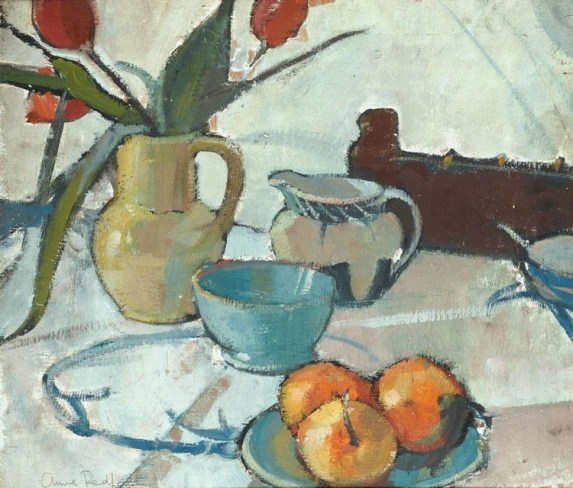
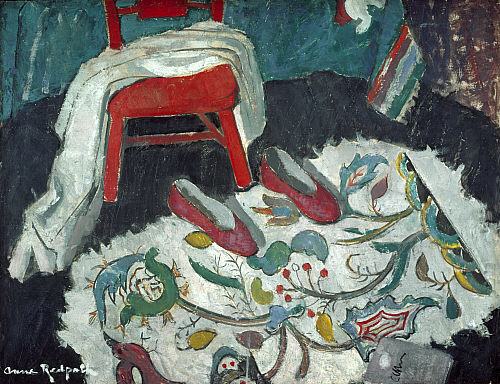
Anne Redpath– Scottish painter (1895-1965) knew by her domestic life, still life paintings. Redpath considered Matisse one of her inspiration and her use of patterns in the  background reminded me of some Matisse’s work. Her paintings are expressive, colourful and calm. Redpath uses perspective in a similar way of post-impressionist painters. In some of her paintings I feel a certain formality and solitude as well as the feeling of home and tranquility. Many of her still life with flowers are bright, and there is no much dark/light contrasts.
anneredpath.jpg

Still life with Red tulips by Anne Redpath
anne-redpath-the-indian-rug-1942

The Indian Rug  by Anne Path (1942)

https://en.wikipedia.org/wiki/Anthony_Green_(painter)

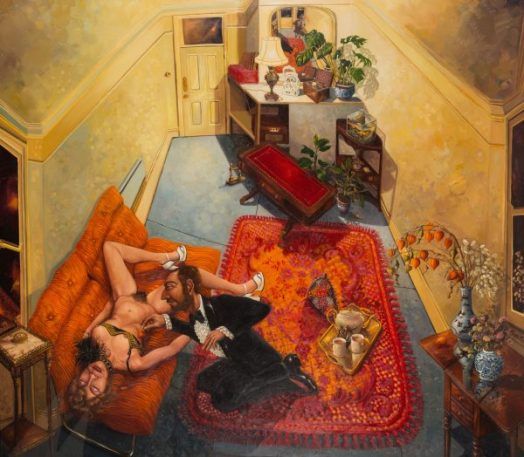
Anthony Green- English painter, known by his own middle calss domestic life and unusal perspective of polygonal forms in large irregular shaped canvasses. His subject is mainly chornicles of his family and surrounding private life. In additon to his unique way of using perspective in his work, what fascinates me when looking at Green’s paintings is the warmth, passion and love in his domestic life. There are so many painting of moments of intimacy with his wife which are revealing and erotic but at the same time innocent and sweet. I like his interior descriptions of the english home feeling with ornaments, rugs and differents patterns in the background.
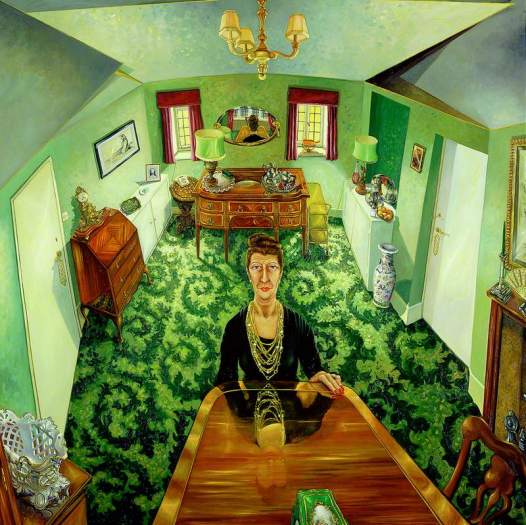
Green, Anthony, b.1939; My Mother Alone in Her Dining Room

Anthony Green, 1939

anthony-green-the-chinese-lantern-600x524

Chinese Lantern by Anthony Green – 1974

https://www.theartstory.org/artist/matisse-henri/life-and-legacy/

Henry Matisse– French post-impressionist painter(1869-1954) , sculptor and printmaker. He is known by bright colours, patterns, interior scenes, still life, nudes and Landscapes. Inspired by painters such as impressionist Van Gough and Paul Cezanne, Matisse was the precursor of Fauvism and one of the greatest artist of the 20th century. His still life and interior paintings are emotional and strong. His cut outs towards the end of his life shows his passion and innovative ways of keeping doing his art. I am very inspired by some of his compositions.
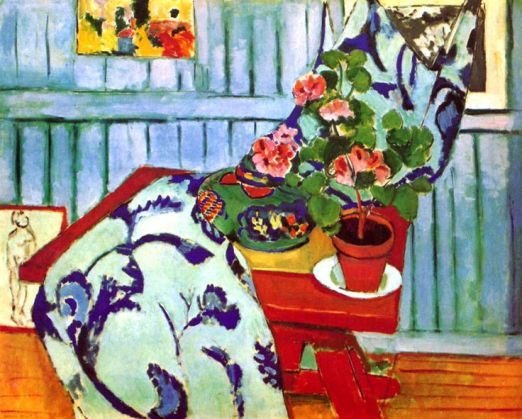
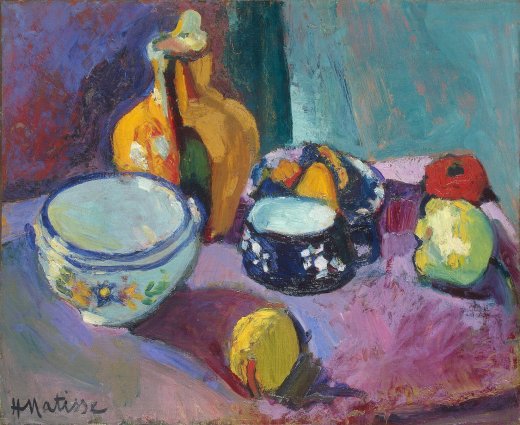
420124@2xMatisse Henri - Dishes and Fruit

http://www.artnet.com/artists/william-scott/

William Scott -British painter (1913-1989) and influenced by Georges Braque and Paul Klee, Scott abstract paintings are flat and use limited colours palette. His still life paintings are abstract but still with a fair amount of description in forms and shapes. He founded an Art school in Pont-Aven in 1937 when he lived in France, lectured in Bath Academy of art and met Jackson Pollock, Franz Kline and Mark Rothko when he visited US in 1953. His paintings have an interesting  use of space , flatness and I like the simplicity in how he describe domestic life objects and  lines.
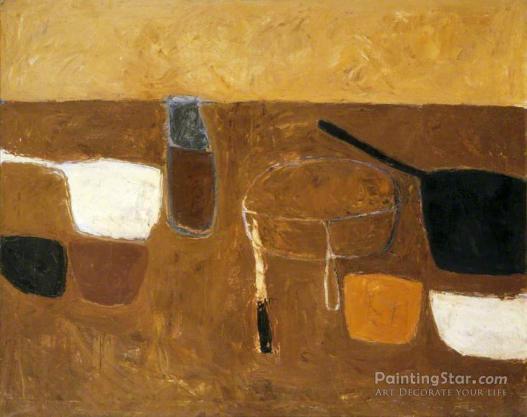
william-scott-brown-still-life-1957-s205086

Brown still life by William Scott (1957)
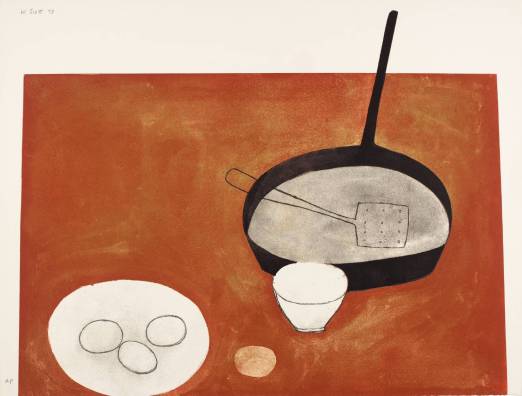
Still Life 1973 by William Scott 1913-1989

Still life by William Scott (1973) 

 Sketch book samples:

I try to go around the house almost everyday to sketch rooms, furniture, objects and situations I find interesting. I hope to have enough for  a selection towards the end of Assignment 5 so I can have a clearer idea of how and what I want to present for this project…

Me, objects, environment and views of domestic life

 While doing my research about the artists I chose and are known  by their work on domestic life, still life and landscapes, I am thinking about trying to define how I look at objects, what drags my attentionto them, what feelings and emotions I would like to put into my work when it comes to home and my drawings and paintings for this project.

I was born in Brazil, from Brazilian mother and Japanese father. I grew up in Sao Paulo but when I was 19years old I moved to Japan for 5 years. I came back to Brazil when I was 24years old and soon after I met a British man who became my husband and father of my two children. I married when I was 30years old and lived in England for one year before moving to Malaysia. For the entire time I was married ( 10 years) I visited England twice a year and became very interested and familiar with English culture. Although I love Malaysia and it has been my home for 15 years, besides my connection with my home country and second home country which is Japan, England has a strong influence in who I am today. Malaysia is where I live, it is beautiful, warm and welcoming but I still struggle with the culture and religion. I lack the sense of belonging here.

When I think of these four cultures that influenced my upbringing, married life and adult life, I want to use all I admire in each of them to add to my artwork and choice of subjects.

Brazil– childhood memories, music, my roots, modest home, the smell of fresh coffee and cakes, sunny days and home drama!

Japan– food, language, art, discipline, simplicity and wisdom .

England– Tradition, formality, celebrations, family oriented and cozy homes.

Malaysia – Colours, spices, friends, diversity and exotic fruits.

In conclusion, I am trying to depict the domestic life I have experienced through these cultures. Using some objects, subjects and imagery that evoke certain feelings and emotions. I would like to try describing it simple but colourful and emotional. I want to present to viewers a personal narrative of what ‘home’ means to me.


Assignment one

Sketch book samples :

First Attempt:

IMG_2726

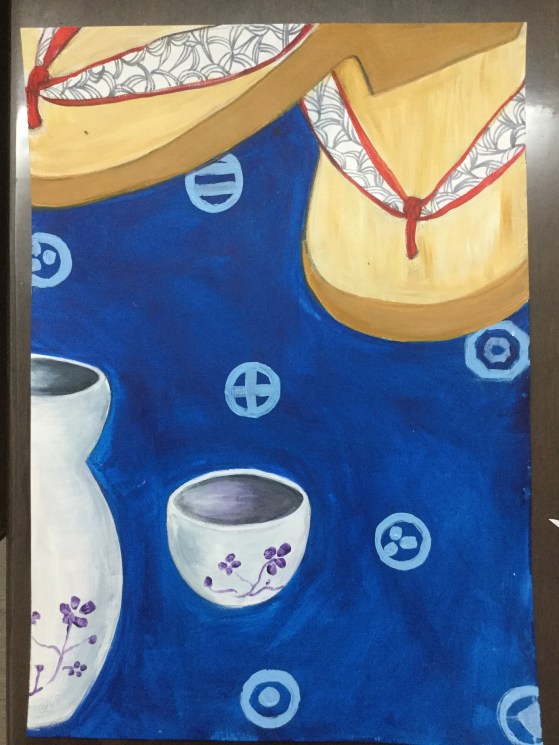
Japanese composition – acrylic on A3 paper

Final work for Assignment one:  ‘A series of compositions in different backgrounds ‘

This slideshow requires JavaScript.

Assignment one – Reflection 

For this assignment I was inspired by the work of Elizabeth Blackadder. My affinity with some of her work comes from my interest in Japanese objects. I am not a collector of objects because I am trying to adopt a minimalistic life style, but I have a few very special Japanese objects that holds emotional meaning to me. I initially had in mind cropping an image, but in the end I also liked some of the compositions from my sketch book. Through this assignment I tried to use bright colours in similar ways that Blackadder and Matisse do. I wanted to make an interesting use of space and composition with the objects, create a balance between the background and objects . I also wanted to keep it simple and chose just some objects rather than too many as in some of Blackadder work pieces. Cropping and start drawing from outside to inside the paper were some the new and interesting experiments I had in Part 1. My first attempt was… ok, just ok. I like the brightness of acrylic paint but I found difficult to work in the details.The result of this piece is a bit stiff, methodically done kind of work, and this is not how I wish my art to be. I like the colours, how I cropped the image and the use of space, but I wanted to have more fun, I needed to think of other ways I could work based on my initial ideas and sketches.  Since this module is about ‘investigating drawing’ ,I want to try new possibilities, new ways of working with composition, colours, space and background. My second attempt was using watercolours which I am very confident with. The objects I chose feels good in watercolour for its softness and delicate notes. On the other hand, if I just had finished a composition in watercolour, that would be it. A drawing in watercolour. I wanted more, I didn’t know what yet. I liked a few ways of working with compositions, I couldn’t chose only one of my sketches. I also didn’t want to have many pieces for this first assignment. I wasn’t sure what I was trying to achieve and I know there is that moment when I look at a piece I have been working on and I can say : that is it, I have finished it, and I wasn’t there yet. My main concern was the background. I was looking for it in Japanese motifs….I tried in acrylics, collage, photos… and then I had an experiment. I cut the objects out, I tried one composition on a piece of Japanese fabric (the one I use for reference in my sketches). I took many pictures changing the position of the objects around. I tried a different fabric. I tried other surfaces around the house, different textures and colours. It became a series of compositions in different backgrounds! Looking through the photos I came to that point. I could say: ‘That is it’, my assignment one is a series of compositions in various background. It was an experiment and investigation and I learned to go beyond what I am still doing at times: try to finish a piece in a certain, technique or method. I want to explore and experiment more and more from now on. 

Katia_Chester_ID1

Feedback on Assignment 1 report 

This report helped me to go back and revise some points for improvement. I entirely agree with the comment of my bottle in the assignment being ‘wonky’, I will definetely do a new drawing. It was very motivating to hear about my abstract kitchen utensils and althoug I like ‘abstraction’, I struggle to define things without many details. In Project 2 ‘Using space’ I tried something different, leaving a lot space on purpose, but apparently it didn’t work. I will revise Project 2 as well. Overall, this report helps to keep in mind points for improvement for next Assignment, gives me good feedback about where it is going well and where I could go further and improve. I am glad my sketch book is working well and I am very motivated in keep developing my parallel project on ‘domestic life’ as the subject for it.

Project 4 – The human form

Aim: Drawing the human figure allow you to develop skills in observing underlying structure- the engineering of the figure- combined with the natural grace and flow of an organic form. The object of this exercise is to create a drawing which leads the eye of the viewer into the overlapping twists and turns of the limbs. Use your judgment to make the most powerful statement you can.

Method: Make a drawing of two combined body parts. This might be two feet crossed over, folded arms or a hand resting on a waist. Look at the curves and the rhytms set up by those curves. Look at the muscles and bones under skin and the tension and evergy they give. Make a drawing which has a curving or sinuous composition using parts of the human figure. If necessary, consider lighting the limbs with an Anglepoise lamp or similar to give yourself more dramatic tones in the manner of chiaroscuro. Don’t leave the limbs to taper off into nothing, even if that means cropping. Don’t be more tentative because you’re working from the figure; redraw and correct vigorously to achieve the most accurate drawing you can.

This slideshow requires JavaScript.

Project  4 – Reflection on The human form

Drawing human main forms are easier and more spontaneous. Focusing on details of parts, capturing muscles, bones  and specially hands and feet has showed to be a bit difficult for me. I went for a live model class for this project but I couldn’t achieve the aim for this project. When I tried sketching on my own hand and feet the results seemed to be more accurate. It is still quite stiff but still more spontaneous than technical and proportional. The human form parts takes endless sketching and practising. I don’t think my drawings direct the viewer’s gaze to specific parts but it is more about the mark making of looking at the subject and sketching. I like one of the sketching from my sketch book where I added a background. It is spontaneous and yet more realistic and contains a certain energy in it. 

Contextual Focus Point : Prunella Clough Tate Archive 

https://www.tate.org.uk/art/artworks/clough-wire-and-demolition-t03451

Prunella Clough ( 1919-1999) was a British artist. She is known mostly for her paintings of Industrial landscapes , though she also made prints and created assemblages of collected objects. 

Her career began in the 1940’ with her Industrial Landscapes but her paintings became more abstract by the 1960’- 1970’. She was a highly influential teacher and artist to the post war generation. 

Prunella Clough compositions consists in a mild or neutral colour palette, texture – achieved with thick impasto , found objects and juxtaposed shapes and forms. Her art was linked to Neo -Romanticism but it was also influenced by Cubism and European abstraction. Her choice of unusual subjects her  perception of them, resulted in intriguing and contextual art pieces.

“ I prefer to look at the urban or industrial scene or any unconsidered piece of ground” Prunella Clough – Interview in 1982 for Warwick Arts Trust .

For instance, Clough has made a number of abstract works that reference fragments of urban detritus and rubbish that she found on the streets of London such as plastic bags and discarded gloves, and oil stains. 

In resume, Clough’s work was explored and experimented using a variety of tools and materials  to apply paint on canvas creating a number of visual effects and layers using  sandpaper, wire wool, roller, wall paper scrapers and pieces of wire mesh. She not only depicted her Landscapes through paintings but used tools and materials that were part of the subject’s matter as medium. Her work presents a fair amount of studying, investigation and her perception and close observation to achieve balanced and engaging images. In the contextual point of view, Clough works demonstrates concerns with industrial waste, mass production of items connected to Capitalism. Clough’s approach to commodities  evokes Karl Marx’s description of it in volume one of Capital (1867) and her paintings participate in a system of wastage and renewal. 

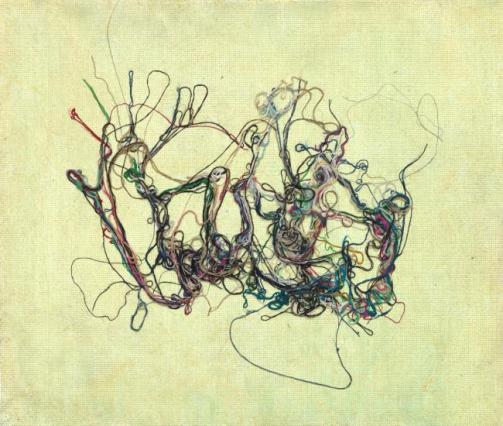
prunella

Waterweed 6 (1988) by Prunella Clough 

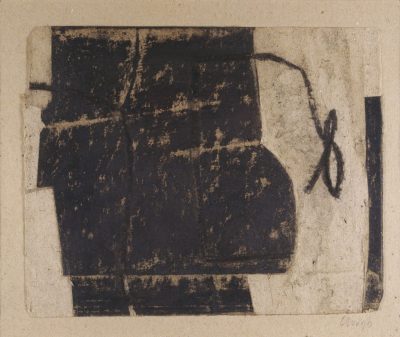
1875-400x337

Urban Detail (1958) by Prunella Clough 

Project 3- Changing the scale

Aim: The focus of this project is to explode notions of scale and experiment with an extreme change of scale to achieve a powerful drawing which suggests monumental landscape or architecture.

Method: Find a handful of small objects, e.g pebbles, shells, buttons, toys. Cluster these objects together and focus in on a cropped area, experiment with using a frame for this. Make large drawing which gives the impression of a landscape view or architerctural detail. suing these objects as source material.

Sketch book samples:

Final work for Project 3 : 

IMG_2666

Project 3 – Reflection on  Changing the scale 

I honestly struggled a bit with this project. I gathered the small objects I found but it was hard to put them together into a landscape. I was not sure if I had to represent the objects exactly as they are or just use them to create my own imaginary landscape. In the end, after having sketched the objects separately, I put together a landscape of a sort of museum or amusement complex. I used box, cotton buds, sewing thread bobbin, cotton balls, a small toy, other small objects found , some small boxes and a small toy. I didn’t feel a natural urge to work with the objects, I didn’t know what to do with them . I still enjoy developing composition but jumping from composition in Part 1, to work with space in Part 2, also working on my parallel project at the same time made me feel a bit lost and confused to get my mind around these small objects, draw in big scale and transform them into a landscape. It was visually and mentally very tiring. I did not enjoy this project and I think it shows in the result. 

Project 2- Using space

Aim: Look at the work of Elizabeth Blackadder and build works from still life.

https://www.nationalgalleries.org/search/artist/elizabeth-blackadder

https://artuk.org/discover/stories/the-versatility-of-elizabeth-blackadder

Method: For your own still life, pin up coloured fabric or card onto a wall or door. Suspend or pin light, brightly coloured objects onto the fabric. Gift bafs or paper lanterns work well. Enjoy the juxtaposition on bright colours and details. Make several drawings in colour, selection areas and elements and refining to explore the composition. Try bringing some lines or shapes in from the edges; lay a sheet of paper behind the one you’re working on so that you can befin drawing off tahe page and enter the drawing from the side.

Sketch book samples:

Final pieces for project 2: 

This slideshow requires JavaScript.

Project 2 : reflection – Using space

It was very inspiring to see the work of Elizabeth Blackladder. I like Matisse and both of them have this intimate relationship with the subject and the exploration of bright colours. Matisse brings me joy and energy and Blackadder’s work is as colourful but very calm and sentimental. I particularly like the lack of background in many of her compositions. My drawings started as studying the objects I had pinned up on a board, drawing and colouring them carefully. I used watercolour, pastel pencils and acrylic,  but as I progressed it became more important the space rather than the objects. I sketched a few juxtaposition combinations I wanted for this project and without even thinking much about it, I had the feeling of cutting and pasting the shapes. It might be the inspiration of looking at Matisse’s cut up patterns, I don’t know.  I had the fully object shape cut and out of the paper edges before trimming it to fit the paper boarders.  It helped to accommodate what I want in the page and it shows what I wanted to show for the final piece in a framed manner. As I progressed, space became more important in my compositions. I want it simple, beautiful, colourful and calm. 

The difference and similarities  between Elizabeth Blackadder and Henry Matisse 

https://www.metmuseum.org/exhibitions/listings/2012/matisse/images

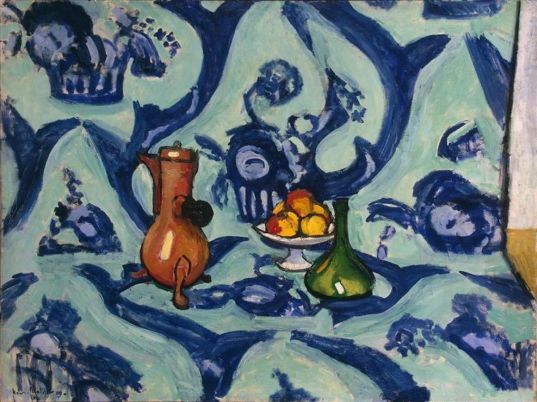
Henry Matisse was a  French artist born in 1869. Matisse initiated an was the leader of Fauvism movement. His art was influenced by Paul Cezanne, Gaugin, Van Gough, Picasso and Paul Signac. Henry Matisse is know by his use of bright colours and although he painted started his career doing landscapes and still life, human figure became his central interest. After he became ill he start creating art work with big cut up pieces of colourful paper forming patterns and human figures. He was also interested and other cultures arts, specially Japanese. 

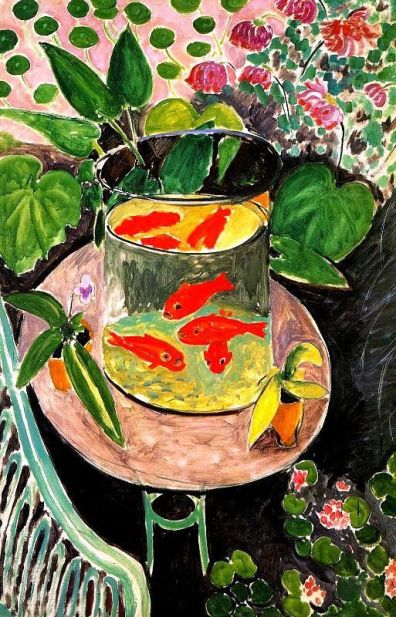
95c91cad03d3dc7addd8438071467046

Goldfish – 1911 by Matisse

chocolatepot

Chocolate Pot – 1900 by Matisse

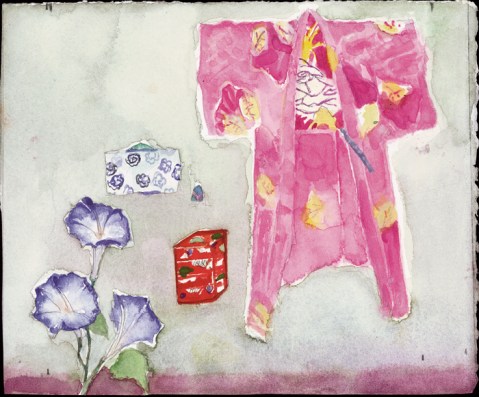
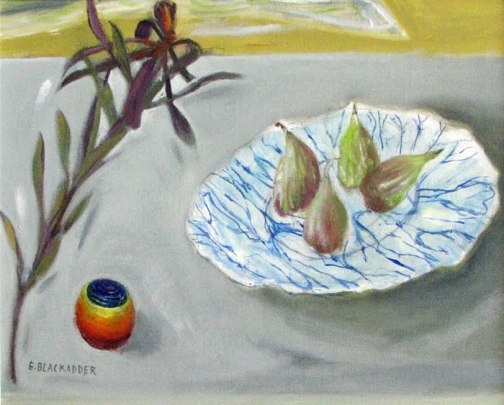
Elizabeth Blackadder is a Scottish artist born in 1931. Her mediums are painting, etching and screen printing. She travelled extensively for art interest purposes and became very found of Japanese objects and art. When Elizabeth travelled to France she discovered Henry Matisse who she is highly influenced by. Her paintings central ideas are still life

; particularly flowers and cats. Her compositions can be of loose elements and no background, and spatial arrangements in 2D shapes without shadows. 

Kimonofinal

Pink Kimono by Elizabeth Blackadder

phpThumb_generated_thumbnailjpg

Still life by Elizabeth Blackadder

Henry matisse and Elizabeth Blackadder similarities :

  • Interest in Japanese art
  • Use of vibrant colour and use of space
  • Still life paintings with a variety of objects and patterns
  • Painting and printmaking 

Henry Matisse and Elizabeth Blackadder differences :

  • Matisse was influenced by Cezanne, Gaugin, Van Gough and Paul Signac and Blackladder was highly influenced by Matisse. 
  • Although Matisse painted still life, his central interest became human figure. Blackladder central interest is still life, particurlarly cats and flowers.
  • Matisse use of colour is more energetic and Blackladder although using vibrant colours, maintain a certain tranquility.
  • Matisse paintings backgrounds details and Blackladder strong feature in her paintings is the loose elements, spatial arrangements with simple or without background 

Matisse was also a sculptor and worked with collage and Blackladder doesn’t work with sculptures and collage 

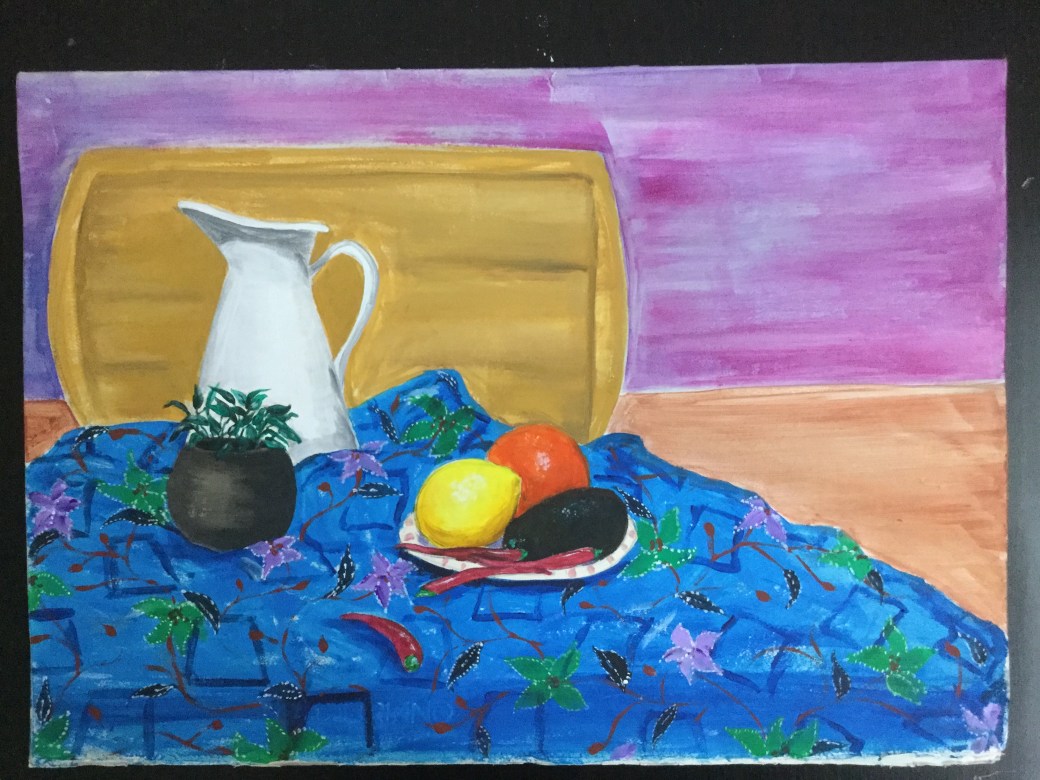
The image below is an attempt in  response to Matisse’s work  sophisticated use of space and pattern.

IMG_2733

A La Matisse still life – acrylic on A3 size paper


Project 1-Observational drawing

Method: Find an inconspicuous are of a room or small area outdoors where several elements are juxtaposed. Take photos and make sketches of cropped details. Make several drawings, playing with the composition of the elements. Allow interesting features to develop; extend lines, repeat motifs, allow forms to come together in unusal ways. Be as playful as possible with pattern, texture, form, etc. Whilst still being sensitive to what you are looking at. As you progress you may find that parts of the subject which feature large in reality disappear completely in your drawing. while incidental patterns of shapes develop their own status.

Sketch book samples: 

Final work for Project 1 : 

This slideshow requires JavaScript.

Project 1 :  Reflection  on  Observational drawing 

When it comes to observational drawing, I tend to pay attention in details, and I either have very energetic drawings or methodic ones where I worry about describing small details in realistic ways. It exhausting at times and the drawings seems a bit static and lifeless. I am tried to capture the overall feeling in this project. I started with very careful, studying the subject shapes and details but I think my last two drawings were what I wanted to achieve: simple, creative and more expressive. These two drawing are of my well everyday used ‘wok’ and a frying pan. I wanted to find out a way to describe the spiral texture at the Botton of each item. I chose Chinese ink and printed the texture on the paper. The cups and bowl I use baking paper ( I wanted to work with things I use in my kitchen daily). The second drawing for instance, I use some aluminium foil to describe the Botton of the wok. From the first couple drawing of the dish rack and my cropped drawing of my chopping board and trays, the last two ones became more abstract and expressive. I try to make a good use of space, leaving areas undone and no background . Before deciding for these items, I sketched areas in my home such a shelf with couple pairs of shoes, my couch, a chair, a counter corner in my bedroom but the kitchen is my favourite space. My relationship with my kitchen utensils, food and environment is more than what I have with people these days. I am jobless and I enjoy the intimacy of my home. I like to cook, I like to watch food when I am stirring , boiling, frying or steaming… I like the satisfaction of seeing my dish rack full of clean dishes rather than the sink full of dirty ones. I like the shape of pots, mugs, bowls and some other utensils. Home is the most known subject I know. I enjoyed this project and it has brought me some inspiration to decide what I will be doing for my ‘ Parallel project’ after discussing with my tutor.